THE CLASSIC COLLECTION✦An outlaw’s diary: the CommuneCLASSIC FREE BOOKS
An outlaw’s diary: the Commune
Cécile Tormay
THE CLASSIC COLLECTION · 1901
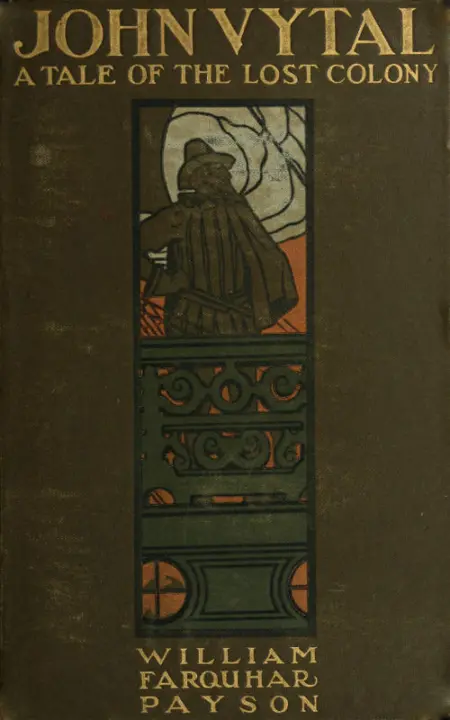
"John Vytal: A Tale of the Lost Colony" by William Farquhar Payson is a historical novel written in the early 20th century. The story explores the romantic and mysterious history of the Roanoke colony, focusing on the life and adventures of its main character, John Vytal. The narrative sets itself against the backdrop of 16th-century Virginia's tumultuous colonial endeavors, marked by adventure, enigma, and human connection. The opening of the tale introduces readers to a richly defined world of Elizabethan England, where the lively poet Christopher Marlowe and the formidable soldier Hugh Rouse encounter many colorful characters. The initial scenes depict the aftermath of a bear-baiting event where Vytal's heroic intervention creates ripples across the social fabric, drawing attention to his valor. As the story unfolds, Vytal prepares for his voyage to Virginia, mingling with both commoners and nobility, and hints of his future endeavors stir excitement. Through vibrant dialogues and intricate character interactions, the beginning offers a glimpse into the dynamics of human relationships in a historical context while setting the stage for a tale that intertwines fate, struggle, and the pursuit of personal destiny.
Introduction adapted from the source catalogue; source summaries may be automatically generated.
Free to read · English · 87,054 words · No account needed
MAKE TIME FOR A GOOD BOOK
On by default. Untick to stop anonymous reading totals. Each page counts after 10 seconds in view. How this works.
Anonymous counting is on unless you have switched it off.
At this the smile which had been rising to the surface of her eyes, whether she would or no, culminated in a laugh as merry as his own. She waded to the bank. “My patient is come to life at the wrong moment; but sit you down, pretty boy, and talk to me. Well?” she said, dangling a pair of white feet in the sluggish stream—“Well?”
“What is the meaning of your expectancy?” he inquired, stretching himself at full length on the mossy ground. “You wait, I suppose, for a seemly expression of gratitude. Thank you, then,” and, taking her hand, he kissed it lazily. But she was pouting. “Oh, I am wrong. What is it, then? Ah, I see. You wait to be told of your beauty, and how the sight of a maid crabbing is beyond description. Methinks there’s another will tell thee that, and more besides. I saw the mountebank to-day ogling thee with eyes distraught and bulging.”
Gyll laughed. “’Tis Roger Prat. He hath no thought o’ me. He’s all for the bear and Vytal.”
“Ah, well,” said Ralph, “thou’rt not so wondrous comely. I tell thee, wench, for all thy prettiness, there’s one outshines thee as the moon a will-o’-the-wisp. Nay, look not angry. ’Tis the governor’s daughter, Mistress Dare. I’ve seen her at her window thrice this very day. My heart goes wild of love for so fair a face, so unobtainable a damsel.”
At this Gyll made a wry face. “Pah! she loses her beauty quickly. When we set out from England she was fairer far than now. I saw her go aboard at Plymouth.”
“Ay,” laughed Ralph, “she was younger, but her face lacked its present fire in the London days.”
“What!” cried Gyll, “you saw her there?”
“Nay, nay,” he returned quickly, “’tis a delusion of my addled brain.”
She looked down at his incongruous beard, and then into the youthful eyes indulgently. “Poor boy!”
“Poor boy!” he echoed. “You call me nothing but ‘poor boy.’”
“Nay, nay, your Majesty,” she contradicted, mocking his assumed haughtiness. “When have I said such a thing before?”
“Was it not when I—” But Ralph hesitated. “Oh no, perhaps not,” he added, quickly, and rambled back to the praise of her appearance.
“If your Majesty will permit me,” she said, complacently, “I will pull on
my stockings.”
To this he made a strange rejoinder. “Mistress Croyden, you are a prophetess, a sibyl who reads the future.”
Your reading position is saved on this browser. Take it to another device with a library code. Reading pages adapt to text, rather than matching a printed edition.
BEHIND THE BOOK
This eBook is for the use of anyone anywhere in the United States and most other parts of the world at no cost and with almost no restrictions whatsoever. You may copy it, give it away or re-use it under the terms of the Project Gutenberg License included with this eBook or online at www.gutenberg.org. If you are not located in the United States, you will have to check the laws of the country where you are located before using this eBook. Read the source licence.
The original source file, including credits and licence, is retained by this library. Request an original-format copy at no charge. Please include the book title and Project Gutenberg identifier #58403.
KEEP YOUR CURIOSITY GOING
Cécile Tormay

Moritz Busch
Coulson Kernahan
John L. Ransom

Maurice Baring
Frances Wright