THE CLASSIC COLLECTION✦An outlaw’s diary: the CommuneCLASSIC FREE BOOKS
An outlaw’s diary: the Commune
Cécile Tormay
THE CLASSIC COLLECTION · 1901
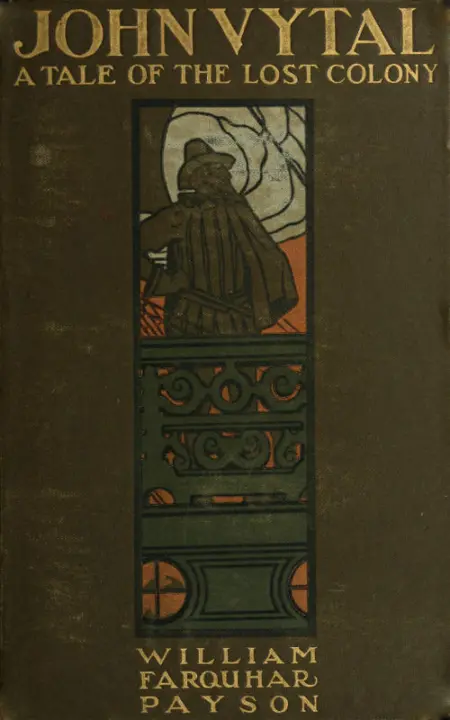
"John Vytal: A Tale of the Lost Colony" by William Farquhar Payson is a historical novel written in the early 20th century. The story explores the romantic and mysterious history of the Roanoke colony, focusing on the life and adventures of its main character, John Vytal. The narrative sets itself against the backdrop of 16th-century Virginia's tumultuous colonial endeavors, marked by adventure, enigma, and human connection. The opening of the tale introduces readers to a richly defined world of Elizabethan England, where the lively poet Christopher Marlowe and the formidable soldier Hugh Rouse encounter many colorful characters. The initial scenes depict the aftermath of a bear-baiting event where Vytal's heroic intervention creates ripples across the social fabric, drawing attention to his valor. As the story unfolds, Vytal prepares for his voyage to Virginia, mingling with both commoners and nobility, and hints of his future endeavors stir excitement. Through vibrant dialogues and intricate character interactions, the beginning offers a glimpse into the dynamics of human relationships in a historical context while setting the stage for a tale that intertwines fate, struggle, and the pursuit of personal destiny.
Introduction adapted from the source catalogue; source summaries may be automatically generated.
Free to read · English · 87,054 words · No account needed
MAKE TIME FOR A GOOD BOOK
On by default. Untick to stop anonymous reading totals. Each page counts after 10 seconds in view. How this works.
Anonymous counting is on unless you have switched it off.
The needle-maker raised his cup and drank deep, while a buzz of conversation began about him. A look of unspeakable relief had come to the faces of the soldier and the poet in the corner.
Toward this pair the eyes of a group across the room were frequently directed. Among the latter company one figure was particularly noticeable, being that of a very young man, of medium size, bearing himself not ungracefully, and wearing a riding-cloak thrown off over one shoulder above an inconspicuous doublet of dark red satin, which, together with his silken hose and velvet, befeathered hat, revealed the civilian. The man nearest to him, many years his senior, was, by name, Sir Walter St. Magil; by profession, unmistakably a soldier. He, too, was of medium height and aristocratic carriage, though with a face rendered exceedingly ill-appearing by a cast in one of his eyes which drew the pupil so far in toward the nose as to leave but a half of it visible.
As the needle-maker concluded his tale this man smiled knowingly, and the smile had more of meaning in it than of mirth or pleasantness. “There is but one,” he said, that all might hear him—“but one with a brain so addled as to be capable of such folly. And that man, my masters, is none other than John—”
But the sentence died on his tongue, half spoken. For Hugh Rouse, who until now had taken no part in the general conversation, came forward from his corner like a great mastiff from its kennel.
“Nay, Sir Walter,” he objected, “I pray you make no mention of the man’s name; it will do no good.”
For an instant the other’s brow clouded, but, controlling himself with ease, he returned, suavely: “Oh, an you, as the man’s friend, desire it, I keep silence. Ne’ertheless, fool, I call him, name or no name, thus to interrupt a bear-baiting.”
Little satisfied with this forbearance, Hugh, whose honest face had been for the moment almost threatening, reluctantly resumed his seat in the corner near Marlowe. “Ah, Hugh Rouse,” observed the latter, in an undertone, “your name neatly fits its owner. But you did well.”
In the mean time, Sir Walter St. Magil, whose remarks had been so unceremoniously interrupted by Rouse, was talking in a low voice with his young companion. “The man,” he said, so low that none but the immediate listener could hear him, “is Vytal—John Vytal. We’ve fought together in the Low Countries, but—” and here his voice sank to a whisper, while he glanced furtively about him, “he’s not one of our men.”
Your reading position is saved on this browser. Take it to another device with a library code. Reading pages adapt to text, rather than matching a printed edition.
BEHIND THE BOOK
This eBook is for the use of anyone anywhere in the United States and most other parts of the world at no cost and with almost no restrictions whatsoever. You may copy it, give it away or re-use it under the terms of the Project Gutenberg License included with this eBook or online at www.gutenberg.org. If you are not located in the United States, you will have to check the laws of the country where you are located before using this eBook. Read the source licence.
The original source file, including credits and licence, is retained by this library. Request an original-format copy at no charge. Please include the book title and Project Gutenberg identifier #58403.
KEEP YOUR CURIOSITY GOING
Cécile Tormay

Moritz Busch
Coulson Kernahan
John L. Ransom

Maurice Baring
Frances Wright