THE CLASSIC COLLECTION✦An outlaw’s diary: the CommuneCLASSIC FREE BOOKS
An outlaw’s diary: the Commune
Cécile Tormay
THE CLASSIC COLLECTION · 1901
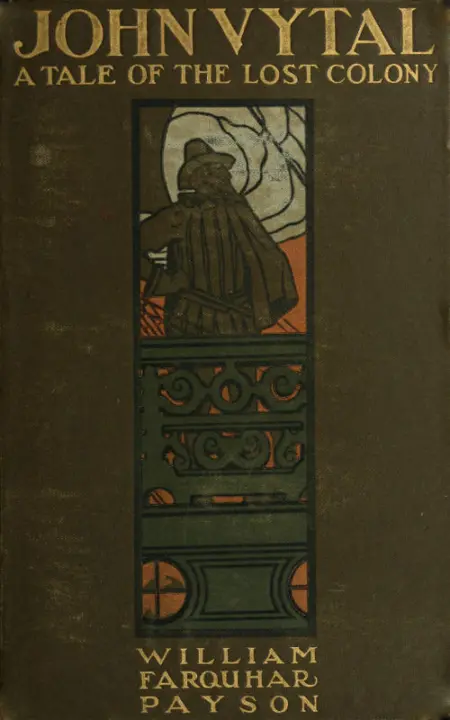
"John Vytal: A Tale of the Lost Colony" by William Farquhar Payson is a historical novel written in the early 20th century. The story explores the romantic and mysterious history of the Roanoke colony, focusing on the life and adventures of its main character, John Vytal. The narrative sets itself against the backdrop of 16th-century Virginia's tumultuous colonial endeavors, marked by adventure, enigma, and human connection. The opening of the tale introduces readers to a richly defined world of Elizabethan England, where the lively poet Christopher Marlowe and the formidable soldier Hugh Rouse encounter many colorful characters. The initial scenes depict the aftermath of a bear-baiting event where Vytal's heroic intervention creates ripples across the social fabric, drawing attention to his valor. As the story unfolds, Vytal prepares for his voyage to Virginia, mingling with both commoners and nobility, and hints of his future endeavors stir excitement. Through vibrant dialogues and intricate character interactions, the beginning offers a glimpse into the dynamics of human relationships in a historical context while setting the stage for a tale that intertwines fate, struggle, and the pursuit of personal destiny.
Introduction adapted from the source catalogue; source summaries may be automatically generated.
Free to read · English · 87,054 words · No account needed
MAKE TIME FOR A GOOD BOOK
On by default. Untick to stop anonymous reading totals. Each page counts after 10 seconds in view. How this works.
Anonymous counting is on unless you have switched it off.
Slowly the door opened, and Eleanor stood looking into his face. Her eyes, though bewildered, were calm and recognizing, while her whole expression seemed indicative of consciousness regained. The somnambulism and delirium, not unnatural to one in her condition, had left her very feeble in body but mentally aroused. As Vytal realized this, the demands of the moment became paramount to him, his own terrible lethargy being broken to meet her needs.
“Mistress Dare,” he said, calmly, “I pray you rest here longer. I have
sent for aid.”
For a moment she made no response, but stood looking about her at the room’s interior. The torchlight fell across a sheet of paper on the table. First a single written sentence met her eye:
“Comparisons are odious.”
She shivered and would have turned away, but there was more writing, which seemed to speak to her, though she was not sensible of reading the lines, even to herself:
“Who ever lov’d that lov’d not at first sight?”
She looked from the table out into the darkness, and then at Vytal. “Oh, sir, tell me how came I hither—thus—at night!” She clasped his cloak tightly about her, leaning against the door-post for support.
“You have been stricken, madam, with a fever. I pray you rest.”
At this a new apprehension came into her eyes. “Oh, John Vytal, have I spoken in feverish way? Tell me, tell me—”
A quick denial sprang to his lips. He believed that deception then would have been no lie, but to the man who had ever fought for truth, to the simple, direct nature, even that deception was impossible.
“You spoke, madam; yet, believe me, your words I shall withhold forever,
even from myself.”
Long they stood in silence, conveying no thought one to the other, by word, or look, or slightest gesture, their spirits, at the end of that silent lifetime, seeming to meet and become one; yet even in the instant of their acute conception of the union they stood apart, as if denying the bond.
Finally he saw her tremble, and a keen realization of her own despair rose above all thoughts of self. “Thank God,” he said, “our colony hath need of us. There’s work to do—not for me only, but for you.”
Thereafter she passed him, inclining her head in vague assent, and with a strenuous effort started out in the darkness toward the gate of the main enclosure.
He could not follow, knowing that her silence prayed him to withhold assistance, yet every instinct fought against his self-control.
“I will send the chirurgeon,” he said, “to your father’s house.”
Your reading position is saved on this browser. Take it to another device with a library code. Reading pages adapt to text, rather than matching a printed edition.
BEHIND THE BOOK
This eBook is for the use of anyone anywhere in the United States and most other parts of the world at no cost and with almost no restrictions whatsoever. You may copy it, give it away or re-use it under the terms of the Project Gutenberg License included with this eBook or online at www.gutenberg.org. If you are not located in the United States, you will have to check the laws of the country where you are located before using this eBook. Read the source licence.
The original source file, including credits and licence, is retained by this library. Request an original-format copy at no charge. Please include the book title and Project Gutenberg identifier #58403.
KEEP YOUR CURIOSITY GOING
Cécile Tormay

Moritz Busch
Coulson Kernahan
John L. Ransom

Maurice Baring
Frances Wright