THE CLASSIC COLLECTION✦An outlaw’s diary: the CommuneCLASSIC FREE BOOKS
An outlaw’s diary: the Commune
Cécile Tormay
THE CLASSIC COLLECTION · 1901
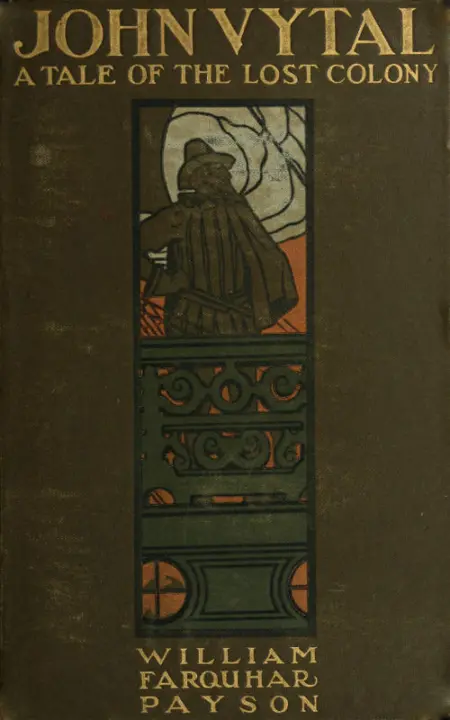
"John Vytal: A Tale of the Lost Colony" by William Farquhar Payson is a historical novel written in the early 20th century. The story explores the romantic and mysterious history of the Roanoke colony, focusing on the life and adventures of its main character, John Vytal. The narrative sets itself against the backdrop of 16th-century Virginia's tumultuous colonial endeavors, marked by adventure, enigma, and human connection. The opening of the tale introduces readers to a richly defined world of Elizabethan England, where the lively poet Christopher Marlowe and the formidable soldier Hugh Rouse encounter many colorful characters. The initial scenes depict the aftermath of a bear-baiting event where Vytal's heroic intervention creates ripples across the social fabric, drawing attention to his valor. As the story unfolds, Vytal prepares for his voyage to Virginia, mingling with both commoners and nobility, and hints of his future endeavors stir excitement. Through vibrant dialogues and intricate character interactions, the beginning offers a glimpse into the dynamics of human relationships in a historical context while setting the stage for a tale that intertwines fate, struggle, and the pursuit of personal destiny.
Introduction adapted from the source catalogue; source summaries may be automatically generated.
Free to read · English · 87,054 words · No account needed
MAKE TIME FOR A GOOD BOOK
On by default. Untick to stop anonymous reading totals. Each page counts after 10 seconds in view. How this works.
Anonymous counting is on unless you have switched it off.
“Comparisons are odious,” he wrote, slowly, little dreaming that the words, born of that fleeting contrast in his mind, were to become proverbial the world over. But, on raising his eyes to Vytal’s face, he found in the deep expression none of the odiousness of comparison, for in his friend’s thoughts there was only one woman to be considered.
Again the poet smiled, as one who half gladly, yet half sadly, understands, and once more his reflections shaped themselves in words. He wrote, carelessly, “Who ever lov’d that lov’d not at first sight?” and, letting fall the pen, handed the paper to Vytal. The soldier read and re-read, but made no response whatever, for, even as his eyes were raised from the writing, his look changed suddenly, and Marlowe, with astonishment, saw him gazing transfixedly toward the battered door.
As a dream comes in the night-time to recall the thoughts of day, so a face, seemingly visionary, appeared now to the two men. The jagged edge of the door’s orifice framed it uncertainly, but the cresset’s light fell across the features in vivid revelation.
Vytal’s lips parted as though he would have spoken, but it was Marlowe
who voiced the name.
“Eleanor—Mistress Dare!”
And now slowly, yet before the two could recover from amaze, the door was opened, and, like a white dove from the heart of the gale, Eleanor came within the cabin.
The door slammed, and then all was quiet, both men sitting spellbound, for a single glance had told them that she was walking in her sleep. Her eyes were open, but evidently unseeing, with that vaguely transcendental look of the somnambulist; and she was clad only in a white simar of silk. Her russet hair, with which the wind had rioted, hung in profuse disorder about her shoulders and beneath her throat, where now it rose and fell more gently with the undulation of her breast. Her hands, clasped before her, added an effect of rest to the blind bewilderment of her all-unconscious pose.
For a moment she stood mutely facing them and looking, as it were, through them to a limitless beyond.
Vytal rose. “Mistress Dare, I pray you—” but as the name Dare seemed to be borne in upon her mind she cried out terrifiedly, and, swaying, would have fallen, had he not supported her and led her to his pallet of straw.
As his hand touched hers, Vytal started. “She hath a fever,” he said to Marlowe. “Do you seek the chirurgeon. He sleeps on the Admiral to-night—also her tire-woman, Margery Harvie, at the governor’s house.”
Your reading position is saved on this browser. Take it to another device with a library code. Reading pages adapt to text, rather than matching a printed edition.
BEHIND THE BOOK
This eBook is for the use of anyone anywhere in the United States and most other parts of the world at no cost and with almost no restrictions whatsoever. You may copy it, give it away or re-use it under the terms of the Project Gutenberg License included with this eBook or online at www.gutenberg.org. If you are not located in the United States, you will have to check the laws of the country where you are located before using this eBook. Read the source licence.
The original source file, including credits and licence, is retained by this library. Request an original-format copy at no charge. Please include the book title and Project Gutenberg identifier #58403.
KEEP YOUR CURIOSITY GOING
Cécile Tormay

Moritz Busch
Coulson Kernahan
John L. Ransom

Maurice Baring
Frances Wright