THE CLASSIC COLLECTION✦An outlaw’s diary: the CommuneCLASSIC FREE BOOKS
An outlaw’s diary: the Commune
Cécile Tormay
THE CLASSIC COLLECTION · 1901
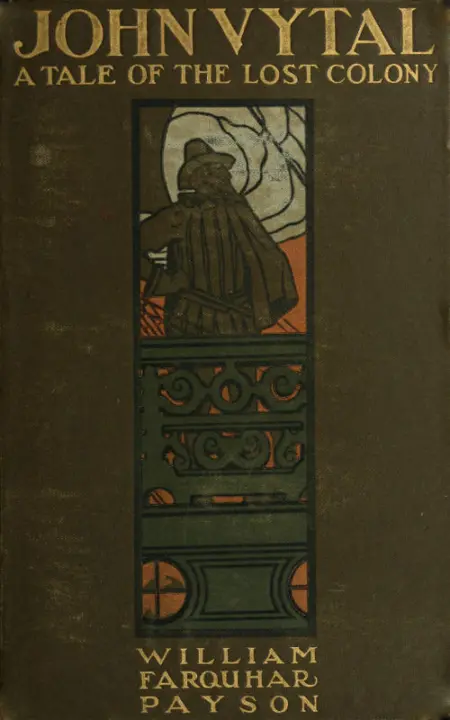
"John Vytal: A Tale of the Lost Colony" by William Farquhar Payson is a historical novel written in the early 20th century. The story explores the romantic and mysterious history of the Roanoke colony, focusing on the life and adventures of its main character, John Vytal. The narrative sets itself against the backdrop of 16th-century Virginia's tumultuous colonial endeavors, marked by adventure, enigma, and human connection. The opening of the tale introduces readers to a richly defined world of Elizabethan England, where the lively poet Christopher Marlowe and the formidable soldier Hugh Rouse encounter many colorful characters. The initial scenes depict the aftermath of a bear-baiting event where Vytal's heroic intervention creates ripples across the social fabric, drawing attention to his valor. As the story unfolds, Vytal prepares for his voyage to Virginia, mingling with both commoners and nobility, and hints of his future endeavors stir excitement. Through vibrant dialogues and intricate character interactions, the beginning offers a glimpse into the dynamics of human relationships in a historical context while setting the stage for a tale that intertwines fate, struggle, and the pursuit of personal destiny.
Introduction adapted from the source catalogue; source summaries may be automatically generated.
Free to read · English · 87,054 words · No account needed
MAKE TIME FOR A GOOD BOOK
On by default. Untick to stop anonymous reading totals. Each page counts after 10 seconds in view. How this works.
Anonymous counting is on unless you have switched it off.
Vytal was standing alone at mid-day, down on the orlop deck, examining the ship’s cables and spare rigging, when a light footstep, almost inaudible, approached him from behind. Turning, he saw the Indian, Manteo, who, it will be remembered, was returning to Virginia after a stay of several years in England. He held a finger to his lips and looked about him cautiously. “We are betrayed,” he said, in a low voice, “by the son of a warlike country. Ferdinando leaves his children to perish. The great ship seeks us not, but would make her way to my land alone.”
Vytal scrutinized the impassive face for the first time with a deep interest. He had seen the Indian’s tall figure, now and again, standing silently aloof in the bow, his dark eyes always gazing off to the westward. But until now he had not seen those eyes alert and troubled, the supple form prescient with meaning.
“What brings you this suspicion, Manteo?”
“I know it as birds know that winter comes, as vultures that a warrior is
dead.”
There was a marked similarity in the bearing of the two men. They were both tall, dignified, and slow to speak, both evidently perceptive, strong, and masterful, both almost childlike in their direct simplicity. Perhaps each realized the likeness, for into the eyes of both there came a look of understanding that gave promise of a bond between them stronger than the stout cables the one had been examining, stronger even than the other’s ties of blood.
“My brother,” said Manteo, at length, “you, too, know the truth, but in a different way. I came to thy country as Master Barlow’s interpreter, many moons ago. I return to my people, but I have learned among thine to interpret more than words. Thus, and by my own heart, I know that we are left behind. I have spoken.”
“You have spoken no lie.”
“I am Manteo, and lie not.”
“My brother,” rejoined Vytal, “listen.” And he told the chief the tale succinctly, omitting only the complicity of Ananias Dare. “An you learn more,” he said, in conclusion, “you will tell me, I trust, and none other.”
“Only to thee have I spoken, or shall speak. For thou art a chief, as I
am, among men.”
There remains no more to be told concerning life on the fly-boat. As to the voyage of the Admiral, it is recorded on accessible pages of history. An excerpt from these may not be inadmissible as a record of bare fact. In the journal of John White, the colony’s governor, we find the following true description of the voyage:
Your reading position is saved on this browser. Take it to another device with a library code. Reading pages adapt to text, rather than matching a printed edition.
BEHIND THE BOOK
This eBook is for the use of anyone anywhere in the United States and most other parts of the world at no cost and with almost no restrictions whatsoever. You may copy it, give it away or re-use it under the terms of the Project Gutenberg License included with this eBook or online at www.gutenberg.org. If you are not located in the United States, you will have to check the laws of the country where you are located before using this eBook. Read the source licence.
The original source file, including credits and licence, is retained by this library. Request an original-format copy at no charge. Please include the book title and Project Gutenberg identifier #58403.
KEEP YOUR CURIOSITY GOING
Cécile Tormay

Moritz Busch
Coulson Kernahan
John L. Ransom

Maurice Baring
Frances Wright