THE CLASSIC COLLECTION✦An outlaw’s diary: the CommuneCLASSIC FREE BOOKS
An outlaw’s diary: the Commune
Cécile Tormay
THE CLASSIC COLLECTION · 1901
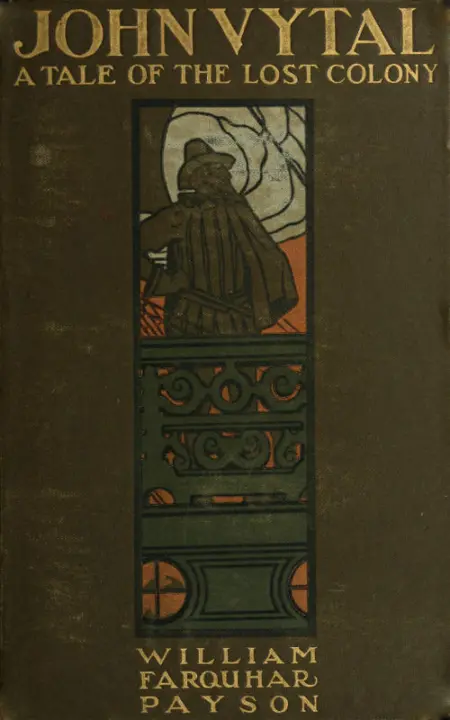
"John Vytal: A Tale of the Lost Colony" by William Farquhar Payson is a historical novel written in the early 20th century. The story explores the romantic and mysterious history of the Roanoke colony, focusing on the life and adventures of its main character, John Vytal. The narrative sets itself against the backdrop of 16th-century Virginia's tumultuous colonial endeavors, marked by adventure, enigma, and human connection. The opening of the tale introduces readers to a richly defined world of Elizabethan England, where the lively poet Christopher Marlowe and the formidable soldier Hugh Rouse encounter many colorful characters. The initial scenes depict the aftermath of a bear-baiting event where Vytal's heroic intervention creates ripples across the social fabric, drawing attention to his valor. As the story unfolds, Vytal prepares for his voyage to Virginia, mingling with both commoners and nobility, and hints of his future endeavors stir excitement. Through vibrant dialogues and intricate character interactions, the beginning offers a glimpse into the dynamics of human relationships in a historical context while setting the stage for a tale that intertwines fate, struggle, and the pursuit of personal destiny.
Introduction adapted from the source catalogue; source summaries may be automatically generated.
Free to read · English · 87,054 words · No account needed
MAKE TIME FOR A GOOD BOOK
On by default. Untick to stop anonymous reading totals. Each page counts after 10 seconds in view. How this works.
Anonymous counting is on unless you have switched it off.
“Nay, how should I know?”
“Did you not overhear the pilot give directions? Think you they are in
the forecastle?”
“No, not there—not by any means there.”
“In the hold, then, hiding?”
“Ay, that’s it. In the hold. Down in the dark hold—oh, ’tis most uncomfortable in the hold—what a mad boat—rocking so—always rocking. ’Sdein! Where’s the tankard?” Rising unsteadily, he looked about on the table in stupid surprise, then, sinking back again, missed his chair and fell heavily to the floor. “Ah, ’tis here, the wine—such brave wine!” and, crawling forward on his hands and knees, he sat down half under the table, holding the tankard to his lips. “Such courageous wine!”
Vytal went to the cabin door. “Heaven guard her,” he prayed, and hastened to the stern. Here he found the pilot and Marlowe. With a gesture, he drew the poet aside, and in a few words made known the truth.
“’Tis against great odds,” observed Marlowe, his eyes lighting up, “that we fight again together.”
“Nay,” declared Vytal, “there shall be no fight. Wherefore desecrate a rapier with so niggardly a foe?”
Marlowe smiled. “The bodkin would fain stitch only satin doublets,” he remarked. “How, then, will you defeat these hirelings?”
“Thus,” and leading the way to the forecastle, the soldier emitted a short, low whistle in one note. Soon Roger Prat stood before them.
“He comes like a devil from a stage-trap!” observed Marlowe, in
astonishment.
Roger laughed proudly and bowed like a juggler after the performance of a
cunning trick.
“Tell Hugh,” said Vytal, in a short whisper, “to overpower the pilot when again I whistle thus, and with a stout rope to make fast his arms; but first procure another helmsman you can trust. For your own part, go to the hatches above the hold. If the pilot gives outcry, and his crew strive to pass you, warn the first man whose head appears, and if he heed not the warning, run him through. They can come but singly. ’Tis within your power to withstand them all.”
“Of a verity, captain, well within it; but the work is tame. They stand
no chance.”
“Mark you, no bloodshed if you can help it. And tell Hugh the same. At the sound of the whistle, then, some time before daybreak.”
“Thank you,” and Roger went his way.
“Wherefore does he thank you?” asked Marlowe.
Your reading position is saved on this browser. Take it to another device with a library code. Reading pages adapt to text, rather than matching a printed edition.
BEHIND THE BOOK
This eBook is for the use of anyone anywhere in the United States and most other parts of the world at no cost and with almost no restrictions whatsoever. You may copy it, give it away or re-use it under the terms of the Project Gutenberg License included with this eBook or online at www.gutenberg.org. If you are not located in the United States, you will have to check the laws of the country where you are located before using this eBook. Read the source licence.
The original source file, including credits and licence, is retained by this library. Request an original-format copy at no charge. Please include the book title and Project Gutenberg identifier #58403.
KEEP YOUR CURIOSITY GOING
Cécile Tormay

Moritz Busch
Coulson Kernahan
John L. Ransom

Maurice Baring
Frances Wright