THE CLASSIC COLLECTION✦An outlaw’s diary: the CommuneCLASSIC FREE BOOKS
An outlaw’s diary: the Commune
Cécile Tormay
THE CLASSIC COLLECTION · 1901
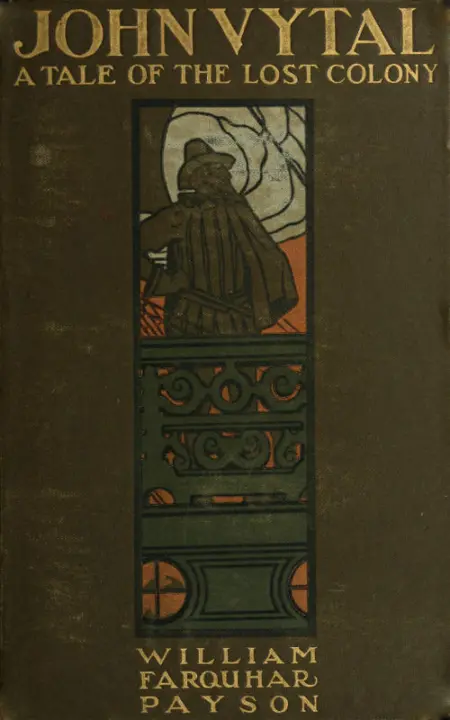
"John Vytal: A Tale of the Lost Colony" by William Farquhar Payson is a historical novel written in the early 20th century. The story explores the romantic and mysterious history of the Roanoke colony, focusing on the life and adventures of its main character, John Vytal. The narrative sets itself against the backdrop of 16th-century Virginia's tumultuous colonial endeavors, marked by adventure, enigma, and human connection. The opening of the tale introduces readers to a richly defined world of Elizabethan England, where the lively poet Christopher Marlowe and the formidable soldier Hugh Rouse encounter many colorful characters. The initial scenes depict the aftermath of a bear-baiting event where Vytal's heroic intervention creates ripples across the social fabric, drawing attention to his valor. As the story unfolds, Vytal prepares for his voyage to Virginia, mingling with both commoners and nobility, and hints of his future endeavors stir excitement. Through vibrant dialogues and intricate character interactions, the beginning offers a glimpse into the dynamics of human relationships in a historical context while setting the stage for a tale that intertwines fate, struggle, and the pursuit of personal destiny.
Introduction adapted from the source catalogue; source summaries may be automatically generated.
Free to read · English · 87,054 words · No account needed
MAKE TIME FOR A GOOD BOOK
On by default. Untick to stop anonymous reading totals. Each page counts after 10 seconds in view. How this works.
Anonymous counting is on unless you have switched it off.
Simon, evading his glance, looked hesitatingly at the choppy sea. “I mislike risking several lives,” he muttered, as though to himself, with feigned prudence, “for one man.”
“I will go, then, alone,” avowed Vytal, quietly, “or with one other. Here, Rouse,” and he turned to his lieutenant, who had joined him. “We go to Roger’s assistance.” But still he looked at Ferdinando, as if deferring to the master by awaiting his assent. Simon, finding no plausible excuse for further delay, and fearing to arouse the other’s suspicions, made a pretence of ready acquiescence amounting almost to eagerness.
As Vytal turned away he found himself face to face with Marlowe. “I go with you,” said the poet.
Vytal nodded. “Quick, then!” And in another instant they had started out in the small boat upon their errand of rescue.
The sea, running higher and higher, tossed about the stanch little craft like a cockle-shell, but the brawny arms of the three rowers, holding her stem to the waves, managed to urge her slowly forward. The fly-boat now lay alongside the Admiral, almost within rope-throw, and both vessels hung as close as could be in the wind, their bowsprits bobbing tipsily, their canvas half empty and rattling.
The rowers strained their eyes and hallooed loudly, but there was no sight of the missing man nor any sound in answer save the flap, flap of the great square sails, the rush of the wind, the crash of the spray from broken foam-crests, and shouts from the swaying decks.
The rowers, now under the Admiral’s stern, were pointing the nose of their sea-toy toward the fly-boat. “Roger hath perished,” said Hugh, hoarsely. “God save his brave soul!”
And then, in weird contrast to the grave words, there came to the ears of the three men a laugh and an incoherent call out of the near darkness. It was as though the blade of Hugh’s oar had spoken. In amazement the men ceased rowing and gazed toward the black stern, from whose invisible water-line the sound had undoubtedly come. All steerage of the cock-boat being momentarily neglected, she swung round until a wave, catching her abeam, with all but disastrous results, washed her yet nearer to the grim hull. “Have a care!” cried the voice; “hold off!” And the rowers saw a dark thing bobbing up and down close to the ship. In another moment a man, grasping the end of a long rope in his hand, was clambering, with the aid of his comrades, into the small boat. “Did ye not see,” he said, immediately assisting at one of the oars, “that I grabbed a hawser as I jumped? ’Twas made fast, thank the Lord, somewhere amidships, and here have I been dangling out behind as comfortable as can be—” but his words belied him, for, even with the assertion on his lips, his last remaining strength failed suddenly, and the inimitable Roger Prat fell back senseless.
Your reading position is saved on this browser. Take it to another device with a library code. Reading pages adapt to text, rather than matching a printed edition.
BEHIND THE BOOK
This eBook is for the use of anyone anywhere in the United States and most other parts of the world at no cost and with almost no restrictions whatsoever. You may copy it, give it away or re-use it under the terms of the Project Gutenberg License included with this eBook or online at www.gutenberg.org. If you are not located in the United States, you will have to check the laws of the country where you are located before using this eBook. Read the source licence.
The original source file, including credits and licence, is retained by this library. Request an original-format copy at no charge. Please include the book title and Project Gutenberg identifier #58403.
KEEP YOUR CURIOSITY GOING
Cécile Tormay

Moritz Busch
Coulson Kernahan
John L. Ransom

Maurice Baring
Frances Wright