THE CLASSIC COLLECTION✦An outlaw’s diary: the CommuneCLASSIC FREE BOOKS
An outlaw’s diary: the Commune
Cécile Tormay
THE CLASSIC COLLECTION · 1901
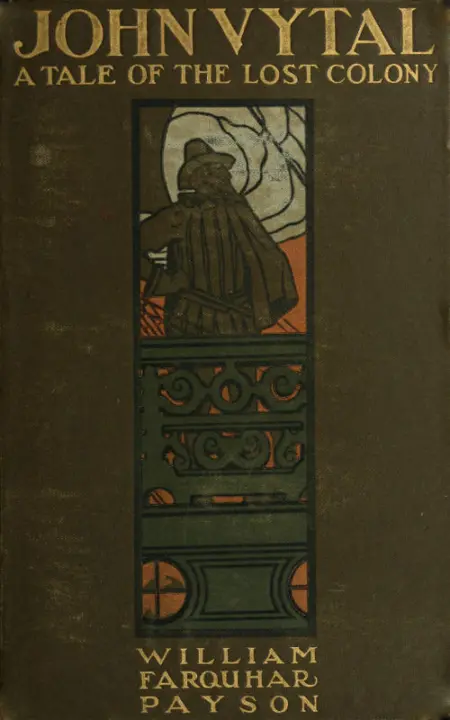
"John Vytal: A Tale of the Lost Colony" by William Farquhar Payson is a historical novel written in the early 20th century. The story explores the romantic and mysterious history of the Roanoke colony, focusing on the life and adventures of its main character, John Vytal. The narrative sets itself against the backdrop of 16th-century Virginia's tumultuous colonial endeavors, marked by adventure, enigma, and human connection. The opening of the tale introduces readers to a richly defined world of Elizabethan England, where the lively poet Christopher Marlowe and the formidable soldier Hugh Rouse encounter many colorful characters. The initial scenes depict the aftermath of a bear-baiting event where Vytal's heroic intervention creates ripples across the social fabric, drawing attention to his valor. As the story unfolds, Vytal prepares for his voyage to Virginia, mingling with both commoners and nobility, and hints of his future endeavors stir excitement. Through vibrant dialogues and intricate character interactions, the beginning offers a glimpse into the dynamics of human relationships in a historical context while setting the stage for a tale that intertwines fate, struggle, and the pursuit of personal destiny.
Introduction adapted from the source catalogue; source summaries may be automatically generated.
Free to read · English · 87,054 words · No account needed
MAKE TIME FOR A GOOD BOOK
On by default. Untick to stop anonymous reading totals. Each page counts after 10 seconds in view. How this works.
Anonymous counting is on unless you have switched it off.
“At an exorbitant price,” added St. Magil. “But we pay it willingly. To-night, then”—his voice sank so low as to be almost inaudible to Vytal at the open window—“to-night, then, we leave them behind. The fly-boat’s pilot, another of my beneficiaries, will play havoc with her steerage-gear. This is their chart, which I procured. The plan has been well arranged. ’Tis for you to clap on sail and leave them.”
“Mary save me!” exclaimed Ferdinando, shuddering. “I fear they will
perish.”
“Nay, good Simon, this Bay of Portugal holds many ships, some of which will doubtless succor the fly-boat.”
“Or, being Spaniards, sink her!”
“Yes, there is that chance, I allow. I have told the pilot, in case of attack, to surrender, proclaim himself my servant, and so save the rest from death.”
“And so,” whispered Ferdinando, “deliver them to a bondage worse than
death.”
St. Magil shrugged his shoulders. “It is but a choice of evils,” he avowed. “In Virginia they would fare yet worse. With them to strengthen it the colony would resist our men from St. Augustine, whereas now I look for a quick surrender. There will be no fight.”
“We lead our countrymen into a trap, Sir Walter, God forgive us!”
“Our countrymen!” ejaculated St. Magil. “I took you for a Spaniard,
Ferdinando.”
“By parentage only,” responded the master. “But you are an English
knight.”
“Ay, English,” allowed St. Magil, gnawing his mustache with a row of yellow teeth, “and I would save the English from their worst enemies. I mean not Spaniards, but themselves.” He rose from the table, and, stretching his arms abroad, yawned aloud.
“A thousand crowns,” muttered Ferdinando, “or say five hundred, the other half being laid aside for masses for my soul.”
St. Magil laughed sleepily. “It might pay,” he drawled, “to turn priest, if all else failed,” with which he leaned forward on the table, being in truth overcome by fatigue, and, with his face between his outstretched arms, was soon breathing heavily.
Ferdinando left the cabin.
Vytal, eluding him, entered it. The room was a long one, considering the size of the ship. Its walls, hung with arras, creaked occasionally as the vessel pitched and rolled, but the creaking, muffled by the heavy hangings, sounded ghostly and added to the gloom which the wavering lamp in no way dispelled.
Vytal stood over St. Magil, his lank, stern figure seeming like the form of Death in Death’s own room. His dark, olive cheeks were pallid and drawn, his hand tensely gripping the hilt of his rapier, the so-called “bodkin.” And his eyes, cast down on the sleeper, held disdain mingled with their fury.
Your reading position is saved on this browser. Take it to another device with a library code. Reading pages adapt to text, rather than matching a printed edition.
BEHIND THE BOOK
This eBook is for the use of anyone anywhere in the United States and most other parts of the world at no cost and with almost no restrictions whatsoever. You may copy it, give it away or re-use it under the terms of the Project Gutenberg License included with this eBook or online at www.gutenberg.org. If you are not located in the United States, you will have to check the laws of the country where you are located before using this eBook. Read the source licence.
The original source file, including credits and licence, is retained by this library. Request an original-format copy at no charge. Please include the book title and Project Gutenberg identifier #58403.
KEEP YOUR CURIOSITY GOING
Cécile Tormay

Moritz Busch
Coulson Kernahan
John L. Ransom

Maurice Baring
Frances Wright