THE CLASSIC COLLECTION✦An outlaw’s diary: the CommuneCLASSIC FREE BOOKS
An outlaw’s diary: the Commune
Cécile Tormay
THE CLASSIC COLLECTION · 1901
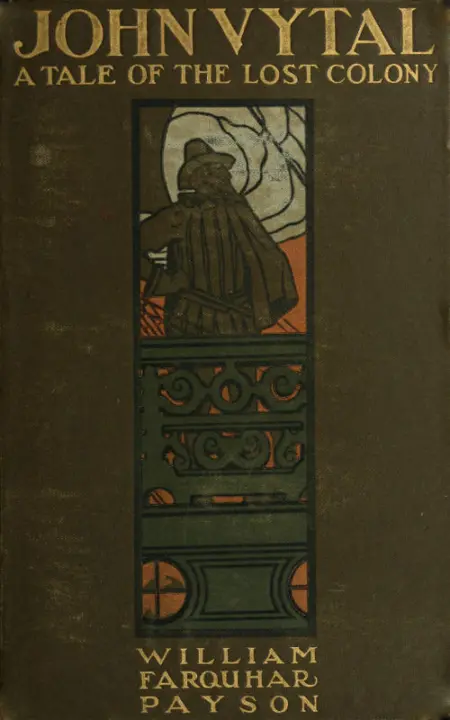
"John Vytal: A Tale of the Lost Colony" by William Farquhar Payson is a historical novel written in the early 20th century. The story explores the romantic and mysterious history of the Roanoke colony, focusing on the life and adventures of its main character, John Vytal. The narrative sets itself against the backdrop of 16th-century Virginia's tumultuous colonial endeavors, marked by adventure, enigma, and human connection. The opening of the tale introduces readers to a richly defined world of Elizabethan England, where the lively poet Christopher Marlowe and the formidable soldier Hugh Rouse encounter many colorful characters. The initial scenes depict the aftermath of a bear-baiting event where Vytal's heroic intervention creates ripples across the social fabric, drawing attention to his valor. As the story unfolds, Vytal prepares for his voyage to Virginia, mingling with both commoners and nobility, and hints of his future endeavors stir excitement. Through vibrant dialogues and intricate character interactions, the beginning offers a glimpse into the dynamics of human relationships in a historical context while setting the stage for a tale that intertwines fate, struggle, and the pursuit of personal destiny.
Introduction adapted from the source catalogue; source summaries may be automatically generated.
Free to read · English · 87,054 words · No account needed
MAKE TIME FOR A GOOD BOOK
On by default. Untick to stop anonymous reading totals. Each page counts after 10 seconds in view. How this works.
Anonymous counting is on unless you have switched it off.
“You are a spirit,” said Vytal.
And then—then she laughed, and the laugh, although fraught with sadness, transformed her instantly. She became a child with it, a sweet, lovable, beautiful child—all reality, innocence, and health. The laughter in her lips converted these fastnesses of expression to its playground, and, romping, chased away all visionary looks. Her cheeks, dimpling, lost their pallor in a blush. One hand smoothed back the straying lock, the other drew her hood yet lower, while her hazel eyes looking up from under it seemed to possess the magic brown of a russet-bedded brook with sunlight playing beneath its surface—and the sunlight was this wonderful transforming laughter.
“You are a child,” he declared, with more of passion in his voice and less of silent wonder. The tone startled her; the grave look came back into her face, and she stepped from the moonlight into the shadow of a sail.
“Nay,” he said, with an incomprehensible sadness in his voice. “Now you are a woman. The sky and the sea are no more changeable.”
“A woman,” she whispered, compressing her lips and turning white, as though nerving herself for a strenuous effort of will—“a woman, and—and—but no, wait, sleep, dream, and dreams will bring you happiness—look you, the sky seems clear—the sea is tranquil. Yet come!”
With a hand on his arm she drew him across the deck into the dense shadow of the rigging. “See, it is but a step from light to darkness, and then—look—the sky!”
He followed the direction of her gaze, and saw again the long ridge of cloud, from behind which the moon had risen. The hill was a mountain now, and black with storm.
“It comes all too quickly,” she said, shivering, and gave him her hand. It was very cold. Bending low he kissed the fingers, and then, holding them in his firm grasp, looked down into her eyes as though to read their meaning if he could. But still making no answer in any way, she trembled. His mute bewilderment and uncomprehending pain were becoming unendurable to her.
“Oh, mayhap it were kinder,” she whispered, finally, half to herself, “and yet I cannot see that deep face show greater pain. Nay, let us not hasten the storm ourselves; it comes whate’er we do, then perchance”—she was forcing a show of cheerfulness into her manner—“perchance, after all, you may not mind so much. Good-night, oh, good-night—” and before he could realize it her hand was withdrawn from his and her hooded figure had gone away into the shadows.
Your reading position is saved on this browser. Take it to another device with a library code. Reading pages adapt to text, rather than matching a printed edition.
BEHIND THE BOOK
This eBook is for the use of anyone anywhere in the United States and most other parts of the world at no cost and with almost no restrictions whatsoever. You may copy it, give it away or re-use it under the terms of the Project Gutenberg License included with this eBook or online at www.gutenberg.org. If you are not located in the United States, you will have to check the laws of the country where you are located before using this eBook. Read the source licence.
The original source file, including credits and licence, is retained by this library. Request an original-format copy at no charge. Please include the book title and Project Gutenberg identifier #58403.
KEEP YOUR CURIOSITY GOING
Cécile Tormay

Moritz Busch
Coulson Kernahan
John L. Ransom

Maurice Baring
Frances Wright