THE CLASSIC COLLECTION✦An outlaw’s diary: the CommuneCLASSIC FREE BOOKS
An outlaw’s diary: the Commune
Cécile Tormay
THE CLASSIC COLLECTION · 1901
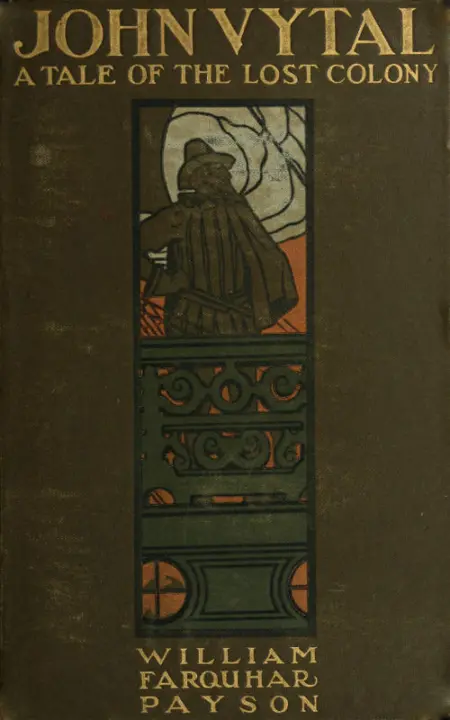
"John Vytal: A Tale of the Lost Colony" by William Farquhar Payson is a historical novel written in the early 20th century. The story explores the romantic and mysterious history of the Roanoke colony, focusing on the life and adventures of its main character, John Vytal. The narrative sets itself against the backdrop of 16th-century Virginia's tumultuous colonial endeavors, marked by adventure, enigma, and human connection. The opening of the tale introduces readers to a richly defined world of Elizabethan England, where the lively poet Christopher Marlowe and the formidable soldier Hugh Rouse encounter many colorful characters. The initial scenes depict the aftermath of a bear-baiting event where Vytal's heroic intervention creates ripples across the social fabric, drawing attention to his valor. As the story unfolds, Vytal prepares for his voyage to Virginia, mingling with both commoners and nobility, and hints of his future endeavors stir excitement. Through vibrant dialogues and intricate character interactions, the beginning offers a glimpse into the dynamics of human relationships in a historical context while setting the stage for a tale that intertwines fate, struggle, and the pursuit of personal destiny.
Introduction adapted from the source catalogue; source summaries may be automatically generated.
Free to read · English · 87,054 words · No account needed
MAKE TIME FOR A GOOD BOOK
On by default. Untick to stop anonymous reading totals. Each page counts after 10 seconds in view. How this works.
Anonymous counting is on unless you have switched it off.
Now on the headland there was a general mêlée, and to distinguish Englishmen from Spaniards was impossible. Only the lofty figure of Vytal, towering above all the combatants, kept the anxious watchers from despair. Sable forms, spirits of the night, met and fell, while, above all, coruscant swords and pike-blades flashed in the calm light of stars; and here and there a face, anguished or triumphant, being lighted up by fitful cressets, seemed not a human countenance, but only, as it were, an expression, bodiless, the mere look of a ghost haunted by reality.
Suddenly, a new glare, high and lurid, broke the gloom. The tree-trunks of the western palisade were now themselves flambeaus, ignited by stealthy Winginas, who, having overcome the outposts, had gained the town.
With a loud cry, Hugh Rouse warned Vytal, whereat the captain fell back to the main entrance. “Quick!” he said to Rouse. “Give the signal to Manteo,” and Hugh started toward the western wall.
In another instant the savage enemy would have been surrounded by Manteo’s men, according to the preconceived arrangement, but Rouse was unexpectedly delayed.
From the small gateway which led to Vytal’s cabin a soldier rushed out to meet him with drawn sword. Even in the faint starlight there was no mistaking that scarred face, with its indrawn eye and yellow teeth, as the lips parted in a smile. The man was Sir Walter St. Magil.
Without a word they met, and their swords crossed, to kill, immediately. But Rouse, taken by surprise, found himself on the defensive, and, before he could swing his heavy weapon effectually, the other’s point pried into his sword-hilt, which, being wet and slippery from the moisture of his fingers, slid from his grasp, and fell with a thud beside him.
Nothing daunted, the giant closed in, unarmed, upon his antagonist with so impetuous a rush that St. Magil could not thrust again before a huge pair of arms encircled him completely. His own arms, benumbed by the sudden pressure, hung lifeless, while at one side his sword dangled uselessly.
Their faces touched, their chests, thighs, and legs were locked together as though with iron bonds. And St. Magil’s breath came in short, quick gasps, hot on the other’s mouth. But at last, gradually, the herculean arms closed tighter and yet tighter about their prey, until suddenly Rouse, hearing a low, cracking sound, knew that his adversary’s arms and perhaps a rib or two were broken.
Then, and then only, Hugh released his grasp, and, leaving St. Magil groaning on the ground, rushed away to give Manteo the signal for a counter-attack.
Your reading position is saved on this browser. Take it to another device with a library code. Reading pages adapt to text, rather than matching a printed edition.
BEHIND THE BOOK
This eBook is for the use of anyone anywhere in the United States and most other parts of the world at no cost and with almost no restrictions whatsoever. You may copy it, give it away or re-use it under the terms of the Project Gutenberg License included with this eBook or online at www.gutenberg.org. If you are not located in the United States, you will have to check the laws of the country where you are located before using this eBook. Read the source licence.
The original source file, including credits and licence, is retained by this library. Request an original-format copy at no charge. Please include the book title and Project Gutenberg identifier #58403.
KEEP YOUR CURIOSITY GOING
Cécile Tormay

Moritz Busch
Coulson Kernahan
John L. Ransom

Maurice Baring
Frances Wright