THE CLASSIC COLLECTION✦An outlaw’s diary: the CommuneCLASSIC FREE BOOKS
An outlaw’s diary: the Commune
Cécile Tormay
THE CLASSIC COLLECTION · 1901
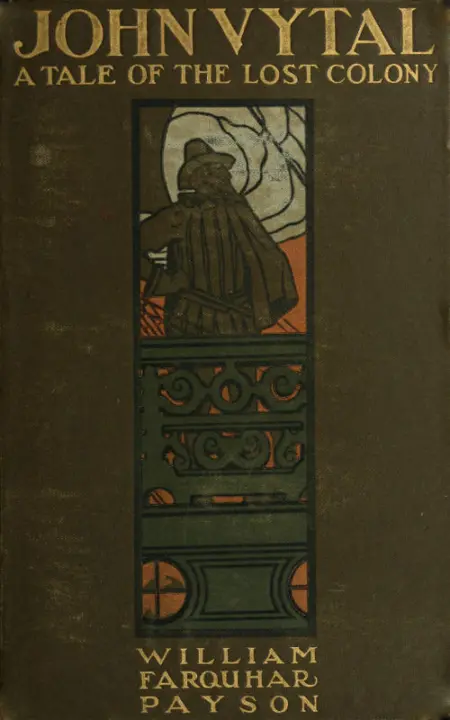
"John Vytal: A Tale of the Lost Colony" by William Farquhar Payson is a historical novel written in the early 20th century. The story explores the romantic and mysterious history of the Roanoke colony, focusing on the life and adventures of its main character, John Vytal. The narrative sets itself against the backdrop of 16th-century Virginia's tumultuous colonial endeavors, marked by adventure, enigma, and human connection. The opening of the tale introduces readers to a richly defined world of Elizabethan England, where the lively poet Christopher Marlowe and the formidable soldier Hugh Rouse encounter many colorful characters. The initial scenes depict the aftermath of a bear-baiting event where Vytal's heroic intervention creates ripples across the social fabric, drawing attention to his valor. As the story unfolds, Vytal prepares for his voyage to Virginia, mingling with both commoners and nobility, and hints of his future endeavors stir excitement. Through vibrant dialogues and intricate character interactions, the beginning offers a glimpse into the dynamics of human relationships in a historical context while setting the stage for a tale that intertwines fate, struggle, and the pursuit of personal destiny.
Introduction adapted from the source catalogue; source summaries may be automatically generated.
Free to read · English · 87,054 words · No account needed
MAKE TIME FOR A GOOD BOOK
On by default. Untick to stop anonymous reading totals. Each page counts after 10 seconds in view. How this works.
Anonymous counting is on unless you have switched it off.
“You regret, then, my departure?”
“For my own sake, deeply. We have been friends.”
“Ay,” said the poet, “friends. Friendship’s the reality; love but a pleasant dream. I look back over the past five years and think of our conversations. I recall, too, those few hours when I talked with Mistress Dare. The difference is plain. Man and man enjoy the freer reverie. No personal distraction mars their elemental thought. They become unbiased lookers-on at life, unfettered by the stage directions. To them the lover’s star hath varied cosmic meanings which far transcend its amorous spell. To them all nature shows her heart, and not the mere reflection of their own. Ay, only with man and man is meditation free—unless—of course, unless—the dream of love hath proven true.” The last words came in a voice of pain, which, however, passed as he added, mechanically, “But come, here is the canoe.”
Following the poet, Vytal stepped into the craft, and with a single stroke of his paddle sent it far out across the inlet. With long, slow sweeps he propelled it on in silence, while Marlowe, facing him, gazed at the sharp-cut features with a kind of worship in his eyes.
“Hath any yet known you, Vytal? Hath one single man or woman probed your
depths?”
Vytal shrugged his shoulders for reply, then said, in a voice that sounded harsh even to himself, “We are come to your starting-point,” and, as they landed, “Where is the ship?”
“Five miles to the north.”
“Let us hasten, then, by the shore.”
They walked for many minutes mutely, until Vytal spoke as though half to himself: “I would have made the sacrifice in your stead, but for these children of Croatan, these helpless colonists, who are in my charge.”
The poet’s eyes lighted up with their old fervor. “I know it well, for partly I know you.” His eyes wandered. “Yet I cannot say that, were I you, I would have left her even for friendship’s sake. I read you, I read myself—you as mighty prose, I, it sometimes seems, as vainly garnished poetry. Marlowe would whisper to her, ‘My soul sings thine,’ but Vytal would say, ‘I love thee.’ Methinks in these very words lie our inmost selves contrasted.” Turning again to look at his companion, he found the dark face averted, but when at last he saw its deep-graven, premature lines again, he found no change in the expression.
“I trust you will make every effort,” said Vytal, “to gain audience with
the queen.”
Your reading position is saved on this browser. Take it to another device with a library code. Reading pages adapt to text, rather than matching a printed edition.
BEHIND THE BOOK
This eBook is for the use of anyone anywhere in the United States and most other parts of the world at no cost and with almost no restrictions whatsoever. You may copy it, give it away or re-use it under the terms of the Project Gutenberg License included with this eBook or online at www.gutenberg.org. If you are not located in the United States, you will have to check the laws of the country where you are located before using this eBook. Read the source licence.
The original source file, including credits and licence, is retained by this library. Request an original-format copy at no charge. Please include the book title and Project Gutenberg identifier #58403.
KEEP YOUR CURIOSITY GOING
Cécile Tormay

Moritz Busch
Coulson Kernahan
John L. Ransom

Maurice Baring
Frances Wright