THE CLASSIC COLLECTION✦An outlaw’s diary: the CommuneCLASSIC FREE BOOKS
An outlaw’s diary: the Commune
Cécile Tormay
THE CLASSIC COLLECTION · 1901
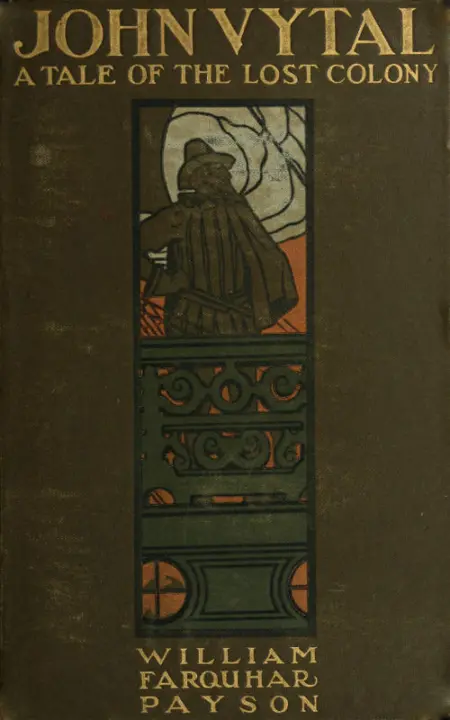
"John Vytal: A Tale of the Lost Colony" by William Farquhar Payson is a historical novel written in the early 20th century. The story explores the romantic and mysterious history of the Roanoke colony, focusing on the life and adventures of its main character, John Vytal. The narrative sets itself against the backdrop of 16th-century Virginia's tumultuous colonial endeavors, marked by adventure, enigma, and human connection. The opening of the tale introduces readers to a richly defined world of Elizabethan England, where the lively poet Christopher Marlowe and the formidable soldier Hugh Rouse encounter many colorful characters. The initial scenes depict the aftermath of a bear-baiting event where Vytal's heroic intervention creates ripples across the social fabric, drawing attention to his valor. As the story unfolds, Vytal prepares for his voyage to Virginia, mingling with both commoners and nobility, and hints of his future endeavors stir excitement. Through vibrant dialogues and intricate character interactions, the beginning offers a glimpse into the dynamics of human relationships in a historical context while setting the stage for a tale that intertwines fate, struggle, and the pursuit of personal destiny.
Introduction adapted from the source catalogue; source summaries may be automatically generated.
Free to read · English · 87,054 words · No account needed
MAKE TIME FOR A GOOD BOOK
On by default. Untick to stop anonymous reading totals. Each page counts after 10 seconds in view. How this works.
Anonymous counting is on unless you have switched it off.
Gyll drew back in amaze. “How now, goblin,” she asked, with not a little terror; “art gone wholly mad?”
He said nothing, but slowly his expression altered until a mingling of grief and cold repulsion told her of his inward change. “I would have risked a wedding,” he said, at last, and drawing the bear to his side. “I would have made you honest wife, and not ungladly, for I felt a kind o’ love—ah, a deal o’ love—for you, Gyll; but I’m a peculiar personage, and not irreverent to men o’ God and church-like things, be I rake or no. Faith, ye’re a most heartless jade, who’ll ne’er be wife o’ mine. Ye’ve shown yourself. For that I thank thee;” whereat he turned on his heel and, leading away King Lud, disappeared in the forest.
For a moment Gyll stood listening, and once she called, but only the clank, clank of the bear’s chain, growing fainter and more faint in the distance, answered her unhappy cry. Finally, when the sound had died, a flood of tears fell from her eyes, but quickly she brushed them away, then, turning, walked in the direction of the shore, and forced from her tremulous lips a song, popular at the time in Southwark:
“Be merry, friends, and take no thought;
For worldly cares now care ye naught,
For whoso doth, when all is fought,
Shall find that thought availeth not—
Be merry, friends.”
Her voice sounded low, its lilt for once seeming artificial. The friends she strove to cheer were her own thoughts—new, discomforting thoughts—yet perhaps more truly friends than all their predecessors. She persisted, however, in drowning the inward mutter of their realization with her voice’s melody:
“To take our sorrows mournfully,
Augmenteth but our malady;
But taking sorrows merrily
Maketh them smaller, verily—
Be merry, friends.”
And now the notes of a flute came to her from afar, half in accompaniment
of her tune:
“Let the world slide, let the world go;
A fig for care and a fig for woe!
If I can’t pay, why, I can owe;
And death makes equal the high and low—
Be merry, friends!”
The last words came in faltering tones that utterly belied their meaning, while from the distance the flute’s music ended in that wild wail which now, more than ever, denoted a finale.
In a few minutes Gyll joined Marlowe on the shore. “Ah, you have come,”
he said, rising.
She laughed. “So it seems; but wherefore, Kyt, did you so mysteriously arrange this meeting?”
Your reading position is saved on this browser. Take it to another device with a library code. Reading pages adapt to text, rather than matching a printed edition.
BEHIND THE BOOK
This eBook is for the use of anyone anywhere in the United States and most other parts of the world at no cost and with almost no restrictions whatsoever. You may copy it, give it away or re-use it under the terms of the Project Gutenberg License included with this eBook or online at www.gutenberg.org. If you are not located in the United States, you will have to check the laws of the country where you are located before using this eBook. Read the source licence.
The original source file, including credits and licence, is retained by this library. Request an original-format copy at no charge. Please include the book title and Project Gutenberg identifier #58403.
KEEP YOUR CURIOSITY GOING
Cécile Tormay

Moritz Busch
Coulson Kernahan
John L. Ransom

Maurice Baring
Frances Wright