THE CLASSIC COLLECTION✦An outlaw’s diary: the CommuneCLASSIC FREE BOOKS
An outlaw’s diary: the Commune
Cécile Tormay
THE CLASSIC COLLECTION · 1901
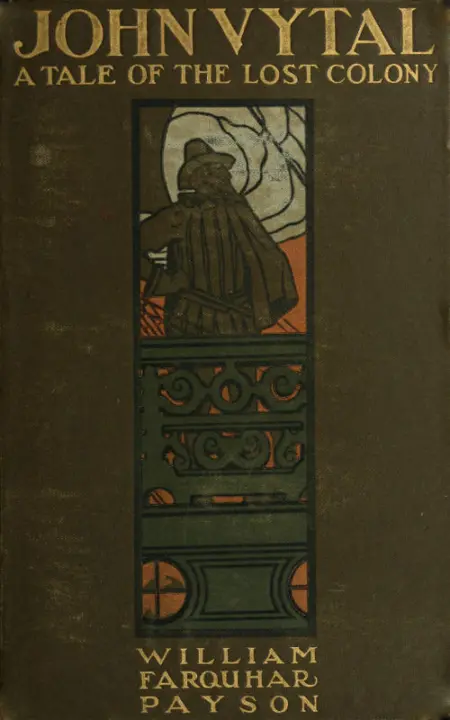
"John Vytal: A Tale of the Lost Colony" by William Farquhar Payson is a historical novel written in the early 20th century. The story explores the romantic and mysterious history of the Roanoke colony, focusing on the life and adventures of its main character, John Vytal. The narrative sets itself against the backdrop of 16th-century Virginia's tumultuous colonial endeavors, marked by adventure, enigma, and human connection. The opening of the tale introduces readers to a richly defined world of Elizabethan England, where the lively poet Christopher Marlowe and the formidable soldier Hugh Rouse encounter many colorful characters. The initial scenes depict the aftermath of a bear-baiting event where Vytal's heroic intervention creates ripples across the social fabric, drawing attention to his valor. As the story unfolds, Vytal prepares for his voyage to Virginia, mingling with both commoners and nobility, and hints of his future endeavors stir excitement. Through vibrant dialogues and intricate character interactions, the beginning offers a glimpse into the dynamics of human relationships in a historical context while setting the stage for a tale that intertwines fate, struggle, and the pursuit of personal destiny.
Introduction adapted from the source catalogue; source summaries may be automatically generated.
Free to read · English · 87,054 words · No account needed
MAKE TIME FOR A GOOD BOOK
On by default. Untick to stop anonymous reading totals. Each page counts after 10 seconds in view. How this works.
Anonymous counting is on unless you have switched it off.
“Wherefore?” The word came in a low whisper, as though a woman’s heart were sinking with the voice to endless silence.
“I consider your happiness, and not—” He paused and turned to leave.
She spoke no detaining word, but only stood watching him as he walked away to the fortress, and her eyes were no longer haunted by misgiving.
“Roger.”
“Ay.”
“Hereafter ignore the dictates of impulse save in matters of your calling. Obey my commands alone, or seek another friend.”
“But, captain—”
“Stay, I ask no explanation nor apology. The thing is done.”
At sunrise the whole colony, save the governor and his daughter, having assembled on the shore, was divided into two parties—those who were lading cock-boats and barges with provisions prior to their departure, and those who merely assisted in the embarkation with a secondary interest, listless and mutely sad.
Soon, like the pinions of two great sea-fowl, wide-spread to bear them upward from a billow, the sails of the fly-boat and Admiral, mounting from yard to yard, held all eyes at gaze.
Prat, watching them with a wry face, turned to Marlowe, who stood beside him. “Damned portents!” he exclaimed.
“Nay, Roger, they are but vultures awaiting to bear away the corpse of Courage.” Prat eyed him with a kind of wonder. “Or,” pursued the poet, carelessly, “those sails are the flags of truce we wave to Destiny.”
“Master Kyt,” asked Roger, with a look of unprecedented embarrassment, “is ’t a hard thing to write poesy?”
Marlowe, still in abstraction, failed to note the preposterous suggestion that underlay the query. He made answer seemingly to himself. “’Tis easy to indite the ‘Jigging Conceits of Rhyming Mother Wits,’” he observed, quoting from the prelude to his “Tamburlaine.”[6] “It is within man’s compass to make a ‘mighty line’ or so; but to write poetry is impossible.”
“Nay, but you yourself, Master Christopher—”
“No, not I, nor any one can scan the lines engrailed by a golden pen on the scroll of sunset, or echo the music of a breeze.”
The soldier looked mournful, his chin sinking on his chest until a triple fold submerged it. “I would fain have invented a poem myself,” he avowed, gloomily. “And, indeed, have written a song of the men of Roanoke. Lack-a-day! ’tis but a jigging mother of rhyme, I fear, and poorly done.”
Marlowe surveyed him in silence for a moment, then laughed gayly and
turned away.
At the same moment a flutter of white scraps, like torn paper, fell to
Roger’s boots.
Your reading position is saved on this browser. Take it to another device with a library code. Reading pages adapt to text, rather than matching a printed edition.
BEHIND THE BOOK
This eBook is for the use of anyone anywhere in the United States and most other parts of the world at no cost and with almost no restrictions whatsoever. You may copy it, give it away or re-use it under the terms of the Project Gutenberg License included with this eBook or online at www.gutenberg.org. If you are not located in the United States, you will have to check the laws of the country where you are located before using this eBook. Read the source licence.
The original source file, including credits and licence, is retained by this library. Request an original-format copy at no charge. Please include the book title and Project Gutenberg identifier #58403.
KEEP YOUR CURIOSITY GOING
Cécile Tormay

Moritz Busch
Coulson Kernahan
John L. Ransom

Maurice Baring
Frances Wright