THE CLASSIC COLLECTION✦An outlaw’s diary: the CommuneCLASSIC FREE BOOKS
An outlaw’s diary: the Commune
Cécile Tormay
THE CLASSIC COLLECTION · 1901
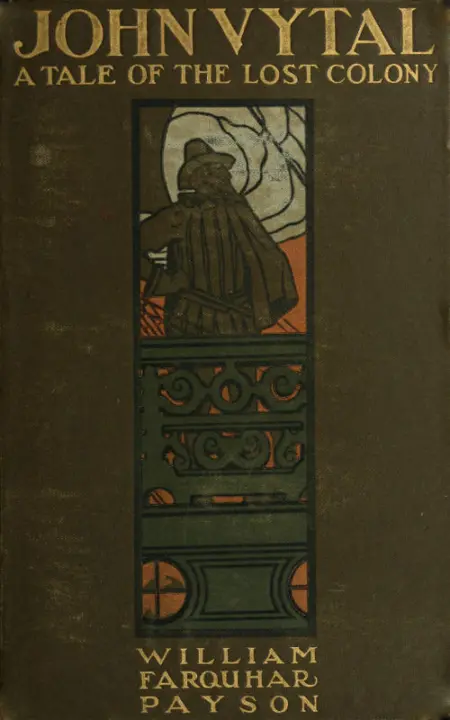
"John Vytal: A Tale of the Lost Colony" by William Farquhar Payson is a historical novel written in the early 20th century. The story explores the romantic and mysterious history of the Roanoke colony, focusing on the life and adventures of its main character, John Vytal. The narrative sets itself against the backdrop of 16th-century Virginia's tumultuous colonial endeavors, marked by adventure, enigma, and human connection. The opening of the tale introduces readers to a richly defined world of Elizabethan England, where the lively poet Christopher Marlowe and the formidable soldier Hugh Rouse encounter many colorful characters. The initial scenes depict the aftermath of a bear-baiting event where Vytal's heroic intervention creates ripples across the social fabric, drawing attention to his valor. As the story unfolds, Vytal prepares for his voyage to Virginia, mingling with both commoners and nobility, and hints of his future endeavors stir excitement. Through vibrant dialogues and intricate character interactions, the beginning offers a glimpse into the dynamics of human relationships in a historical context while setting the stage for a tale that intertwines fate, struggle, and the pursuit of personal destiny.
Introduction adapted from the source catalogue; source summaries may be automatically generated.
Free to read · English · 87,054 words · No account needed
MAKE TIME FOR A GOOD BOOK
On by default. Untick to stop anonymous reading totals. Each page counts after 10 seconds in view. How this works.
Anonymous counting is on unless you have switched it off.
The Indian, and doubtless Frazer, too, had been here earlier in the day, for just within scope of the firelight was the carcass of a young deer, while on the ground a pannier of various provisions lay beside the arbor’s entrance. Furthermore, a long riding-cloak had been spread out like a rug in the natural cell.
“Master Frazer is most thoughtful of our comfort,” observed Gyll, seating herself thereon, with a laugh. But Eleanor, sinking down, fatigued and despairing, made no answer. Meanwhile their captor was methodically cutting from the deer a steak, which he presently held over the fire on the prongs of a green crotch. Soon the meat sizzled and grew black, whereupon, turning to his captives, the Indian held it out, and, with a gesture, bade them eat. Gyll laughed. “Are we to devour it whole, Towaye?”
The Indian, who, thanks to his sojourn in England, understood their language, considered the question for a minute; then, evidently suspecting that Gyll thus sought to obtain a weapon, smiled craftily, laid down the meat, and proceeded to cut it up with a knife of Frazer’s resembling a Toledo poniard. Next, taking the pieces in his fingers, he piled them on a pewter plate which he drew from the pannier, and offered his guests the savory dish with a grunt of hospitality.
Again Gyll laughed. “But our hands are tied.”
Towaye shrugged his shoulders, and, squatting on the ground, held his wrists together, then raised the dark fingers to his lips. “This way,” he said, “prisoners eat.” And now, turning away, he busied himself in preparing his own meal of venison.
Gyll, with a wry face, stood upon her feet, and, reaching to the low roof, plucked a bunch of grapes—necessarily with both hands at once—which she offered to Eleanor. Then, having provided herself with another cluster, she sat down again and bit off the grapes one by one, with evident relish. Eleanor, however, only looked out listlessly to the crackling fire, her hands clasped, her fingers intertwined with feverish strength. Tears fell slowly on the forgotten fruit in her lap, causing it to shine like a cluster of inestimable rubies in the firelight. Her face, even now like a child’s, but very spiritual for all its witchery, was more sad than fearful, more given over to an expression of deep distress and hopelessness than to terror and apprehension. Her hazel eyes, moist and lustrous, seemed to have gained a new depth, which for the first time reached to her very soul. Their look was a prayer. “My little one, my little Virginia,” again and again she repeated inwardly, half to herself and half to a Higher Power—“My little Virginia.” Like the dull surge of heavy, monotonous surf, her thoughts beat upon her brain, now in comprehending supplication, now in mere unconscious repetition, until suddenly the despair of her eyes became less passive and more intense. Another name sprang into the ceaseless, unutterable murmur and all but escaped her pale lips—“John Vytal.”
Your reading position is saved on this browser. Take it to another device with a library code. Reading pages adapt to text, rather than matching a printed edition.
BEHIND THE BOOK
This eBook is for the use of anyone anywhere in the United States and most other parts of the world at no cost and with almost no restrictions whatsoever. You may copy it, give it away or re-use it under the terms of the Project Gutenberg License included with this eBook or online at www.gutenberg.org. If you are not located in the United States, you will have to check the laws of the country where you are located before using this eBook. Read the source licence.
The original source file, including credits and licence, is retained by this library. Request an original-format copy at no charge. Please include the book title and Project Gutenberg identifier #58403.
KEEP YOUR CURIOSITY GOING
Cécile Tormay

Moritz Busch
Coulson Kernahan
John L. Ransom

Maurice Baring
Frances Wright