THE CLASSIC COLLECTION✦An outlaw’s diary: the CommuneCLASSIC FREE BOOKS
An outlaw’s diary: the Commune
Cécile Tormay
THE CLASSIC COLLECTION · 1901
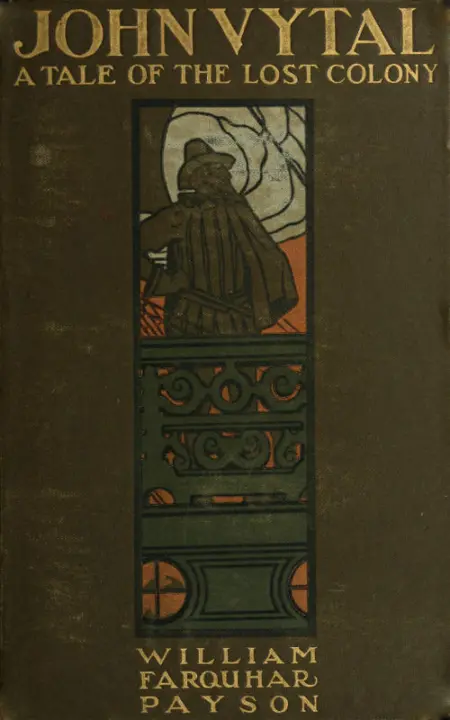
"John Vytal: A Tale of the Lost Colony" by William Farquhar Payson is a historical novel written in the early 20th century. The story explores the romantic and mysterious history of the Roanoke colony, focusing on the life and adventures of its main character, John Vytal. The narrative sets itself against the backdrop of 16th-century Virginia's tumultuous colonial endeavors, marked by adventure, enigma, and human connection. The opening of the tale introduces readers to a richly defined world of Elizabethan England, where the lively poet Christopher Marlowe and the formidable soldier Hugh Rouse encounter many colorful characters. The initial scenes depict the aftermath of a bear-baiting event where Vytal's heroic intervention creates ripples across the social fabric, drawing attention to his valor. As the story unfolds, Vytal prepares for his voyage to Virginia, mingling with both commoners and nobility, and hints of his future endeavors stir excitement. Through vibrant dialogues and intricate character interactions, the beginning offers a glimpse into the dynamics of human relationships in a historical context while setting the stage for a tale that intertwines fate, struggle, and the pursuit of personal destiny.
Introduction adapted from the source catalogue; source summaries may be automatically generated.
Free to read · English · 87,054 words · No account needed
MAKE TIME FOR A GOOD BOOK
On by default. Untick to stop anonymous reading totals. Each page counts after 10 seconds in view. How this works.
Anonymous counting is on unless you have switched it off.
“Even so,” said he, with a sudden outburst of young conceit. “There’s more than battle in my ‘Tamburlaine.’ There’s love, parentage, death in the play. Each day I feel most miserable when Zenocrate expires. A bear dies—that is but the death of a bear. Zenocrate’s death is a queen’s demise—a scene—a picture—call it what you will—’tis art, and in bear-baiting, I tell you, there is no art.”
“Ay, Marlowe,” observed Rouse, “excellent well said. I cannot find words
as thou canst.”
“Art!” exclaimed Frazer, “art! Is that a paint-brush in thy dainty scabbard, Sir Poet?” And again he laughed with a curiously boyish merriment.
“Ay,” returned Marlowe, “and its crimson color grows dim. The paint-brush would fain find a palette to mix on and daub afresh, Master Princox.”
“A palate!” ejaculated Frazer, laughing with genuine mirth; “that sheath must hold an axe then. It’s by the palate wine goes to the stomach, and an axe, so I’ve heard, to the block.”
“Ha, but thy wit,” rejoined Marlowe, “‘wol out,’ as Geoffrey Chaucer said. Nay, though, perhaps it is because you watch fearfully the doings near block and gallows that you know so well their manners. Wit—foh! It is easy to play the game of words as Tarlton does. I call it but juggling phrases, and robbing language of its meaning, as a vagabond juggles stolen coin.”
“Ay, juggles phrases,” echoed Rouse, with admiration.
“But we’ll see a nobler conjury,” pursued Marlowe, upon whose hot blood the insolent bearing of Frazer was having its effect. “The artist’s brush shall paint the juggler’s tongue a deeper red—the—” The poet’s threat, however, uttered while he rose and drew his sword, was interrupted by Simon Groat, the host, who came forward with hands uplifted in expostulation.
“Gogsnouns!” he exclaimed. “Not so, my worshipful guests. Take ye the ‘Tabard’ for a tilt-yard? Nay, nay—I pray you—here, tapster, a quietus for all—open the ale-tap wide. Free flagons, gentles, an it please you to wait and drain them. You’ll find more space without—down by the bridge-house there is room for—”
And now Sir Walter St. Magil, the apparent adviser of young Frazer, lent his aid to Simon Groat in calming the turbulent disputants. “Ay, Master Frazer,” said he, “respect thine host—the quarrel’s idle, gentlemen, if you’ll permit me.”
“But the swords,” declared Marlowe, “shall not be.”
“Nay,” cried Frazer, in whose veins the Canary wine ran riotous. “Your artist’s brush would fain paint—”
Your reading position is saved on this browser. Take it to another device with a library code. Reading pages adapt to text, rather than matching a printed edition.
BEHIND THE BOOK
This eBook is for the use of anyone anywhere in the United States and most other parts of the world at no cost and with almost no restrictions whatsoever. You may copy it, give it away or re-use it under the terms of the Project Gutenberg License included with this eBook or online at www.gutenberg.org. If you are not located in the United States, you will have to check the laws of the country where you are located before using this eBook. Read the source licence.
The original source file, including credits and licence, is retained by this library. Request an original-format copy at no charge. Please include the book title and Project Gutenberg identifier #58403.
KEEP YOUR CURIOSITY GOING
Cécile Tormay

Moritz Busch
Coulson Kernahan
John L. Ransom

Maurice Baring
Frances Wright