THE CLASSIC COLLECTION✦An outlaw’s diary: the CommuneCLASSIC FREE BOOKS
An outlaw’s diary: the Commune
Cécile Tormay
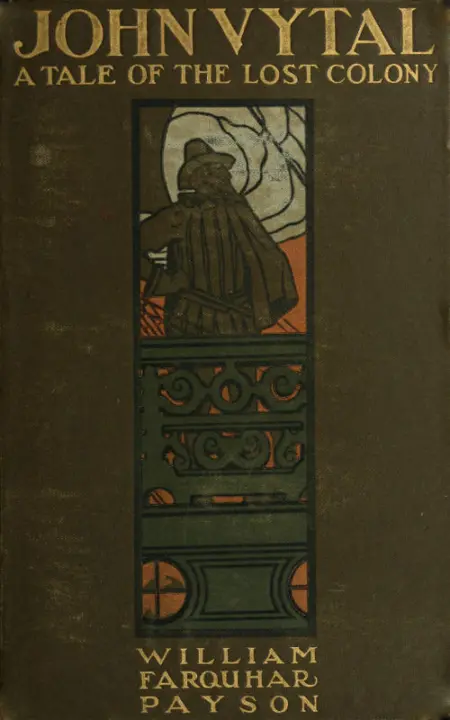
THE CLASSIC COLLECTION · 1901
"John Vytal: A Tale of the Lost Colony" by William Farquhar Payson is a historical novel written in the early 20th century. The story explores the romantic and mysterious history of the Roanoke colony, focusing on the life and adventures of its main character, John Vytal. The narrative sets itself against the backdrop of 16th-century Virginia's tumultuous colonial endeavors, marked by adventure, enigma, and human connection. The opening of the tale introduces readers to a richly defined world of Elizabethan England, where the lively poet Christopher Marlowe and the formidable soldier Hugh Rouse encounter many colorful characters. The initial scenes depict the aftermath of a bear-baiting event where Vytal's heroic intervention creates ripples across the social fabric, drawing attention to his valor. As the story unfolds, Vytal prepares for his voyage to Virginia, mingling with both commoners and nobility, and hints of his future endeavors stir excitement. Through vibrant dialogues and intricate character interactions, the beginning offers a glimpse into the dynamics of human relationships in a historical context while setting the stage for a tale that intertwines fate, struggle, and the pursuit of personal destiny.
Introduction adapted from the source catalogue; source summaries may be automatically generated.
Free to read · English · 87,054 words · No account needed
MAKE TIME FOR A GOOD BOOK
On by default. Untick to stop anonymous reading totals. Each page counts after 10 seconds in view. How this works.
Anonymous counting is on unless you have switched it off.
“Frazer!” The poet started. “We are tricked. Tricked by a boy! Forgive me. You must leave another to defend the fortress,” and Marlowe, drawing his sword, held it out to the soldier. “Leave me the pen only, for I am not worthy of this.”
But Vytal laid a hand on his shoulder kindly. “I was befooled myself.”
“Let us go to him,” suggested Christopher.
“Nay, I have just sent Hugh Rouse, who returned with me from his picket duty. He will bring the fellow to the fort.”
“Let us wait in the armory, then. I long to see that bantering actor pleading for our mercy. He would play excellent well upon the stage, with his tales of torture and feigned idiocy.”
So they waited, waited long, and still Hugh Rouse did not return.
The cause of this delay is briefly told.
Hugh, having stepped into a canoe, had, with a few long sweeps of his paddle, come to the Admiral; and the captive heard voices approaching the cabin door. At this he rose from the table, and, with an air still somewhat careless, yet of definite purpose, concealed himself behind the arras with which the walls were hung.
Once more the key grated in its lock, and Frazer heard two men enter the long cabin, which by now was enveloped in gloom. Seeming to stand near the threshold, while their eyes were probably accustoming themselves to the darkness, neither of these men spoke at first, but finally the prisoner heard one whisper to the other and, with a deep oath, advance farther into the room.
“He hides. Do you, Dyonis, guard the door.”
Harvie obeyed, while Rouse, growing more and more amazed, searched the cabin without success. He might have searched until the crack of doom and come no nearer to a trace of the cunning quarry.
For, even on their first entrance midway into the room, when Rouse had supposed that Harvie held the door, and Harvie that the captive must certainly be before them, the bird had flown. Softly, in that first moment, the heavy arras undulated, as though a breeze were passing across it from end to end of the apartment. Then, parting from the wall near the entrance, it fell flat again—a motionless, innocent piece of tapestry in darkness.
And, suppressing a laugh, Master Ralph lowered himself into Hugh’s canoe, to paddle away under the cover of evening.
Your reading position is saved on this browser. Take it to another device with a library code. Reading pages adapt to text, rather than matching a printed edition.
BEHIND THE BOOK
This eBook is for the use of anyone anywhere in the United States and most other parts of the world at no cost and with almost no restrictions whatsoever. You may copy it, give it away or re-use it under the terms of the Project Gutenberg License included with this eBook or online at www.gutenberg.org. If you are not located in the United States, you will have to check the laws of the country where you are located before using this eBook. Read the source licence.
The original source file, including credits and licence, is retained by this library. Request an original-format copy at no charge. Please include the book title and Project Gutenberg identifier #58403.
KEEP YOUR CURIOSITY GOING
Cécile Tormay

Moritz Busch
Coulson Kernahan
John L. Ransom

Maurice Baring
Frances Wright