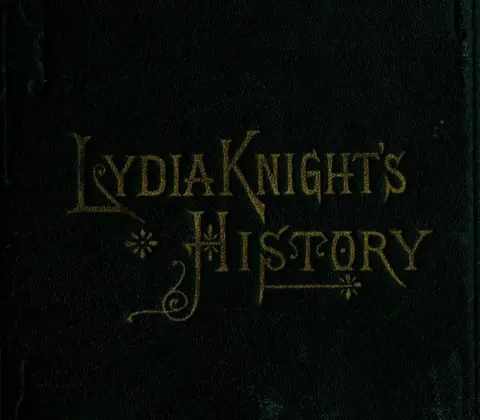
Lydia Knight’s History The First Book of the Noble Women’s Lives
Susa Young Gates
THE CLASSIC COLLECTION · 1909
"John Stevens' Courtship: A Story of the Echo Canyon War" by Susa Young Gates is a historical novel written in the early 20th century. The narrative unfolds during the dramatic and tumultuous times surrounding the Echo Canyon War, focusing on themes of love set against the backdrop of pioneer life in Utah. The central characters include John Stevens, a kind-hearted pioneer, and Diantha Winthrop, a young woman navigating her feelings amidst the chaos of the era. The opening of the story introduces readers to a picnic planned by the settlers of Salt Lake City in 1857, which serves as a festive escape from the tensions brewing due to the impending conflict with United States troops. Through the conversations of Diantha and her sister-in-law, Rachel, we glimpse the dynamics of their relationships, along with hints of romantic rivalry involving the affections of both John Stevens and Henry Boyle. As the group prepares for their outing, the excitement is palpable, but underlying themes of expectation and uncertainty are also delicately woven into the dialogue, foreshadowing the challenges that lay ahead in their lives amidst historical upheaval. The idyllic setting quickly transforms into a pivotal moment of cultural and personal significance as events unfold in the valley.
Introduction adapted from the source catalogue; source summaries may be automatically generated.
Free to read · English · 84,895 words · No account needed
MAKE TIME FOR A GOOD BOOK
On by default. Untick to stop anonymous reading totals. Each page counts after 10 seconds in view. How this works.
Anonymous counting is on unless you have switched it off.
Handing his musket to his companion, and striding steadily forward, Captain Stevens was soon within the outskirts of the great camp at Fort Scott. In the rough camp life of the hordes of camp followers were mingled shouts of drunken laughter, oaths of anger, and the shrill cries of ribald women. He entered the narrow streets of rude houses in the edge of the camp, which consisted of half shacks, half wigwams, and all of them altogether abandoned in their reckless atmosphere of rude frontier conviviality. The look on the face of the mountaineer as he walked hastily through this outer fringe of corruption to reach the inner city of white orderliness was grim and foreboding.
Passing one of the larger tents in the motley village, a drunken man
suddenly emerged therefrom with his pistol swinging in his reckless
grasp.
"Who are you?" he demanded of John, reeling up and cocking the pistol directly in the face of the mountaineer. The drunken eyes of the soldier noted the rude garb of the stranger and with drunken quickness of malicious wit, he shouted noisily:
"Are you a damned Mormon?"
With a terrible look in the flashing eyes which passed along the gun barrel and pierced the very marrow of his assailant, John Stevens answered, through his clenched teeth:
"Yes siree! I am a 'Mormon!' Dyed in the wool!"
With a shaking hand the pistol was lowered, and the soldier said
unsteadily:
"Well, you're a damned good feller."
John Stevens turned away in disgust and yet with a quick gratitude for
the speedy deliverance.
And now he reached the entrance to the real Camp Scott.
He showed his passports to the sentry, and passed quickly into the tented enclosure, where he was soon ushered into the presence of Governor Cumming and a group of officers, among whom were the Peace Commissioners, no doubt, whom John Stevens had come to seek.
Governor Cumming's countenance lighted as he met the flashing gaze of
John Stevens.
"So, Captain Stevens, you are to be my escort into Great Salt Lake City
this second time also?"
"If that is my duty, I shall perform it even more cheerfully than I did before, Governor Cumming."
"Spoken like a soldier. But, friend Stevens, I want you to enlighten these gentlemen. Excuse me, gentlemen, I desire Captain Stevens, who has so recently come from the Valley, to tell you officers how cordial and friendly his President is."
Stevens' smile was very grim as he answered:
"President Brigham Young is always cordial to his friends."
"And always generous, even to his enemies, hey, Stevens?"
"He is just to every one."
Your reading position is saved on this browser. Take it to another device with a library code. Reading pages adapt to text, rather than matching a printed edition.
BEHIND THE BOOK
This eBook is for the use of anyone anywhere in the United States and most other parts of the world at no cost and with almost no restrictions whatsoever. You may copy it, give it away or re-use it under the terms of the Project Gutenberg License included with this eBook or online at www.gutenberg.org. If you are not located in the United States, you will have to check the laws of the country where you are located before using this eBook. Read the source licence.
The original source file, including credits and licence, is retained by this library. Request an original-format copy at no charge. Please include the book title and Project Gutenberg identifier #50312.
KEEP YOUR CURIOSITY GOING
Cécile Tormay

Moritz Busch
Coulson Kernahan
John L. Ransom

Maurice Baring
Frances Wright