THE CLASSIC COLLECTION✦Inkle and Yarico: An opera, in three actsCLASSIC FREE BOOKS
Inkle and Yarico: An opera, in three acts
George Colman
THE CLASSIC COLLECTION · 1800
"John Bull; Or, The Englishman's Fireside: A Comedy, in Five Acts" by George Colman is a comedic play written in the early 19th century. It addresses themes of love, societal expectations, and the follies of human nature through its humorous characters and situations. The drama unfolds against a backdrop of relationships and conflicts, particularly revolving around the main character, Job Thornberry, who faces the distress of his daughter's departure and the impact of his friend's betrayal on his business. The opening of the play introduces the character Dennis Brulgruddery, who operates a struggling pub called the Red Cow on Muckslush Heath in Cornwall. He and his servant, Dan, express their woes about the state of their establishment and their lack of customers. As they discuss the arrival of a stranger, Peregrine, who has been shipwrecked, tensions rise with the sudden entrance of a distraught girl named Mary. She reveals her troubles stemming from a broken engagement, setting the stage for a mix of comedic misunderstandings, heartfelt moments, and the exploration of personal connections that characterize the unfolding story. The interactions between these diverse characters hint at the humorous chaos that will ensue, making it clear that the play will blend wit with deeper emotional undertones.
Introduction adapted from the source catalogue; source summaries may be automatically generated.
Free to read · English · 25,750 words · No account needed
MAKE TIME FOR A GOOD BOOK
On by default. Untick to stop anonymous reading totals. Each page counts after 10 seconds in view. How this works.
Anonymous counting is on unless you have switched it off.
Shuff. Not a bit--I give you my honour, I did'nt find it inconvenient at all. How is Frank Rochdale?
Sir Simon. Why, my son is'nt up yet; and before he's stirring, do let me talk to you, my dear Tom Shuffleton! I have something near my heart, that--
Shuff. Don't talk about your heart, Baronet;--feeling's quite out
of fashion.
Sir Simon. Well, then, I'm interested in----
Shuff. Aye, stick to that. We make a joke of the heart,
now-a-days; but when a man mentions his interest, we know he's in
earnest.
Sir Simon. Zounds! I am in earnest. Let me speak, and call my
motives what you will.
Shuff. Speak--but don't be in a passion. We are always cool at the clubs: the constant habit of ruining one another, teaches us temper. Explain.
Sir Simon. Well, I will. You know, my dear Tom, how much I admire your proficiency in the New school of breeding;--you are, what I call, one of the highest finished fellows of the present day.
Shuff. Psha! Baronet; you flatter.
Sir Simon. No, I don't; only in extolling the merits of the newest fashion'd manners and morals, I am sometimes puzzled, by the plain gentlemen, who listen to me, here in the country, most consumedly.
Shuff. I don't doubt it.
Sir Simon. Why, 'twas but t'other morning, I was haranguing old Sir Noah Starchington, in my library, and explaining to him the shining qualities of a dasher, of the year eighteen hundred and three; and what do you think he did?
Shuff. Fell asleep.
Sir Simon. No; he pull'd down an English dictionary; when (if you'll believe me! he found my definition of stylish living, under the word "insolvency;" a fighting crop turn'd out a "dock'd bull dog;" and modern gallantry, "adultery and seduction."
Shuff. Noah Starchington is a damn'd old twaddler.--But the fact is, Baronet, we improve. We have voted many qualities to be virtues, now, that they never thought of calling virtues formerly. The rising generation wants a new dictionary, damnably.
Sir Simon. Deplorably, indeed! You can't think, my dear Tom, what a scurvy figure you, and the dashing fellows of your kidney, make in the old ones. But you have great influence over my son Frank; and want you to exert it. You are his intimate--you come here, and pass two or three months at a time, you know.
Shuff. Yes--this is a pleasant house.
Sir Simon. You ride his horses, as if they were your own.
Shuff. Yes--he keeps a good stable.
Sir Simon. You drink our claret with him, till his head aches.
Shuff. Your's is famous claret, Baronet.
Your reading position is saved on this browser. Take it to another device with a library code. Reading pages adapt to text, rather than matching a printed edition.
George Colman
George Colman
George Colman
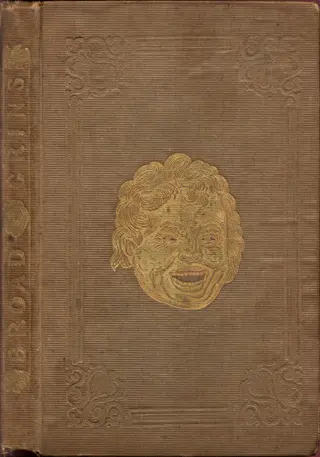
George Colman
BEHIND THE BOOK
This eBook is for the use of anyone anywhere in the United States and most other parts of the world at no cost and with almost no restrictions whatsoever. You may copy it, give it away or re-use it under the terms of the Project Gutenberg License included with this eBook or online at www.gutenberg.org. If you are not located in the United States, you will have to check the laws of the country where you are located before using this eBook. Read the source licence.
The original source file, including credits and licence, is retained by this library. Request an original-format copy at no charge. Please include the book title and Project Gutenberg identifier #20177.
KEEP YOUR CURIOSITY GOING
Maurice Baring
W. B. (William Butler) Yeats
Edward Martyn

John Brougham & Charlotte Brontë
Marguerite Merington
Leonid Andreyev