
The Writing of News A Handbook with Chapters on Newspaper Correspondence and Copy Reading
Charles G. (Charles Griffith) Ross
THE CLASSIC COLLECTION · 1905
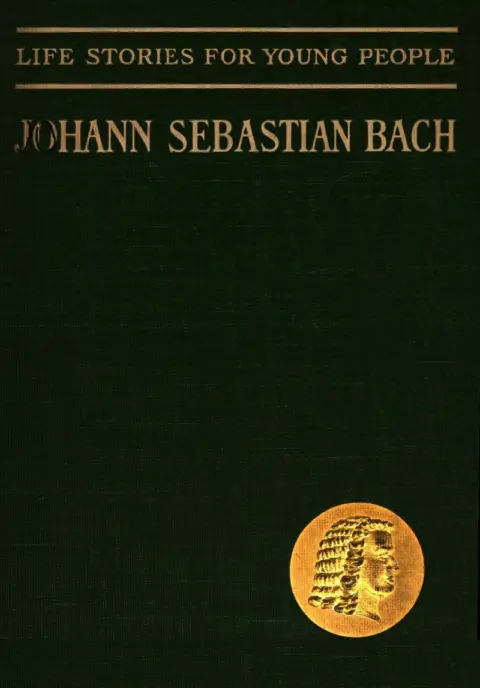
"Johann Sebastian Bach" by Ludwig Ziemssen is a biographical account written in the early 20th century. The work explores the life and accomplishments of the renowned composer Johann Sebastian Bach, providing insights into his character, struggles, and artistic dedication. It serves as an inspirational narrative about the life of a pivotal figure in music history whose profound influence is still felt today. The opening of the book introduces the reader to Bach's childhood and the profound loss he experiences with the death of his brother, leading to a pivotal moment in his life. Young Sebastian grapples with the impending changes and reflects on his ambitions to pursue a greater musical career beyond his small town. His determination to escape the limitations of his musical environment sets the stage for his future endeavors and aspirations, emphasizing themes of perseverance and the quest for artistic fulfillment. As he dialogues with his friends about his goals, the narrative hints at his deep passion for music and hints at the challenges he'll have to overcome, engaging readers in the beginning of Bach's journey toward greatness.
Introduction adapted from the source catalogue; source summaries may be automatically generated.
Free to read · English · 25,235 words · No account needed
MAKE TIME FOR A GOOD BOOK
On by default. Untick to stop anonymous reading totals. Each page counts after 10 seconds in view. How this works.
Anonymous counting is on unless you have switched it off.
“Jetzt komm ich, Herr, vor Deinen Thron
Mit loberfülltem Munde,
Und danke Dir durch Deinen Sohn
In dieser Abendstunde.
Nimm an das Opfer, das ich Dir
Mit meinen Lippen bringe,
Und höre gnädig was ich Dir
Zu Deiner Ehre singe.”
[26]Weimar is on the Ilm.
[27]This appointment was made in 1714.
[28]Cöthen was at that time the capital of the Duchy of Anhalt-Cöthen, which was united to Anhalt-Dessau in 1853.
[29]So called because they are dedicated to the Margrave of Brandenburg.
[30]The suite was originally a succession of various national dances. The four most characteristic parts are the Allemande, Courante, Sarabande, and Gigue. Sometimes they also include the Gavotte, Passepied, Branle, Bourrée, and Minuet.
[31]The Sonata (sounding piece) originally was the general term for instrumental pieces, as opposed to Cantata (singing piece). The present form was definitely established by Haydn, Mozart, and Beethoven. Its parts are Allegro, Andante or Adagio, Minuet with trio or a Scherzo, and Rondo or Presto.
[32]Inventions, a term first used by Bach in the sense of impromptus. They were small pieces for the piano, written in two or three parts, each developing a single idea.
[33]Symphony (with sound) is a large musical work for full orchestra, in the form of the sonata, with much fuller development of the single parts and richer development of true color in particular instruments.
[34]The title which Bach gave to this work is as follows:
“The Well Tempered Clavier, or Preludes and Fugues in all the Tones and Semi-tones, both with the major third or ‘Ut, Re, Mi’ and with the minor third or ‘Re, Mi, Fa.’ For the Use and Practice of Young Musicians who desire to learn, as well as for those who are already skilled in this study by way of amusement. Made and composed by Johann Sebastian Bach, Chapelmaster to the Grand Duke of Anhalt-Cöthen and Director of his Chamber Music. In the year 1722.”
The first part of the “Well Tempered Clavier,” or “Clavichord,” as it is usually called, was written in 1722, probably during some of his journeys with Prince Leopold. The second part was finished in Leipsic about 1740.
[35]June 25, 1722.
[36]The “Alumni” were charity children, who were provided with food and lodging in the schoolhouse and a small allowance of money in consideration of their singing in church and at funerals.
[37]There were two organs in St. Thomas’s Church, a large and a small one. When Bach’s great Passion music was given there, both were used.
[38]Anna Magdalena was the youngest daughter of the court-trumpeter, Johann Casper Wülkens. She was at this time twenty-one years of age. They were married December 3, 1721.
Your reading position is saved on this browser. Take it to another device with a library code. Reading pages adapt to text, rather than matching a printed edition.
BEHIND THE BOOK
This eBook is for the use of anyone anywhere in the United States and most other parts of the world at no cost and with almost no restrictions whatsoever. You may copy it, give it away or re-use it under the terms of the Project Gutenberg License included with this eBook or online at www.gutenberg.org. If you are not located in the United States, you will have to check the laws of the country where you are located before using this eBook. Read the source licence.
The original source file, including credits and licence, is retained by this library. Request an original-format copy at no charge. Please include the book title and Project Gutenberg identifier #65747.
KEEP YOUR CURIOSITY GOING
Charles G. (Charles Griffith) Ross
Hannah Webster Foster

Emily Lawless
Edwin Hamlin Carr

Charles De Lano Hine
Andrew Ure