
The Writing of News A Handbook with Chapters on Newspaper Correspondence and Copy Reading
Charles G. (Charles Griffith) Ross
THE CLASSIC COLLECTION · 1905
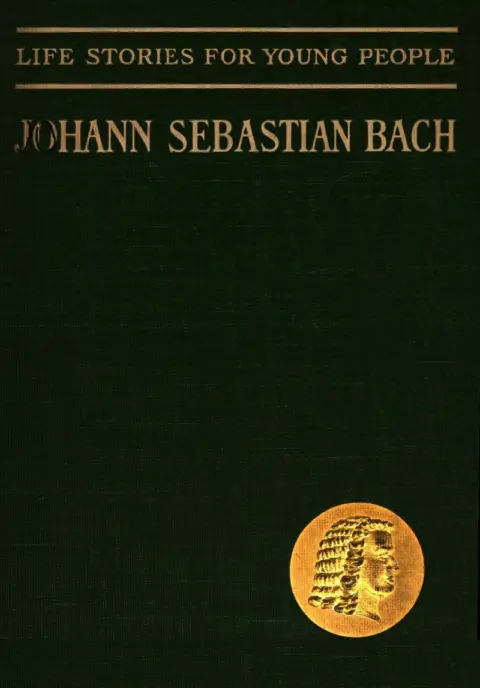
"Johann Sebastian Bach" by Ludwig Ziemssen is a biographical account written in the early 20th century. The work explores the life and accomplishments of the renowned composer Johann Sebastian Bach, providing insights into his character, struggles, and artistic dedication. It serves as an inspirational narrative about the life of a pivotal figure in music history whose profound influence is still felt today. The opening of the book introduces the reader to Bach's childhood and the profound loss he experiences with the death of his brother, leading to a pivotal moment in his life. Young Sebastian grapples with the impending changes and reflects on his ambitions to pursue a greater musical career beyond his small town. His determination to escape the limitations of his musical environment sets the stage for his future endeavors and aspirations, emphasizing themes of perseverance and the quest for artistic fulfillment. As he dialogues with his friends about his goals, the narrative hints at his deep passion for music and hints at the challenges he'll have to overcome, engaging readers in the beginning of Bach's journey toward greatness.
Introduction adapted from the source catalogue; source summaries may be automatically generated.
Free to read · English · 25,235 words · No account needed
MAKE TIME FOR A GOOD BOOK
On by default. Untick to stop anonymous reading totals. Each page counts after 10 seconds in view. How this works.
Anonymous counting is on unless you have switched it off.
[3]Eisenach, a little town in Thuringia, was the birthplace of Sebastian Bach. It is also famous for the Wartburg, which stands on one of the hills near the town, where Luther lived at one time and translated the Bible into German, and as being the scene of many of the song contests of the Minnesingers.
[4]George Erdmann was a schoolfellow of Sebastian Bach and an excellent musician, though in after life he followed other pursuits.
[5]The Amatis were a world-renowned family of violin-makers living at Cremona, Italy, in the sixteenth and seventeenth centuries. The most famous members of the family were Andrea A., died in 1577, the maker of the first Violin; Nicola, 1568-1586; Antonio, 1589-1627, and Niccole, 1596-1684, the last the great violin-makers of the family.
[6]The capital of Lüneburg in the province of Hanover, Prussia.
[7]George Böhm, a countryman of Bach, was born at Goldbach in 1661. He was one of the greatest organists of his time.
[8]Reinken was born at Deventer in 1663 and died as organist of St. Katherine’s Church, in Hamburg, in 1722. He had remarkable talent both as player and composer and was greatly esteemed by Bach.
[9]The term “motet” is applied to church music set to Biblical texts for several voices, of moderate length, and without instrumental accompaniment.
[10]A large and beautiful forest, containing a hunting-castle, within the jurisdiction of Lüneburg.
[11]Veit Bach, the founder of the Bach family, was a baker at Presburg, on the Danube. After leaving Hungary he settled in Wechmar, Thuringia, and carried on his business there. He played the lute and, it is related, was so fond of it that he used to play it while his corn was being ground. His son, Hans, was the first of the Bachs to make music a profession.
[12]The Silbermanns were a distinguished family of piano and organ makers whose instruments were highly prized in the seventeenth and eighteenth centuries. The most famous of this name was Gottfried (1683-1753), who lived at Freiburg. He built forty-two organs and introduced the present piano, then known as “hammer-clavier,” into Germany. Bartolomeo Cristofori, who died in Florence in 1731, undoubtedly invented this instrument and gave it its present name, piano-forte, but Silbermann greatly improved it.
[13]Certain scholars in the institution, known as “matin scholars,” received free instruction as compensation for their singing in the choir.
[14]An introduction to a chorale or fugue, and sometimes, as organists frequently improvise on a chorale, a free fantasie. A fugue is generally preceded by a prelude which stands in the same key.
[15]Reinken was born in 1623 and died in 1722. At this time he must have been about seventy-seven years of age.
Your reading position is saved on this browser. Take it to another device with a library code. Reading pages adapt to text, rather than matching a printed edition.
BEHIND THE BOOK
This eBook is for the use of anyone anywhere in the United States and most other parts of the world at no cost and with almost no restrictions whatsoever. You may copy it, give it away or re-use it under the terms of the Project Gutenberg License included with this eBook or online at www.gutenberg.org. If you are not located in the United States, you will have to check the laws of the country where you are located before using this eBook. Read the source licence.
The original source file, including credits and licence, is retained by this library. Request an original-format copy at no charge. Please include the book title and Project Gutenberg identifier #65747.
KEEP YOUR CURIOSITY GOING
Charles G. (Charles Griffith) Ross
Hannah Webster Foster

Emily Lawless
Edwin Hamlin Carr

Charles De Lano Hine
Andrew Ure