
The Writing of News A Handbook with Chapters on Newspaper Correspondence and Copy Reading
Charles G. (Charles Griffith) Ross
THE CLASSIC COLLECTION · 1905
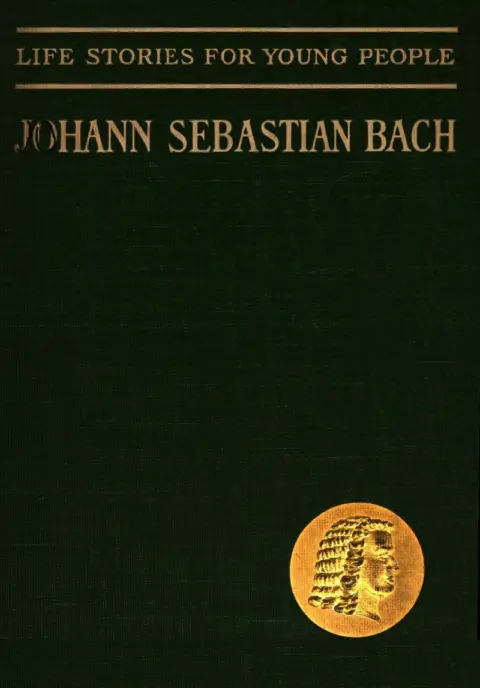
"Johann Sebastian Bach" by Ludwig Ziemssen is a biographical account written in the early 20th century. The work explores the life and accomplishments of the renowned composer Johann Sebastian Bach, providing insights into his character, struggles, and artistic dedication. It serves as an inspirational narrative about the life of a pivotal figure in music history whose profound influence is still felt today. The opening of the book introduces the reader to Bach's childhood and the profound loss he experiences with the death of his brother, leading to a pivotal moment in his life. Young Sebastian grapples with the impending changes and reflects on his ambitions to pursue a greater musical career beyond his small town. His determination to escape the limitations of his musical environment sets the stage for his future endeavors and aspirations, emphasizing themes of perseverance and the quest for artistic fulfillment. As he dialogues with his friends about his goals, the narrative hints at his deep passion for music and hints at the challenges he'll have to overcome, engaging readers in the beginning of Bach's journey toward greatness.
Introduction adapted from the source catalogue; source summaries may be automatically generated.
Free to read · English · 25,235 words · No account needed
MAKE TIME FOR A GOOD BOOK
On by default. Untick to stop anonymous reading totals. Each page counts after 10 seconds in view. How this works.
Anonymous counting is on unless you have switched it off.
The man disappeared, and the King turned to his band with a beaming smile. “We have the old man at last. Gather up your music, gentlemen; we will play your concerto, Quantz, some other time. This evening we shall listen to one greater than any of you.”
The musicians obeyed, and then stood whispering together. All this time the King was pacing up and down the hall impatiently, with his flute still under his arm. At last he stopped. “Graun, a word with you.”
Graun approached the King.
“Listen, Graun. We must let old Bach hear some good music of our own time. What have we to offer him from the opera repertory?”
“If Your Majesty please, we have Hasse’s ‘Artaxerxes,’ Porpora’s ‘Annibale’ and ‘Mitridate,’ Handel’s ‘Faramondo’—”[44]
“No, no! We must have something of our own.”
“Perhaps one of Agricola’s pieces.”
“But, still better, why not one of Graun’s?” said the King, laughing.
Graun bowed. “In that case, and in obedience to Your Majesty, I make bold to suggest the ‘Galatea.’”
“Oh! because I myself stumbled around a little in that pastoral music?[45] Ah! ah! Graun, have you also begun to be a courtier? What will become of my band? No, no, we will not have ‘Galatea.’ We will have ‘Demofoonte’ or ‘Caius Fabricius.’ What do you think of those?”
“We have well practised both, Your Majesty, but ‘Cinna’ is completely ready. If Your Majesty is so disposed, we can give Herr Bach the first act of that.”
“Good, good, we can manage it; but we will talk about it later. As to
the rest, I wish—”
At that moment the door opened and the lackey announced, “Herr Bach, of Leipsic, is in the anteroom and at Your Majesty’s service.”
“Let him enter, let him enter,” exclaimed the King, as he laid aside his flute, and his face lit up with smiles. “Dear Bach, bring in your father.”
Emanuel hastened to the anteroom, and a few seconds later father and son entered the hall together. With the most gracious friendliness and cordiality Frederick met the old master.
“I have you at last, my dear Bach,” he said, affectionately offering both hands to him as he stood bowing low, “and now I propose to hold you fast. I have had hard work to get a sight at you.”
Your reading position is saved on this browser. Take it to another device with a library code. Reading pages adapt to text, rather than matching a printed edition.
BEHIND THE BOOK
This eBook is for the use of anyone anywhere in the United States and most other parts of the world at no cost and with almost no restrictions whatsoever. You may copy it, give it away or re-use it under the terms of the Project Gutenberg License included with this eBook or online at www.gutenberg.org. If you are not located in the United States, you will have to check the laws of the country where you are located before using this eBook. Read the source licence.
The original source file, including credits and licence, is retained by this library. Request an original-format copy at no charge. Please include the book title and Project Gutenberg identifier #65747.
KEEP YOUR CURIOSITY GOING
Charles G. (Charles Griffith) Ross
Hannah Webster Foster

Emily Lawless
Edwin Hamlin Carr

Charles De Lano Hine
Andrew Ure