
The Writing of News A Handbook with Chapters on Newspaper Correspondence and Copy Reading
Charles G. (Charles Griffith) Ross
THE CLASSIC COLLECTION · 1905
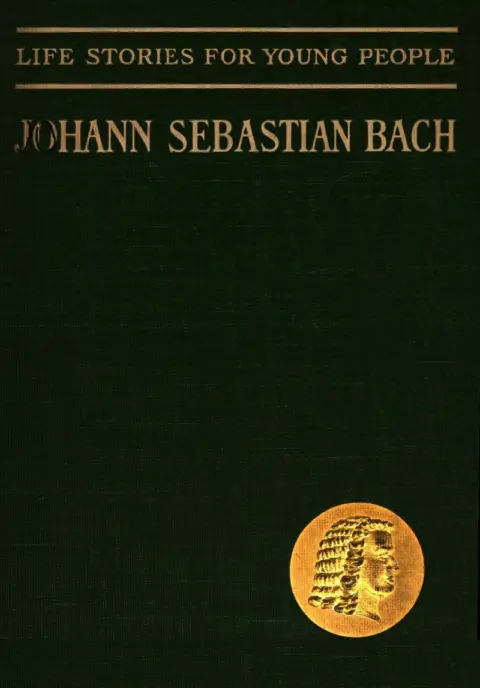
"Johann Sebastian Bach" by Ludwig Ziemssen is a biographical account written in the early 20th century. The work explores the life and accomplishments of the renowned composer Johann Sebastian Bach, providing insights into his character, struggles, and artistic dedication. It serves as an inspirational narrative about the life of a pivotal figure in music history whose profound influence is still felt today. The opening of the book introduces the reader to Bach's childhood and the profound loss he experiences with the death of his brother, leading to a pivotal moment in his life. Young Sebastian grapples with the impending changes and reflects on his ambitions to pursue a greater musical career beyond his small town. His determination to escape the limitations of his musical environment sets the stage for his future endeavors and aspirations, emphasizing themes of perseverance and the quest for artistic fulfillment. As he dialogues with his friends about his goals, the narrative hints at his deep passion for music and hints at the challenges he'll have to overcome, engaging readers in the beginning of Bach's journey toward greatness.
Introduction adapted from the source catalogue; source summaries may be automatically generated.
Free to read · English · 25,235 words · No account needed
MAKE TIME FOR A GOOD BOOK
On by default. Untick to stop anonymous reading totals. Each page counts after 10 seconds in view. How this works.
Anonymous counting is on unless you have switched it off.
One evening he rushed into the Bach home, where both friends were visiting, and as if in utter despair flung himself down into a chair without a word of greeting. All looked at him with great concern. “Dear Bach,” said Laurentius Stauber, solicitously, “why do you come rushing in in this unceremonious manner? Has anything unfortunate happened?”
“I am the unfortunate myself,” exclaimed Sebastian, passionately. “I am a bungler, and I shall always be a bungler if I stay here. I am going away.”
“Away from here!” they all exclaimed. “Where are you going?”
“Where there is something to be learned. I am going backward here. Soon I shall know nothing.”
“But, Sebastian—” said Johann Michael, reproachfully.
“But it is true,” he replied, gloomily. “My organ-playing is going backward. It has no depth, no vigor, no progressiveness—”
“But, dear Bach—”
“I tell you it is true, I feel it. My compositions also have no ideas. They show no charm of fancy, no mastery of materials. This cannot go on any longer.”
“But you greatly underestimate yourself, cousin,” said Johann Ernst, son of the twin brother of Sebastian’s father. “Would to God I could play as well as you do already at twenty! Everyone here is astonished at your work.”
“But what do they know about music here?” replied Sebastian,
contemptuously.
“But we are astonished also,” interposed Herr Uthe, “and we think we know a little something about sacred music.”
“To be sure you do,” said Sebastian, “but your friendship for me makes you blind. You do not see my failings. No, no, I must be off. I must hear once more the great masters of the art and find out from them how to get on the right road again. I am going away at once.”
“Where will you go? Where will you find what you are longing for?”
“Where? Yes, that is the question,” said Sebastian, with a sad look in his eyes. “Really there are only two places where I expect to find what I need—in Nuremberg with Pachelbel,[21] or in Lübeck with Buxtehude.[22]”
“Both are certainly far enough away from here,” said Herr Uthe,
dolefully.
“What matters distance?” answered Sebastian, with some warmth. “I would go to the ends of the earth if I could hear the great organists there. But, to cut matters short, I shall go to Lübeck in the morning.”
“Without permission?” asked Johann Ernst, very seriously.
“I am going to see the Superintendent this evening.”
“And at this unpleasant season of the year? Think of that,” said Johann
Michael.
“A journey of at least sixty miles,” added Herr Stauber.
Your reading position is saved on this browser. Take it to another device with a library code. Reading pages adapt to text, rather than matching a printed edition.
BEHIND THE BOOK
This eBook is for the use of anyone anywhere in the United States and most other parts of the world at no cost and with almost no restrictions whatsoever. You may copy it, give it away or re-use it under the terms of the Project Gutenberg License included with this eBook or online at www.gutenberg.org. If you are not located in the United States, you will have to check the laws of the country where you are located before using this eBook. Read the source licence.
The original source file, including credits and licence, is retained by this library. Request an original-format copy at no charge. Please include the book title and Project Gutenberg identifier #65747.
KEEP YOUR CURIOSITY GOING
Charles G. (Charles Griffith) Ross
Hannah Webster Foster

Emily Lawless
Edwin Hamlin Carr

Charles De Lano Hine
Andrew Ure