THE CLASSIC COLLECTION✦The haunts of menCLASSIC FREE BOOKS
The haunts of men
Robert W. (Robert William) Chambers
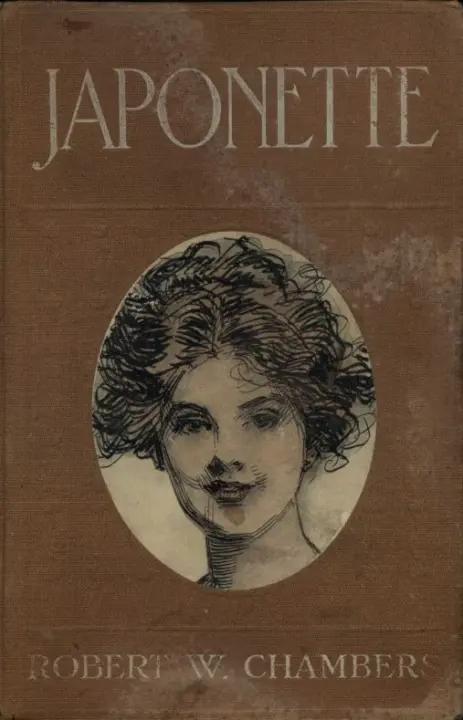
THE CLASSIC COLLECTION · 1912
"Japonette" by Robert W. Chambers is a novel written in the early 20th century. The story centers around James Edgerton, a young man returning to New York after a financial disaster that has wiped out his family's legacy. As he navigates his new reality, he unexpectedly encounters two orphaned nieces of a family acquaintance, Diana and Silvette Tennant, who have rented his apartment without his knowledge. Their interaction sets the stage for a rich exploration of relationships, identity, and the complexities of social status. At the start of the book, Edgerton arrives back in New York after losing everything in his late uncle's firm. Upon returning to his apartment, he finds it occupied by the Tennant sisters, who believed they were merely renting a space for the summer. This initial surprise leads to comedic misunderstandings and a need for collaboration as they each navigate their precarious financial situations. The characters’ dialogues reveal their personalities, creating a light-hearted yet contemplative atmosphere, hinting at deeper themes of resilience and familial connections that may unfold as their lives become intertwined.
Introduction adapted from the source catalogue; source summaries may be automatically generated.
Free to read · English · 59,465 words · No account needed
MAKE TIME FOR A GOOD BOOK
On by default. Untick to stop anonymous reading totals. Each page counts after 10 seconds in view. How this works.
Anonymous counting is on unless you have switched it off.
For Mrs. Wemyss really needed nothing of men except admiration and uninterrupted attention. No deeper passion had ever moved her. She was ignorant of love, although apparently fashioned for it; immune to its lawlessness, although lid and ear and lip seemed to chorus the contrary. In the slightly veiled eyes there was really no promise, no significance in the full, sweet mouth--nothing to her except the superficial provocation which all men mistook, and the laughing and ready friendship offered so prettily that no man ever refused.
Inwood, searching the house and terrace over for Christine, discovering her at last in the moonlit rose garden, and, not daring to join her after all, so faint hearted he had become, walked moodily into the billiard room where a noisy lot of people were enjoying themselves.
Wallace, standing between Diana and Lillian Wemyss, his broad back against a billiard table, was evidently having a splendid time; and Inwood halted, irresolute, one hand in his pocket crushing Edgerton's letter into a wad.
Lillian Wemyss caught sight of him, smiled instinctively, but her blue eyes reverted to Wallace. There was something in her attitude, as she stood in the full splendor of her somewhat ample beauty, that subtly repelled Inwood; and he swung on his heel, somber young head bent, moving toward the door by which he had entered.
"Mr. Inwood!" called Diana across the hubbub, "will you play bottle pool
with us?"
He turned, smiling to her.
"Thanks, I'm not up to it," and resumed his way out.
"Billy!" said Mrs. Wemyss, "I wish you to play!"
"No, thanks," he returned coolly, and continued toward the door.
It was his first exhibition of insubordination, and Lillian Wemyss, surprised, did not propose to stand it, particularly in the presence of these two people. Scott Wallace seemed to be almost ready for his leash; it was a bad example for him, this insubordination of young Inwood.
She looked anxiously at Diana.
"I'm afraid Billy Inwood is not well," she said. "I've thought so for several days. Those swamps where you men shoot must be full of malaria."
"Not a bit," said Wallace, laughing.
"How do you know?" asked Diana. "You never go into them, you lazy
thing!"
Mrs. Wemyss hesitated, listening to the banter that passed between Diana and Scott Wallace, which slightly excluded her for the moment.
Then she made up her mind that her authority over Inwood must be asserted at once, and that she had time enough to eliminate Diana later.
She turned and saw Inwood passing the windows outside on the terrace. The next moment she was on the terrace, too, and he turned slowly to confront her.
Your reading position is saved on this browser. Take it to another device with a library code. Reading pages adapt to text, rather than matching a printed edition.
Robert W. (Robert William) Chambers
Robert W. (Robert William) Chambers

Robert W. (Robert William) Chambers
Robert W. (Robert William) Chambers
BEHIND THE BOOK
This eBook is for the use of anyone anywhere in the United States and most other parts of the world at no cost and with almost no restrictions whatsoever. You may copy it, give it away or re-use it under the terms of the Project Gutenberg License included with this eBook or online at www.gutenberg.org. If you are not located in the United States, you will have to check the laws of the country where you are located before using this eBook. Read the source licence.
The original source file, including credits and licence, is retained by this library. Request an original-format copy at no charge. Please include the book title and Project Gutenberg identifier #52842.
KEEP YOUR CURIOSITY GOING
Coulson Kernahan

Maurice Baring
Frances Wright
Cécile Tormay

Frederic Jesup Stimson

W. H. P. (William Henry Pope) Jarvis