THE CLASSIC COLLECTION✦The haunts of menCLASSIC FREE BOOKS
The haunts of men
Robert W. (Robert William) Chambers
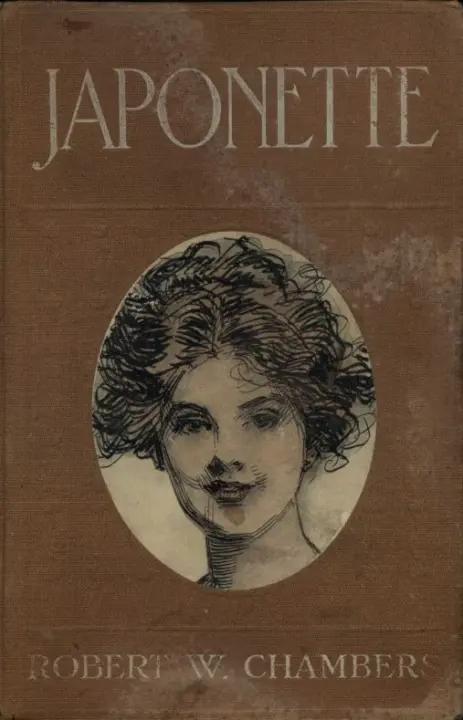
THE CLASSIC COLLECTION · 1912
"Japonette" by Robert W. Chambers is a novel written in the early 20th century. The story centers around James Edgerton, a young man returning to New York after a financial disaster that has wiped out his family's legacy. As he navigates his new reality, he unexpectedly encounters two orphaned nieces of a family acquaintance, Diana and Silvette Tennant, who have rented his apartment without his knowledge. Their interaction sets the stage for a rich exploration of relationships, identity, and the complexities of social status. At the start of the book, Edgerton arrives back in New York after losing everything in his late uncle's firm. Upon returning to his apartment, he finds it occupied by the Tennant sisters, who believed they were merely renting a space for the summer. This initial surprise leads to comedic misunderstandings and a need for collaboration as they each navigate their precarious financial situations. The characters’ dialogues reveal their personalities, creating a light-hearted yet contemplative atmosphere, hinting at deeper themes of resilience and familial connections that may unfold as their lives become intertwined.
Introduction adapted from the source catalogue; source summaries may be automatically generated.
Free to read · English · 59,465 words · No account needed
MAKE TIME FOR A GOOD BOOK
On by default. Untick to stop anonymous reading totals. Each page counts after 10 seconds in view. How this works.
Anonymous counting is on unless you have switched it off.
"I? No; Palm Beach," said the colonel hastily, watching the other out of his pale and protruding eyes. "And then--I don't go in for such capers," he explained with a pained expression. "What a man jokes about, he never bothers with."
"I've joked many a man out of half a million," observed Rivett grimly.
"That's different.... I'm a settled citizen." He looked cautiously at Rivett, hesitated, then said carelessly: "I mean to marry, some day."
"Do you?"
"I do, certainly.... And I flatter myself that the woman I marry will receive her equivalent, sir."
"Her moral equivalent?"
"Certainly. Perhaps not her--ah--financial equivalent." He looked up at Rivett to see how he took it. Rivett neither took it nor rejected it, apparently, and the colonel probed further.
"I expect to wait a year or two----"
"Aren't you getting on, Follis?"
"No, sir, I am not getting on!" said the colonel shortly. "I am forty-five. No man is fit to marry before he's forty-seven, in my opinion. At that age he's able to treat his wife intelligently. Intelligence is what a young girl most deeply appreciates in a man."
"A--young girl?"
"I prefer a youthful wife. Youth is susceptible of being moulded. I propose to make a perfect specimen of womanhood out of whatever charming and adolescent material fortune bestows upon me." The colonel slightly lifted his eyes until they protruded toward the ceiling. "I shall consider my wife as a sacred trust, a soul for which I am responsible."
"Very good idea," said Rivett without the slightest trace of expression on his face. "Why not marry the little Diana--and mould her into the ideal?"
"Marry her!" blurted out Curmew. "What! Marry a hired--a
paid--employee!"
His countenance became crimson and congested, and his eyes popped and
popped.
Rivett rose. "My wife worked in her uncle's kitchen when I married her," he said indifferently, and walked out.
On the stairway he joined Diana, also descending.
"Well," he said, looking at her through his round glasses, "you look
happy enough."
"I am, thank you," said the girl, smiling.
"Don't thank me for it," he said dryly.
"You're to be thanked, too," she laughed--"or ought to be. But you don't like it, I know, so I tell your wife how very pleasant you are making Adriutha for my sister and myself."
"Do you find it pleasant?"
"Yes, I do."
"Like the people?"
They had halted on the stairs.
She looked up at him.
"Some of them I like," she said frankly.
"Which?"
"That is bad manners! ... But I like you and your wife and Christine and
Jack."
"All of us?"
"Unreservedly--except in your case."
"What's the matter with me?" he asked grimly.
Your reading position is saved on this browser. Take it to another device with a library code. Reading pages adapt to text, rather than matching a printed edition.
Robert W. (Robert William) Chambers
Robert W. (Robert William) Chambers

Robert W. (Robert William) Chambers
Robert W. (Robert William) Chambers
BEHIND THE BOOK
This eBook is for the use of anyone anywhere in the United States and most other parts of the world at no cost and with almost no restrictions whatsoever. You may copy it, give it away or re-use it under the terms of the Project Gutenberg License included with this eBook or online at www.gutenberg.org. If you are not located in the United States, you will have to check the laws of the country where you are located before using this eBook. Read the source licence.
The original source file, including credits and licence, is retained by this library. Request an original-format copy at no charge. Please include the book title and Project Gutenberg identifier #52842.
KEEP YOUR CURIOSITY GOING
Coulson Kernahan

Maurice Baring
Frances Wright
Cécile Tormay

Frederic Jesup Stimson

W. H. P. (William Henry Pope) Jarvis