THE CLASSIC COLLECTION✦The haunts of menCLASSIC FREE BOOKS
The haunts of men
Robert W. (Robert William) Chambers
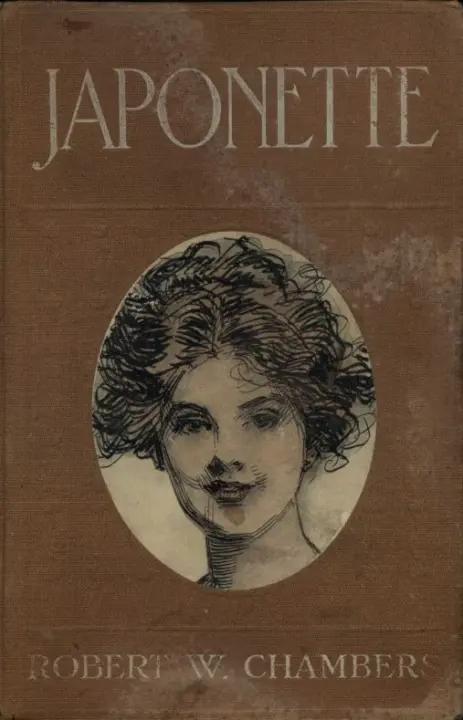
THE CLASSIC COLLECTION · 1912
"Japonette" by Robert W. Chambers is a novel written in the early 20th century. The story centers around James Edgerton, a young man returning to New York after a financial disaster that has wiped out his family's legacy. As he navigates his new reality, he unexpectedly encounters two orphaned nieces of a family acquaintance, Diana and Silvette Tennant, who have rented his apartment without his knowledge. Their interaction sets the stage for a rich exploration of relationships, identity, and the complexities of social status. At the start of the book, Edgerton arrives back in New York after losing everything in his late uncle's firm. Upon returning to his apartment, he finds it occupied by the Tennant sisters, who believed they were merely renting a space for the summer. This initial surprise leads to comedic misunderstandings and a need for collaboration as they each navigate their precarious financial situations. The characters’ dialogues reveal their personalities, creating a light-hearted yet contemplative atmosphere, hinting at deeper themes of resilience and familial connections that may unfold as their lives become intertwined.
Introduction adapted from the source catalogue; source summaries may be automatically generated.
Free to read · English · 59,465 words · No account needed
MAKE TIME FOR A GOOD BOOK
On by default. Untick to stop anonymous reading totals. Each page counts after 10 seconds in view. How this works.
Anonymous counting is on unless you have switched it off.
"I was only thinking, Jacob, that I would be happy when you have
finished with--business."
"Don't worry, dear." He put one arm around her--a thin arm in its loose coat sleeve, thin as a tempered steel rod. She laid her faded face against it, comforted by its inflexibility.
"Some day," she said, "when the children are happy--with their
families----"
"Yes, yes," he nodded; "a smaller house for you and me--just a little one." He smiled; few people ever had seen him smile. "Just a little house for two little old people," he said; "only one horse to take us about, one servant to feed us--eh, Sarah?"
She looked around her, smiling vaguely at the magnificence.
"I like to dust," she said, coloring up prettily, "and to make jelly.... I've wanted to a long while."
"You shall do it; I swear you shall. By God! I'll be glad when that
chef is fired!"
"You know, Jacob," she said timidly, "with knitting and dusting and--and a little kitchen work--and you--the day passes very nicely."
"Some day you'll make some more of those crullers!" he predicted; "mark
my words!"
"And the cinnamon shells," she added, slightly excited.
"Oh, Lord! Why can't that fool of a chef make 'em!" he burst out.
"Well, I'll wait.... It gives us something more to wait for, doesn't
it?"
He laughed. Only his wife had ever heard the dry cackle which was his
manifestation of mirth.
Contented, she lifted her face, and he kissed her.
He went to New York that evening to remain over Wednesday as usual.
In the small company remaining at Adriutha a certain intimacy had developed, enough to make any effort at entertainment superfluous. There was now a decided inclination to laziness in the evening, and a preference for the billiard room and its easy informality.
It was a big room with open fires and the inevitable trophies of somebody else's chase--the heads of big game mounted, staring at nothing out of their glass eyes; weapons of a vanished age on the oaken wainscoting, modern guns in racks as well as cues, and leather lounges and seats and wide-armed chairs everywhere.
Hither Mrs. Rivett now brought her embroidery or knitting; and around her, within a radius more or less distant, the others gathered or circled in temporary orbits, and games were played and music made and youth flirted and age gossiped much as they did when she was a young girl in Mills Corners, and her husband taught in the red schoolhouse next door.
Your reading position is saved on this browser. Take it to another device with a library code. Reading pages adapt to text, rather than matching a printed edition.
Robert W. (Robert William) Chambers
Robert W. (Robert William) Chambers

Robert W. (Robert William) Chambers
Robert W. (Robert William) Chambers
BEHIND THE BOOK
This eBook is for the use of anyone anywhere in the United States and most other parts of the world at no cost and with almost no restrictions whatsoever. You may copy it, give it away or re-use it under the terms of the Project Gutenberg License included with this eBook or online at www.gutenberg.org. If you are not located in the United States, you will have to check the laws of the country where you are located before using this eBook. Read the source licence.
The original source file, including credits and licence, is retained by this library. Request an original-format copy at no charge. Please include the book title and Project Gutenberg identifier #52842.
KEEP YOUR CURIOSITY GOING
Coulson Kernahan

Maurice Baring
Frances Wright
Cécile Tormay

Frederic Jesup Stimson

W. H. P. (William Henry Pope) Jarvis