THE CLASSIC COLLECTION✦The haunts of menCLASSIC FREE BOOKS
The haunts of men
Robert W. (Robert William) Chambers
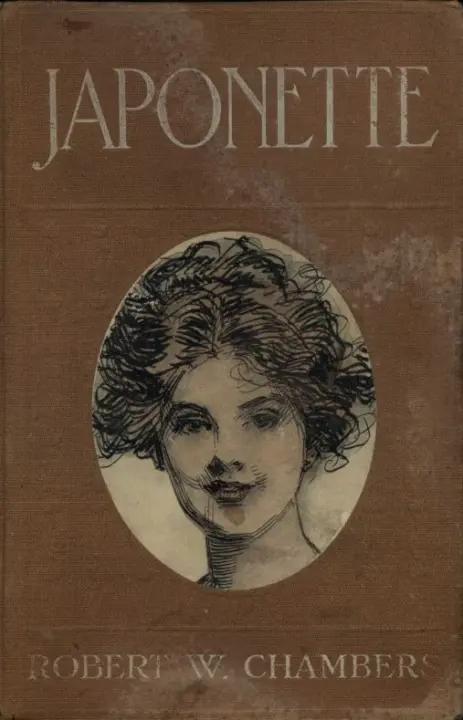
THE CLASSIC COLLECTION · 1912
"Japonette" by Robert W. Chambers is a novel written in the early 20th century. The story centers around James Edgerton, a young man returning to New York after a financial disaster that has wiped out his family's legacy. As he navigates his new reality, he unexpectedly encounters two orphaned nieces of a family acquaintance, Diana and Silvette Tennant, who have rented his apartment without his knowledge. Their interaction sets the stage for a rich exploration of relationships, identity, and the complexities of social status. At the start of the book, Edgerton arrives back in New York after losing everything in his late uncle's firm. Upon returning to his apartment, he finds it occupied by the Tennant sisters, who believed they were merely renting a space for the summer. This initial surprise leads to comedic misunderstandings and a need for collaboration as they each navigate their precarious financial situations. The characters’ dialogues reveal their personalities, creating a light-hearted yet contemplative atmosphere, hinting at deeper themes of resilience and familial connections that may unfold as their lives become intertwined.
Introduction adapted from the source catalogue; source summaries may be automatically generated.
Free to read · English · 59,465 words · No account needed
MAKE TIME FOR A GOOD BOOK
On by default. Untick to stop anonymous reading totals. Each page counts after 10 seconds in view. How this works.
Anonymous counting is on unless you have switched it off.
But since then, recently in fact, other matters, somehow, had intervened--the dawning distaste for his own position, the apparent absence of any future prospect, the gradual conviction that he had no real capacity for decently earning a living, no ability--perhaps no character.
His silence seemed to be her answer now; she spurred forward, accepting it. He put his horse to a canter, to a gallop, and they raced away through the woods until they came in sight of the others. Colonel Curmew joined her; Edgerton rode forward with Christine Rivett.
That afternoon there was some tennis played; a number of commonplace and very rich people departed, leaving as residue the original house party which Edgerton and his cousins had found there on their arrival, and who now knew one another well enough to separate into sympathetic groups.
Thus, Judge Wicklow, Mrs. Rivett, and Mrs. Lorrimore played Chinese Kahn under the terrace awning; Colonel Follis Curmew, who had been rash enough to discard his coat and reveal an unlooked-for excess of abdomen, played tennis with Silvette against Jack Rivett and Mrs. Wemyss; Mr. Rivett and Mr. Snaith indulged in laborious clock golf and talked of oil; and Christine and Edgerton, down by the river's edge, continued a conversation begun the evening previous, and which was near enough to meaning something to stimulate their attention.
From his clock golf on the lawn above, Mr. Rivett turned his convex glasses on them occasionally; from one card table on the terrace, her mother, drawing the white wool shawl closer around her slight shoulders, watched her daughter from moment to moment.
Later, the game ended, Mrs. Lorrimore victorious, and his honor unusually peevish. Mrs. Rivett rose and, advancing to the terrace edge, gazed down at the river bank, where her daughter and Edgerton still sat in the floating canoe, holding it inshore by grasping willow branches overhead.
For a few moments the little old lady watched them, one hand gathering the fleece shawl over the magnificent sapphire at her breast; then she turned quietly away into the house, wandering through it from one gorgeous room to another, until at last she came to the high organ.
Here her husband found her in the semi-dusk, sitting motionless and silent under the tall pipes, hands folded in her lap.
"Well, mother?" he said in a voice which nobody else ever had the
privilege of listening to.
She lifted her head, smiled, and laid one hand over his as he seated himself beside her in the demi-twilight.
"Are you happy?" he asked, patting the worn fingers.
"Yes, Jacob--when you and the children are."
"Does that damn Sims bother you?"
Your reading position is saved on this browser. Take it to another device with a library code. Reading pages adapt to text, rather than matching a printed edition.
Robert W. (Robert William) Chambers
Robert W. (Robert William) Chambers

Robert W. (Robert William) Chambers
Robert W. (Robert William) Chambers
BEHIND THE BOOK
This eBook is for the use of anyone anywhere in the United States and most other parts of the world at no cost and with almost no restrictions whatsoever. You may copy it, give it away or re-use it under the terms of the Project Gutenberg License included with this eBook or online at www.gutenberg.org. If you are not located in the United States, you will have to check the laws of the country where you are located before using this eBook. Read the source licence.
The original source file, including credits and licence, is retained by this library. Request an original-format copy at no charge. Please include the book title and Project Gutenberg identifier #52842.
KEEP YOUR CURIOSITY GOING
Coulson Kernahan

Maurice Baring
Frances Wright
Cécile Tormay

Frederic Jesup Stimson

W. H. P. (William Henry Pope) Jarvis