THE CLASSIC COLLECTION✦The haunts of menCLASSIC FREE BOOKS
The haunts of men
Robert W. (Robert William) Chambers
THE CLASSIC COLLECTION · 1912
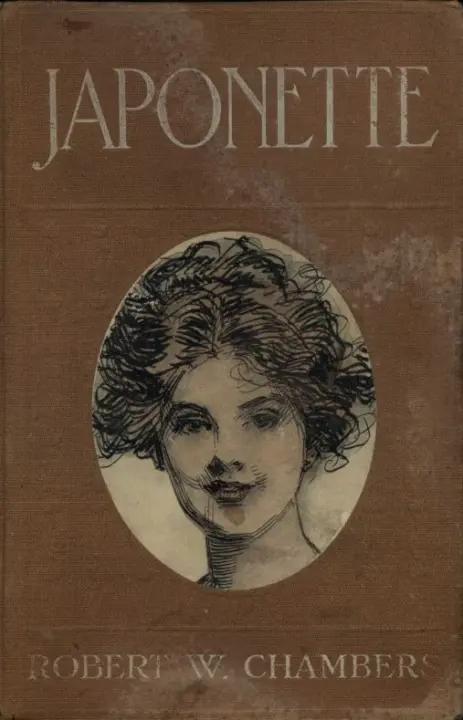
"Japonette" by Robert W. Chambers is a novel written in the early 20th century. The story centers around James Edgerton, a young man returning to New York after a financial disaster that has wiped out his family's legacy. As he navigates his new reality, he unexpectedly encounters two orphaned nieces of a family acquaintance, Diana and Silvette Tennant, who have rented his apartment without his knowledge. Their interaction sets the stage for a rich exploration of relationships, identity, and the complexities of social status. At the start of the book, Edgerton arrives back in New York after losing everything in his late uncle's firm. Upon returning to his apartment, he finds it occupied by the Tennant sisters, who believed they were merely renting a space for the summer. This initial surprise leads to comedic misunderstandings and a need for collaboration as they each navigate their precarious financial situations. The characters’ dialogues reveal their personalities, creating a light-hearted yet contemplative atmosphere, hinting at deeper themes of resilience and familial connections that may unfold as their lives become intertwined.
Introduction adapted from the source catalogue; source summaries may be automatically generated.
Free to read · English · 59,465 words · No account needed
MAKE TIME FOR A GOOD BOOK
On by default. Untick to stop anonymous reading totals. Each page counts after 10 seconds in view. How this works.
Anonymous counting is on unless you have switched it off.
"Listen to me," he said; "where man's despoiling labor pollutes nature, sadness and resignation make heavy the hearts of her true lovers, but where man's abominable ignorance desecrates, reigns a more shocking desolation which no modest heart ever forgives!"
Diana, surprised by the sudden and unexpected outburst, drew bridle
beside his standing horse.
A moment previous they had been amiably exchanging idle gossip from their saddles, gradually falling back behind the others--Silvette, Christine, Jack, and Colonel Curmew--who had cantered on forward; and now, suddenly out of a clear sky, not apropos of anything, Edgerton had flashed out the bolt of his contempt for the House of Rivett--for his ox, his ass, his servants, and all that was Rivett's.
"Jim," she remarked, "isn't it rather bad taste of you to say that?"
"Why? I am paid for being here." But he realized that she was right,
and it made him sullen.
"His roof shelters you none the less," she said quietly.
"Yours is rather a fine-drawn sense of hospitality, it seems to me," he
retorted.
"I can't snap at the hand that feeds me."
"Good Lord! May a man not have his own ideas?"
"Under lock and key, yes."
"All right," he said, reddening; "only I supposed I could be frank with
you."
"Are we actually on any such footing?" she asked quietly.
"I thought so--even a footing on which I permit myself to accept such a
rebuke from you."
She turned in her saddle.
"Permit yourself?" she repeated. "Do you mean condescend?"
"I mean what I say," he retorted sulkily, still smarting under her
rebuke.
Her cheeks were bright with anger, her lips compressed as though silence had become an effort. Presently, however, she looked across at him with perfect sweetness and composure.
"No, you don't mean what you say, Jim. If you did, you would be at a disadvantage with me, and you don't want to be that; nor do I wish to be, ever."
He said obstinately: "I'm getting sick of this Adriutha business."
"I predicted you would."
"Well, I am.... It isn't false pride; I don't care what they think about me. If I chose to be a waiter in a Broadway cafe, their opinion wouldn't concern me.... I'm simply weary of the place, the majority of the people--what they think and do, their private life, their mere coming in and going out.... It isn't the pitiable absurdity of their offensive environment alone, the horror of the architecture, the gilded entrails of their abode--it's the whole bally combination! ... I'm sick--sick! And that's the truth, Diana."
"I think," she said, smiling, "that you are also a little bit bored with
us."
Your reading position is saved on this browser. Take it to another device with a library code. Reading pages adapt to text, rather than matching a printed edition.
Robert W. (Robert William) Chambers
Robert W. (Robert William) Chambers

Robert W. (Robert William) Chambers
Robert W. (Robert William) Chambers
BEHIND THE BOOK
This eBook is for the use of anyone anywhere in the United States and most other parts of the world at no cost and with almost no restrictions whatsoever. You may copy it, give it away or re-use it under the terms of the Project Gutenberg License included with this eBook or online at www.gutenberg.org. If you are not located in the United States, you will have to check the laws of the country where you are located before using this eBook. Read the source licence.
The original source file, including credits and licence, is retained by this library. Request an original-format copy at no charge. Please include the book title and Project Gutenberg identifier #52842.
KEEP YOUR CURIOSITY GOING
Coulson Kernahan

Maurice Baring
Frances Wright
Cécile Tormay

Frederic Jesup Stimson

W. H. P. (William Henry Pope) Jarvis