THE CLASSIC COLLECTION✦The haunts of menCLASSIC FREE BOOKS
The haunts of men
Robert W. (Robert William) Chambers
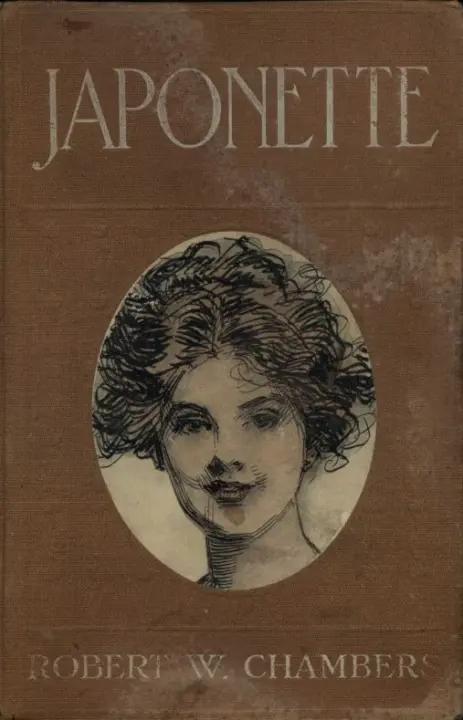
THE CLASSIC COLLECTION · 1912
"Japonette" by Robert W. Chambers is a novel written in the early 20th century. The story centers around James Edgerton, a young man returning to New York after a financial disaster that has wiped out his family's legacy. As he navigates his new reality, he unexpectedly encounters two orphaned nieces of a family acquaintance, Diana and Silvette Tennant, who have rented his apartment without his knowledge. Their interaction sets the stage for a rich exploration of relationships, identity, and the complexities of social status. At the start of the book, Edgerton arrives back in New York after losing everything in his late uncle's firm. Upon returning to his apartment, he finds it occupied by the Tennant sisters, who believed they were merely renting a space for the summer. This initial surprise leads to comedic misunderstandings and a need for collaboration as they each navigate their precarious financial situations. The characters’ dialogues reveal their personalities, creating a light-hearted yet contemplative atmosphere, hinting at deeper themes of resilience and familial connections that may unfold as their lives become intertwined.
Introduction adapted from the source catalogue; source summaries may be automatically generated.
Free to read · English · 59,465 words · No account needed
MAKE TIME FOR A GOOD BOOK
On by default. Untick to stop anonymous reading totals. Each page counts after 10 seconds in view. How this works.
Anonymous counting is on unless you have switched it off.
He glanced up at the awning gay with yellow and white stripes.
"Macy's," she admitted guiltily; "I'll starve you at dinner to-night to
pay for it."
He looked at her rather queerly, she thought.
"There are things I'd starve for--and people."
"And awnings, cousin?"
"Yours."
"That's very nice and gallant and obvious," she said in such a tormenting tone that he broke out almost impatiently:
"Japonette, can't you ever take me seriously?"
"I hope not, cousin."
For an instant the smile remained stamped on their lips; then the slight strain became perceptible, a moment only, for she turned lightly away and seated herself on the edge of a big hanging seat.
"More Macy," she nodded ruefully. "We'll all have to fast to-morrow.... You may sit here, too, if you wish.'"
A family of starlings were nesting in the cornices of the roof across the way, and the two young people watched the old birds for a while flying to the park and returning with food for their invisible young.
"Horrid, isn't it?" observed Diana. "But that's the way of things. No sooner are you married and happy than--zip! the scene changes, and you turn into a wretched purveyor of nourishment for the next generation. Carpe diem!"
"Cede Deo! It's probably good fun," commented Edgerton.
"What? Slaving for others just when you are all ready for real
happiness?"
"That's happiness, or nobody would do it--not even those birds."
"It's instinct!"
"Maybe with birds. Instincts are all right for birds, but we humans are usually arrested when we follow our instincts."
She laughed. "That is true; it's neither instinct nor happiness that makes us slaves to babies:--it's duty."
"If that were all it is," he said, "the state would be nourishing the majority of infants. No; it's probably fun, Diana. That's the only possible explanation."
She shrugged her dainty shoulders and looked at the westering sun above Staten Island; and in the gesture she seemed, in pantomime, to discard all feminine duties, cares, and responsibilities forever. Then as she rested there, cheek on hand, her blue eyes grew vaguer.
"I am glad you came into our lives," she said; "I mean it this time."
"I am glad, too," he said seriously.
"You are now; I can see that.... How soon will you be sorry?"
"Why?"
She turned toward him.
"How soon will the novelty tire you?"
"I have not considered you as a novelty."
"But I am; I'm a mechanical toy. My paint soon comes off, cousin."
"You're my own kin. There's no novelty, as you call it, in kinship,
nothing evanescent."
Your reading position is saved on this browser. Take it to another device with a library code. Reading pages adapt to text, rather than matching a printed edition.
Robert W. (Robert William) Chambers
Robert W. (Robert William) Chambers

Robert W. (Robert William) Chambers
Robert W. (Robert William) Chambers
BEHIND THE BOOK
This eBook is for the use of anyone anywhere in the United States and most other parts of the world at no cost and with almost no restrictions whatsoever. You may copy it, give it away or re-use it under the terms of the Project Gutenberg License included with this eBook or online at www.gutenberg.org. If you are not located in the United States, you will have to check the laws of the country where you are located before using this eBook. Read the source licence.
The original source file, including credits and licence, is retained by this library. Request an original-format copy at no charge. Please include the book title and Project Gutenberg identifier #52842.
KEEP YOUR CURIOSITY GOING
Coulson Kernahan

Maurice Baring
Frances Wright
Cécile Tormay

Frederic Jesup Stimson

W. H. P. (William Henry Pope) Jarvis