THE CLASSIC COLLECTION✦The haunts of menCLASSIC FREE BOOKS
The haunts of men
Robert W. (Robert William) Chambers
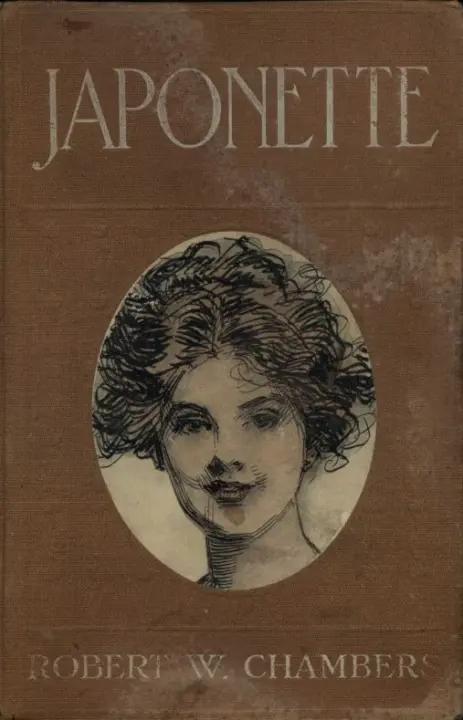
THE CLASSIC COLLECTION · 1912
"Japonette" by Robert W. Chambers is a novel written in the early 20th century. The story centers around James Edgerton, a young man returning to New York after a financial disaster that has wiped out his family's legacy. As he navigates his new reality, he unexpectedly encounters two orphaned nieces of a family acquaintance, Diana and Silvette Tennant, who have rented his apartment without his knowledge. Their interaction sets the stage for a rich exploration of relationships, identity, and the complexities of social status. At the start of the book, Edgerton arrives back in New York after losing everything in his late uncle's firm. Upon returning to his apartment, he finds it occupied by the Tennant sisters, who believed they were merely renting a space for the summer. This initial surprise leads to comedic misunderstandings and a need for collaboration as they each navigate their precarious financial situations. The characters’ dialogues reveal their personalities, creating a light-hearted yet contemplative atmosphere, hinting at deeper themes of resilience and familial connections that may unfold as their lives become intertwined.
Introduction adapted from the source catalogue; source summaries may be automatically generated.
Free to read · English · 59,465 words · No account needed
MAKE TIME FOR A GOOD BOOK
On by default. Untick to stop anonymous reading totals. Each page counts after 10 seconds in view. How this works.
Anonymous counting is on unless you have switched it off.
"No, Jim; my snooping days are about over. Dissection wearies; the clinic is a bore. I'm beginning to be content with the surface of things; I'm tending toward impressionism and the elimination of detail--toward the blessed serenity of stupidity. There is rest, there."
"Rest," he repeated, smiling. "Of what are you already tired?"
"I am tired of intelligence. It's too exacting. It forms a liaison with conscience, and affronts inclination. I'm tired of rule and precept with which an occult and inborn tyranny shackles me. I'm tired of more than that--but isn't that sufficient to fatigue a girl?"
"Heavy chains," he said, looking at the figures on the carpet, tracing them with an incurious eye.
"So I think I'll file away a few links."
"You can't."
He rose, walked to the window, drew the curtain, and looked out at the November stars. Limpid, inexorable, the countless eyes of the night met his. Whatever message they held for him he seemed to understand it, for, presently he came quietly back to her.
"Yes," he said, "it's a good game, after all. The main thing is to get into it and stay there--in medeas res--squarely." He looked up, smiling. "Your superb interference put me there. Why do you deny it?"
"Does it please you that I should not deny it?"
"Yes, Diana."
"Then I affirm and deny nothing--which makes me sufficient of a
nonentity to suit you, I hope."
"I am suited."
A moment later the bell rang, and Silvette and Jack, followed by Mr. Rivett, came laughing through the hall and into the little parlor.
"Jim! At last!" cried Silvette, giving him both hands.
"How are you, cousin! How are you, Mr. Rivett! Hello, Jack!" he said as they surrounded him with lively greetings.
"How goes it?" inquired Mr. Rivett dryly.
"First rate."
"Did you see McMillan in Pittsburgh?"
"By jove, I did! He was tremendously interesting--and exceedingly
cordial to me."
Mr. Rivett nodded. He might have said that he kept McMillan in his vest pocket, but he only stared at Edgerton through his big, round glasses.
They all had supper together, later; Jack and Silvette bubbled enthusiasm over the play and the splendid cast; Dineen came in and talked business to Rivett in casual undertones; Diana and Edgerton were quieter, even inclined to silence.
Meanwhile Jack was consulting Silvette about theater plans for the following evening, and Edgerton said that he would return from business in time to join them.
"You'll be in Jersey, won't you?" asked Rivett.
"Yes."
"Well, try to get back in time to dress and join us at dinner."
"I don't believe I can do that."
Rivett looked at him. "Try," he said briefly.
Your reading position is saved on this browser. Take it to another device with a library code. Reading pages adapt to text, rather than matching a printed edition.
Robert W. (Robert William) Chambers
Robert W. (Robert William) Chambers

Robert W. (Robert William) Chambers
Robert W. (Robert William) Chambers
BEHIND THE BOOK
This eBook is for the use of anyone anywhere in the United States and most other parts of the world at no cost and with almost no restrictions whatsoever. You may copy it, give it away or re-use it under the terms of the Project Gutenberg License included with this eBook or online at www.gutenberg.org. If you are not located in the United States, you will have to check the laws of the country where you are located before using this eBook. Read the source licence.
The original source file, including credits and licence, is retained by this library. Request an original-format copy at no charge. Please include the book title and Project Gutenberg identifier #52842.
KEEP YOUR CURIOSITY GOING
Coulson Kernahan

Maurice Baring
Frances Wright
Cécile Tormay

Frederic Jesup Stimson

W. H. P. (William Henry Pope) Jarvis