THE CLASSIC COLLECTION✦Tattle-tales of CupidCLASSIC FREE BOOKS
Tattle-tales of Cupid
Paul Leicester Ford
THE CLASSIC COLLECTION · 1899
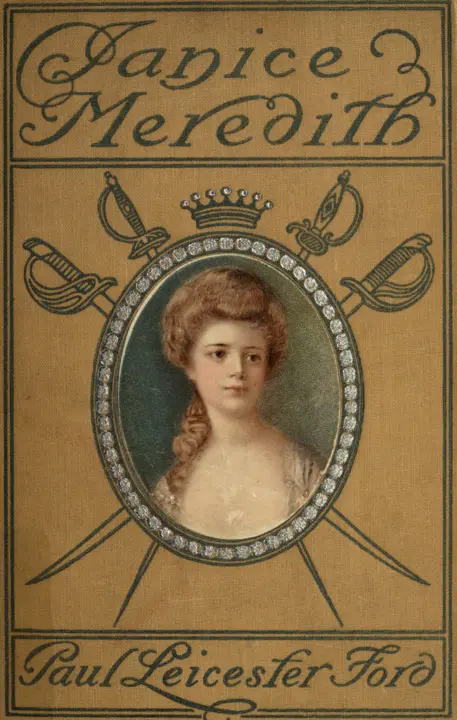
"Janice Meredith: A Story of the American Revolution" by Paul Leicester Ford is a historical novel written in the early 20th century. The book is set during the American Revolution and focuses on the life of a young heroine named Janice Meredith as she navigates the challenges and romantic entanglements of her time. Throughout the narrative, the story will delve into her relationships with various characters, including her family, friends, and the more mysterious figures that the revolutionary setting brings into her life. The opening of the novel introduces Janice Meredith as a spirited and somewhat rebellious young girl who finds herself in a playful yet tumultuous situation while reading a forbidden romance novel with her friend, Tabitha. Their enjoyment is cut short by Janice's mother, leading to a humorous yet stern reprimand. As Janice grapples with her mother's expectations and her own youthful desires, her characterization begins to unfold. Meanwhile, the stage is set for deeper themes of love, identity, and the social upheaval brought on by the revolutionary war that will shape Janice's life and define her character throughout the remainder of the story. The initial slice of life from Janice's perspective hints at her spirited nature and sets the tone for a tale that weaves personal growth with the larger historical narrative of the American Revolution.
Introduction adapted from the source catalogue; source summaries may be automatically generated.
Free to read · English · 183,228 words · No account needed
MAKE TIME FOR A GOOD BOOK
On by default. Untick to stop anonymous reading totals. Each page counts after 10 seconds in view. How this works.
Anonymous counting is on unless you have switched it off.
Once they were seated among the gravestones, the colonel said "I need not tell you that five times in the last two months the continental post-riders have been waylaid 'twixt Brunswick and Princeton by scoundrels in the pay of the British. Only once, fortunately, was there information of the slightest importance, but 't is something that must be stopped; and General Washington, knowing of my familiarity with this neighbourhood, directed me to discover and bring the wretches to punishment. Because I can trust you, I come to ask if you have any information or even inkling that can be of service?"
"Surely, man, you do not suspect any one in my parish?"
replied the clergyman.
Brereton smiled slightly. "There is little doubt that the secret Tories of Monmouth County are concerned; but there is some confederate in Brunswick, who, whether he takes an active share, supplies them with information concerning the routes, days, and hours of the posts. I see, however, you have no light to shed on the matter."
"'T is all news to me," answered the minister, shaking his head. "I knew that there was some illicit trading with New York, but that we had real traitors amongst us I never dreamed."
"Trap them I will, before many weeks," asserted the
officer. "If in no other way, I'll--"
The sentence was interrupted by the clang of the church
bell above them.
"Bless me!" cried McClave, springing to his feet. "Your
call has made me forget the auction, which, as justice of the
peace, I must attend."
"What auction?"
"For the sale of Greenwood under the statute."
The officer frowned. "I feared it when I read of the passing of a general act of forfeiture and escheatage," he muttered, "though I still hoped 't would not extend to them."
Together the two men crossed the green to the town hall, where now a crowd, consisting of almost every inhabitant of the village and of the outlying farms, was assembled. The officer, a scowl on his face, paused in the doorway and glanced about, then threaded his way to where two negresses stood weeping, and began talking to them. Meanwhile, the clergyman, pushing on through the throng, joined Esquire Hennion and Bagby, who for some reason were suspiciously eying each other on the platform.
"I intend to bid on the property, McClave," announced
the Honourable Joseph, "so 't is best that the squire takes
charge of the sale."
"Thet 'ere is jes what I'm a-calkerlatin' ter do, likewise,"
responded Hennion, with an ugly glance at Joe, "so I guess
yer'll hev ter assoom the runnin' of the perseedins yerself,
paason."
Your reading position is saved on this browser. Take it to another device with a library code. Reading pages adapt to text, rather than matching a printed edition.
Paul Leicester Ford

Paul Leicester Ford
Paul Leicester Ford

Paul Leicester Ford
BEHIND THE BOOK
This eBook is for the use of anyone anywhere in the United States and most other parts of the world at no cost and with almost no restrictions whatsoever. You may copy it, give it away or re-use it under the terms of the Project Gutenberg License included with this eBook or online at www.gutenberg.org. If you are not located in the United States, you will have to check the laws of the country where you are located before using this eBook. Read the source licence.
The original source file, including credits and licence, is retained by this library. Request an original-format copy at no charge. Please include the book title and Project Gutenberg identifier #5719.
KEEP YOUR CURIOSITY GOING
Cécile Tormay

Moritz Busch
Coulson Kernahan
John L. Ransom

Maurice Baring
Frances Wright