THE CLASSIC COLLECTION✦Tattle-tales of CupidCLASSIC FREE BOOKS
Tattle-tales of Cupid
Paul Leicester Ford
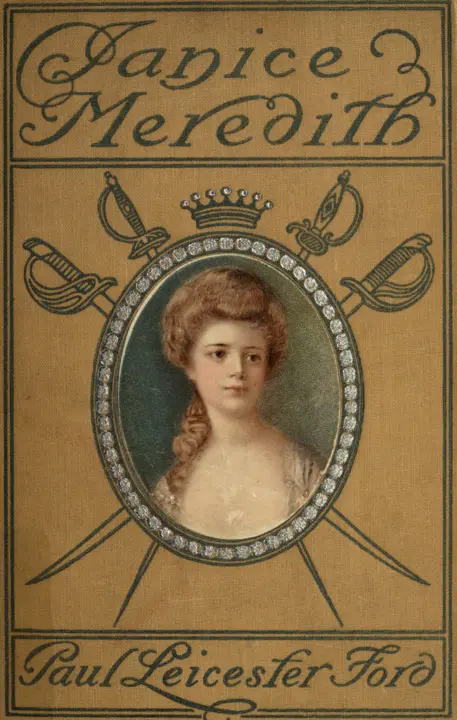
THE CLASSIC COLLECTION · 1899
"Janice Meredith: A Story of the American Revolution" by Paul Leicester Ford is a historical novel written in the early 20th century. The book is set during the American Revolution and focuses on the life of a young heroine named Janice Meredith as she navigates the challenges and romantic entanglements of her time. Throughout the narrative, the story will delve into her relationships with various characters, including her family, friends, and the more mysterious figures that the revolutionary setting brings into her life. The opening of the novel introduces Janice Meredith as a spirited and somewhat rebellious young girl who finds herself in a playful yet tumultuous situation while reading a forbidden romance novel with her friend, Tabitha. Their enjoyment is cut short by Janice's mother, leading to a humorous yet stern reprimand. As Janice grapples with her mother's expectations and her own youthful desires, her characterization begins to unfold. Meanwhile, the stage is set for deeper themes of love, identity, and the social upheaval brought on by the revolutionary war that will shape Janice's life and define her character throughout the remainder of the story. The initial slice of life from Janice's perspective hints at her spirited nature and sets the tone for a tale that weaves personal growth with the larger historical narrative of the American Revolution.
Introduction adapted from the source catalogue; source summaries may be automatically generated.
Free to read · English · 183,228 words · No account needed
MAKE TIME FOR A GOOD BOOK
On by default. Untick to stop anonymous reading totals. Each page counts after 10 seconds in view. How this works.
Anonymous counting is on unless you have switched it off.
"I was just a-tellin' Captain Plunkett that we'd done a
mighty bad stroke this mornin', but that this 'ud be a worse
one, for--"
"Why, it 's Phil!" cheerfully exclaimed Mr. Meredith. "Welcome, lad, and all the more that I feared 't was another call the thieving Whigs were about to pay my cribs and barn. Where have ye been, lad? But, rather, in with ye and your friend," he said, interrupting his own question, as the other officer approached, "and tell your errand over a bottle where there's more warmth."
"It's such a mighty sorry errand, squire," replied Philemon, with evident reluctance, and reddening, "that it won't take many words ter tell. We was sent out yestere'en toward Somerset Court-house, a-foragin', and this mornin' as we was returnin', we was set upon by the rebels."
"Devil burn it!" muttered the captain, "what do you call such mode of warfare? At Millstone Ford, where they attacked us, they scattered like sheep as we deployed for a charge. But the moment we were on the march in column, ping, ping, ping from every bit of cover, front, flank, and rear, and each bullet with a billet at that, no matter what the distance. Not till we reached Middle Brook did their stinging fire cease."
"And 'stead of bringin' into Brunswick forty carts of food
and forage, and a swipe of cattle," groaned Philemon, "we
has only four waggon-loads of wounded ter show for our
raid."
"With the post nigh to short commons," went on Plunkett. "Therefore, Mr. Meredith, we are put to the necessity of taking a look at your barn and granaries.
"What!" roared the squire, incredulously, yet with a wrath in his voice that went far to show that conviction rather than disbelief was his true state of mind. "'T is impossible that British regulars will thieve like the rebels."
Both the officers flushed, and Philemon began a faltering explanation and self-exculpation, but he was cut short by his superior saying sharply: "Tush, sir, such language will not make us deal the more gently with your cribs; so if you 'd save something, mend your speech."
"I done my best, squire," groaned Philemon, "ter dissuade
Captain Plunkett, but General Grant's orders was not
ter come back without a train."
"Then at least ye'll have the grace to pay for what ye take? Ye'll be no worse than the rebel, that I'll lay to."
Your reading position is saved on this browser. Take it to another device with a library code. Reading pages adapt to text, rather than matching a printed edition.
Paul Leicester Ford
Paul Leicester Ford
Paul Leicester Ford

Paul Leicester Ford
BEHIND THE BOOK
This eBook is for the use of anyone anywhere in the United States and most other parts of the world at no cost and with almost no restrictions whatsoever. You may copy it, give it away or re-use it under the terms of the Project Gutenberg License included with this eBook or online at www.gutenberg.org. If you are not located in the United States, you will have to check the laws of the country where you are located before using this eBook. Read the source licence.
The original source file, including credits and licence, is retained by this library. Request an original-format copy at no charge. Please include the book title and Project Gutenberg identifier #5719.
KEEP YOUR CURIOSITY GOING
Cécile Tormay

Moritz Busch
Coulson Kernahan
John L. Ransom

Maurice Baring
Frances Wright