THE CLASSIC COLLECTION✦Tattle-tales of CupidCLASSIC FREE BOOKS
Tattle-tales of Cupid
Paul Leicester Ford
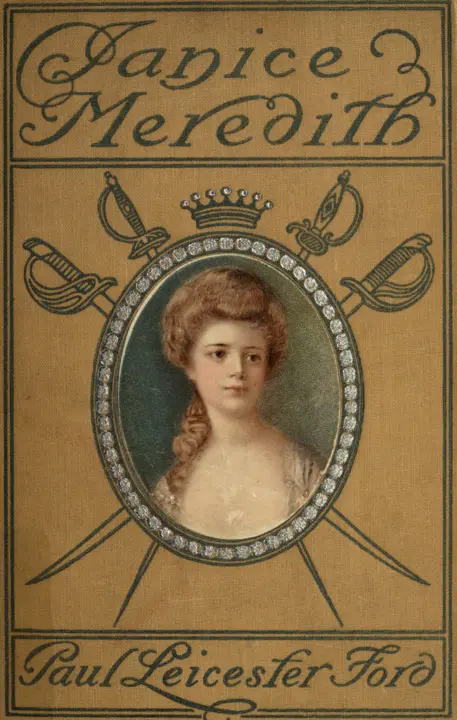
THE CLASSIC COLLECTION · 1899
"Janice Meredith: A Story of the American Revolution" by Paul Leicester Ford is a historical novel written in the early 20th century. The book is set during the American Revolution and focuses on the life of a young heroine named Janice Meredith as she navigates the challenges and romantic entanglements of her time. Throughout the narrative, the story will delve into her relationships with various characters, including her family, friends, and the more mysterious figures that the revolutionary setting brings into her life. The opening of the novel introduces Janice Meredith as a spirited and somewhat rebellious young girl who finds herself in a playful yet tumultuous situation while reading a forbidden romance novel with her friend, Tabitha. Their enjoyment is cut short by Janice's mother, leading to a humorous yet stern reprimand. As Janice grapples with her mother's expectations and her own youthful desires, her characterization begins to unfold. Meanwhile, the stage is set for deeper themes of love, identity, and the social upheaval brought on by the revolutionary war that will shape Janice's life and define her character throughout the remainder of the story. The initial slice of life from Janice's perspective hints at her spirited nature and sets the tone for a tale that weaves personal growth with the larger historical narrative of the American Revolution.
Introduction adapted from the source catalogue; source summaries may be automatically generated.
Free to read · English · 183,228 words · No account needed
MAKE TIME FOR A GOOD BOOK
On by default. Untick to stop anonymous reading totals. Each page counts after 10 seconds in view. How this works.
Anonymous counting is on unless you have switched it off.
"Tell you shall," exclaimed Washington, warmly. "The fact was known to none but the general officers and to the powder committee, and if there has been unguarded or unfaithful speech it shall be traced to its source."
"Your Excellency wrote a letter to the committee of Middlesex
County in Jersey?"
"I did."
"The committee refused to part with the powder."
Washington rose. "Have they no public spirit, no consideration of our desperate plight?" he exclaimed.
"But your Excellency, though the committee would not part with the powder, some lads of spirit would not see you want for it, and--and by united effort we succeeded in getting and bringing to Cambridge twenty half-barrels of powder, which is now outside, subject to your orders."
With an exclamation mingling disbelief and hope, the commander
sprang to the window. A glance took in the two carts
loaded with kegs, and he turned, his face lighted with
emotion.
"God only knows the grinding anxiety, the sleepless nights, I have suffered, knowing how defenceless the army committed to my charge actually was! You have done our cause a service impossible to measure or reward." He shook the man's hand warmly.
"And I ask in payment, your Excellency, premission to
volunteer."
"In what capacity?"
"I have served in the British forces as an officer, but all I ask is leave to fight, without regard to rank."
"Tell me the facts of your life."
"As I said, my name is John Brereton. Nothing else about
me will ever be known from me."
Washington scrutinised the man with an intent surprise. "You cannot expect us to trust you on such information."
"An hour ago it would have been possible for me to have sneaked by stealth into the British lines with this letter," said the man, taking from his pocket a sheet of paper and handing it to the general. "What think you would Sir William Howe have given me for news, over the signature of General Washington, that the Continental Army had less than ten rounds of powder per man?"
Washington studied the face of the young fellow steadily for twenty seconds. "Are you good at penmanship?" he asked.
"I am a deft hand at all smouting work," replied Brereton.
"Then, sir," said Washington, smiling slightly, "as I wish to keep an eye on you until you have proved yourself, I shall for the present find employment for you in my own family."
Thus a twelve-month passed without Philemon Hennion, John Evatt, Charles Fownes, Parson McClave, or any other lover so much as once darkening the doors of Greenwood.
Your reading position is saved on this browser. Take it to another device with a library code. Reading pages adapt to text, rather than matching a printed edition.
Paul Leicester Ford

Paul Leicester Ford
Paul Leicester Ford

Paul Leicester Ford
BEHIND THE BOOK
This eBook is for the use of anyone anywhere in the United States and most other parts of the world at no cost and with almost no restrictions whatsoever. You may copy it, give it away or re-use it under the terms of the Project Gutenberg License included with this eBook or online at www.gutenberg.org. If you are not located in the United States, you will have to check the laws of the country where you are located before using this eBook. Read the source licence.
The original source file, including credits and licence, is retained by this library. Request an original-format copy at no charge. Please include the book title and Project Gutenberg identifier #5719.
KEEP YOUR CURIOSITY GOING
Cécile Tormay

Moritz Busch
Coulson Kernahan
John L. Ransom

Maurice Baring
Frances Wright