THE CLASSIC COLLECTION✦Noah Webster American Men of LettersCLASSIC FREE BOOKS
Noah Webster American Men of Letters
Horace Elisha Scudder
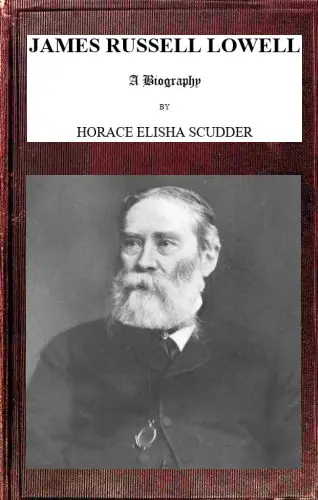
THE CLASSIC COLLECTION · 1901
"James Russell Lowell, A Biography; vol 2/2" by Horace Elisha Scudder is a biographical account written in the early 20th century. This work explores the life and contributions of James Russell Lowell, focusing on various critical periods of his life, including his engagement in political discourse and his literary career. The biography covers Lowell's role during the Civil War, his editorial work for the Atlantic Monthly, and his political opinions, providing insight into his impact on American literature and thought, particularly surrounding issues like democracy and slavery. The opening of the biography sets the stage for a detailed examination of Lowell's engagement with the political landscape of his time, particularly during the Civil War. It discusses the establishment of the Atlantic Monthly, highlighting its intention to be a platform for both art and politics under Lowell's leadership. The author outlines how this magazine became a crucial medium for discussions about pressing national issues, including the moral and political implications of slavery. The text reflects on Lowell's fervent convictions regarding freedom and democracy, emphasizing the ethical considerations that guided his views as the nation faced tumultuous times.
Introduction adapted from the source catalogue; source summaries may be automatically generated.
Free to read · English · 135,986 words · No account needed
MAKE TIME FOR A GOOD BOOK
On by default. Untick to stop anonymous reading totals. Each page counts after 10 seconds in view. How this works.
Anonymous counting is on unless you have switched it off.
The character, of the work he was noticing led him at the beginning of his paper into some reflections on the part played by newspapers in modern times, and the stimulus given to national sensitiveness by the quick transmission of news. “It is no trifling matter,” he says, “that thirty millions of men should be thinking the same thought and feeling the same pang at a single moment of time, and that these vast parallels of latitude should become a neighborhood more intimate than many a country village. The dream of Human Brotherhood seems to be coming true at last. The peasant who dipped his net in the Danube, or trapped the beaver on its banks, perhaps never heard of Cæsar, or of Cæsar’s murder; but the shot that shattered the forecasting brain, and curdled the warm, sweet heart of the most American of Americans, echoed along the wires through the length and breadth of a continent, swelling all eyes at once with tears of indignant sorrow. Here was a tragedy fulfilling the demands of Aristotle, and purifying with an instantaneous throb of pity and terror a theatre of such proportions as the world never saw. We doubt if history ever recorded an event so touching and awful as this sympathy, so wholly emancipated from the toils of space and time that it might seem as if earth were really sentient, as some have dreamed, or the great god Pan alive again to make the hearts of nations stand still with his shout. What is Beethoven’s ‘Funeral March for the Death of a Hero’ to the symphony of love, pity, and wrathful resolve which the telegraph of that April morning played on the pulses of a nation?”
It was perhaps with one of these phrases lingering in his mind that he characterized Lincoln a few weeks later when he came to write his Ode recited at the Harvard Commemoration. This commemoration was held by Harvard College, 21 July, 1865, in honor of its sons who had died in the war. Lowell was asked to write a poem for the occasion, and he has given in a letter written a score of years later, to Mr. Gilder, a bit of reminiscence respecting its composition. “The ode itself,” he says, “was an improvisation. Two days before the commemoration I had told my friend Child that it was impossible--that I was dull as a door-mat. But the next day something gave me a jog, and the whole thing came out of me with a rush. I sat up all night writing it out clear, and took it on the morning of the day to Child. ‘I have something but don’t yet know what it is, or whether it will do. Look at it and tell me.’ He went a little way apart with it under an elm-tree in the College yard. He read a passage here and there, brought it back to me, and said ‘Do? I should think so! Don’t you be scared!’ And I wasn’t, but virtue enough had gone out of me to make me weak for a fortnight after.” Something of this reaction appears in a letter to Miss Norton, written four days after the delivery of the poem: “I eat and smoke and sleep and go through all the nobler functions of a man mechanically still, and wonder at myself as at something outside of and alien to me. For have I not worked myself lean on an ‘Ode for Commemoration?’ Was I not so rapt with the fervor of conception as I have not been these ten years, losing my sleep, my appetite, and my flesh, those attributes to which I before alluded as nobly uniting us in a common nature with our kind? Did I not for two days exasperate everybody that came near me by reciting passages in order to try them on? Did I not even fall backward and downward to the old folly of hopeful youth, and think I had written something really good at last? And am I not now enduring those retributive dumps which ever follow such sinful exaltations, the Erynnyes of Vanity? Did not I make John Holmes and William Story shed tears by my recitation of it (my ode) in the morning, both of ’em fervently declaring it was ‘noble’? Did not even the silent Rowse declare ’twas in a higher mood than much or most of later verse? Did not I think, in my nervous exhilaration, that ’twould be the feature (as reporters call it) of the day? And, after all, have I not a line in the Daily Advertiser calling it a ‘graceful poem’ (or ‘some graceful verses’ I forget which), which ‘was received with applause?’ Why, Jane, my legs are those of grasshoppers, and my head is an autumn threshing-floor, still beating with the alternate flails of strophe and antistrophe, and an infinite virtue is gone out of me somehow--but it seems not into my verse as I dreamed. Well, well, Charles will like it--but then he always does, so what’s the use? I am Icarus now,
Your reading position is saved on this browser. Take it to another device with a library code. Reading pages adapt to text, rather than matching a printed edition.
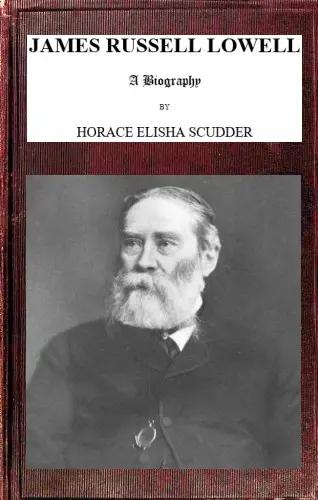
Horace Elisha Scudder

Horace Elisha Scudder
Horace Elisha Scudder
Horace Elisha Scudder
BEHIND THE BOOK
This eBook is for the use of anyone anywhere in the United States and most other parts of the world at no cost and with almost no restrictions whatsoever. You may copy it, give it away or re-use it under the terms of the Project Gutenberg License included with this eBook or online at www.gutenberg.org. If you are not located in the United States, you will have to check the laws of the country where you are located before using this eBook. Read the source licence.
The original source file, including credits and licence, is retained by this library. Request an original-format copy at no charge. Please include the book title and Project Gutenberg identifier #57777.
KEEP YOUR CURIOSITY GOING
Cécile Tormay

Moritz Busch
John L. Ransom
Frances Wright
Cécile Tormay

Mabel Potter Daggett