THE CLASSIC COLLECTION✦Noah Webster American Men of LettersCLASSIC FREE BOOKS
Noah Webster American Men of Letters
Horace Elisha Scudder
THE CLASSIC COLLECTION · 1901
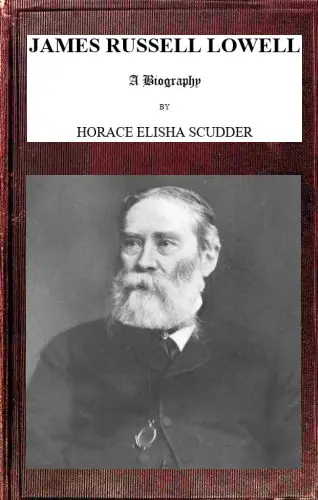
"James Russell Lowell, A Biography; vol 2/2" by Horace Elisha Scudder is a biographical account written in the early 20th century. This work explores the life and contributions of James Russell Lowell, focusing on various critical periods of his life, including his engagement in political discourse and his literary career. The biography covers Lowell's role during the Civil War, his editorial work for the Atlantic Monthly, and his political opinions, providing insight into his impact on American literature and thought, particularly surrounding issues like democracy and slavery. The opening of the biography sets the stage for a detailed examination of Lowell's engagement with the political landscape of his time, particularly during the Civil War. It discusses the establishment of the Atlantic Monthly, highlighting its intention to be a platform for both art and politics under Lowell's leadership. The author outlines how this magazine became a crucial medium for discussions about pressing national issues, including the moral and political implications of slavery. The text reflects on Lowell's fervent convictions regarding freedom and democracy, emphasizing the ethical considerations that guided his views as the nation faced tumultuous times.
Introduction adapted from the source catalogue; source summaries may be automatically generated.
Free to read · English · 135,986 words · No account needed
MAKE TIME FOR A GOOD BOOK
On by default. Untick to stop anonymous reading totals. Each page counts after 10 seconds in view. How this works.
Anonymous counting is on unless you have switched it off.
[61] The reference is to a volume by Mr. William Cleaver Wilkinson, entitled A Free Lance in the Field of Life and Letters, published in 1874, which contained three papers on “Mr. Lowell’s Poetry,” “Mr. Lowell’s ‘Cathedral,’” and “Mr. Lowell’s Prose.” In a letter to Mrs. Clifford (Letters, ii. 290) Lowell refers to this book apparently when he says: “You will be glad to hear that a man once devoted an entire volume to the exposure of my solecisms, or whatever he chose to call them. I never read it--lest it should spoil my style by making it conscious.” The papers on Lowell constitute, however, less than a third of Mr. Wilkinson’s book.
[62] See, for further detail, Mr. E. P. Bliss’s statement in Letters, ii. 160, 161, footnote.
[63] Mr. Blaine.
[64] Letters, ii. 171.
[65] Letters, ii. 173-178.
[66] Literary Friends and Acquaintances, pp. 237, 238.
[67] Elmwood, 5 June, 1877. Letters, ii. 104.
[68] To Miss Grace Norton. Letters, ii. 195, 196.
[69] Letters, ii. 200-202.
[70] Copied in Impressions of Spain, pp. 53-72.
[71] Señor Cánovas del Castillo.
[72] See, for the larger part, Impressions of Spain, pp. 23-42.
[73] “Bare is back without a brother behind it.”
Norse Proverb.
[74] Letters, i 343.
[75] New York Tribune, 16 August, 1891.
[76] Auld Lang Syne, p. 179.
[77] The succession of Mr. Arthur to the presidency naturally set flying all sorts of rumors about a fresh deal in high offices.
[78] The old inn at which he and the Fields had formerly stayed.
[79] “E Pluribus Unum,” Political Essays, pp. 67, 68. Printed first in the Atlantic Monthly, February, 1861.
[80] Despatch No. 132, dated 26 February, 1881.
[81] Foreign Relations, 1881, p. 543.
[82] The title of the act, called sometimes the “coercion” sometimes the “protection” act, was “An act for the better protection of person and property in Ireland.”
[83] Mr. Frelinghuysen had succeeded Mr. Blaine as Secretary of State.
[84] The New York Tribune, 5, 6 April, 1882.
[85] The Spectator, 1 August, 1891.
[86] Letters, ii. 293, 294.
[87] The Athenæum, 22 August, 1891.
[88] January, 1897. “Conversations with Mr. Lowell.”
[89] Literary Essays, iv.
[90] “The Place of the Independent in Politics,” in Literary and
Political Addresses.
[91] 13 August, 1891.
[92] Report No. 1188, 49th Congress, 1st session, p. 28.
[93] All these remarks were stenographically reported and subjected probably to little revision, certainly to none by the speaker.
[94] Mr. James Welsh, representing the Typographical Union.
[95] See supra, vol. i. p. 293.
[96] “I went also,” he says, after hunting up the magazine in the Athenæum, “to see Whittier, who was in town. He was very cordial. There is a wrinkled freshness about him as of a russet apple in April, but I fear we shan’t have him much longer.”
Your reading position is saved on this browser. Take it to another device with a library code. Reading pages adapt to text, rather than matching a printed edition.
Horace Elisha Scudder

Horace Elisha Scudder
Horace Elisha Scudder
Horace Elisha Scudder
BEHIND THE BOOK
This eBook is for the use of anyone anywhere in the United States and most other parts of the world at no cost and with almost no restrictions whatsoever. You may copy it, give it away or re-use it under the terms of the Project Gutenberg License included with this eBook or online at www.gutenberg.org. If you are not located in the United States, you will have to check the laws of the country where you are located before using this eBook. Read the source licence.
The original source file, including credits and licence, is retained by this library. Request an original-format copy at no charge. Please include the book title and Project Gutenberg identifier #57777.
KEEP YOUR CURIOSITY GOING
Cécile Tormay

Moritz Busch
John L. Ransom
Frances Wright
Cécile Tormay

Mabel Potter Daggett