THE CLASSIC COLLECTION✦Noah Webster American Men of LettersCLASSIC FREE BOOKS
Noah Webster American Men of Letters
Horace Elisha Scudder
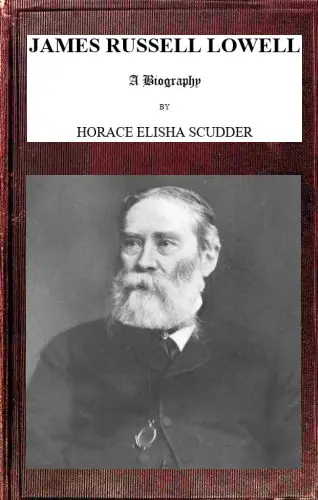
THE CLASSIC COLLECTION · 1901
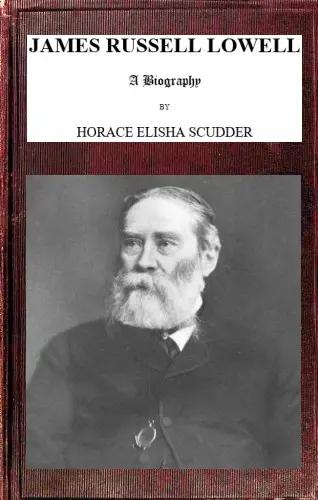
"James Russell Lowell, A Biography; vol 2/2" by Horace Elisha Scudder is a biographical account written in the early 20th century. This work explores the life and contributions of James Russell Lowell, focusing on various critical periods of his life, including his engagement in political discourse and his literary career. The biography covers Lowell's role during the Civil War, his editorial work for the Atlantic Monthly, and his political opinions, providing insight into his impact on American literature and thought, particularly surrounding issues like democracy and slavery. The opening of the biography sets the stage for a detailed examination of Lowell's engagement with the political landscape of his time, particularly during the Civil War. It discusses the establishment of the Atlantic Monthly, highlighting its intention to be a platform for both art and politics under Lowell's leadership. The author outlines how this magazine became a crucial medium for discussions about pressing national issues, including the moral and political implications of slavery. The text reflects on Lowell's fervent convictions regarding freedom and democracy, emphasizing the ethical considerations that guided his views as the nation faced tumultuous times.
Introduction adapted from the source catalogue; source summaries may be automatically generated.
Free to read · English · 135,986 words · No account needed
MAKE TIME FOR A GOOD BOOK
On by default. Untick to stop anonymous reading totals. Each page counts after 10 seconds in view. How this works.
Anonymous counting is on unless you have switched it off.
I return the letter.
Faithfully yours,
J. R. LOWELL.
[18] Quoted by A. V. G. Allen in his Life and Letters of Phillips
Brooks, i. 552.
[19] An interesting venture was made by Little, Brown & Co. in the summer of 1864, which unfortunately proved too uncertain to be carried through. Lowell was to have edited a series of volumes illustrative of the Old Dramatists, from Marlowe down. He prepared one volume, which was put into type but never published. A set of proofs is in the library of Harvard University.
[20] “James Russell Lowell,” in the Atlantic Monthly, January, 1892.
[21] “Shakespeare Once More,” iii. 33.
[22] “Chaucer,” iii. 292.
[23] “Thoreau,” i. 361.
[24] This was no doubt Cranch’s Kobboltozo.
[25] “To J. B. on sending me a seven-pound trout,” Atlantic Monthly,
July, 1866.
[26] The lost copy of Donne turned up, and after Lowell’s death his daughter and Mr. Norton used it for the production of a special edition by the Grolier Club in 1895.
[27] See supra, i. 300-302.
[28] What Lowell thought of the impeachment business may be inferred from a passage in a letter written to Mr. Godkin, 20 December, 1867: “I was sorry to see you [in the Nation] relaxing a little about impeachment. For myself, I have seen no sufficient reason to change my old opinion of its folly. They remind me of the boy’s playing at hanging, who finds he has done it all right,--only forgotten to cut himself down. We might be able to stand it, we are a wonderful people, of course, but the other lesson of standing A. J. to the end of his tether is worth ten of this. The South is as mad now as it ever will be.”
[29] With a single exception, for which see infra, p. 122.
[30] Letters, i. 349.
[31] “Rousseau,” in Literary Essays, ii. 256.
[32] Letters, i. 408.
[33] After all Whittier changed his mind and gave his book the title
“Among the Hills.”
[34] The bookbinder who wanted the lettering for the volume.
[35] Originally designed to make part of The Nooning.
[36] George Eliot’s The Spanish Gipsy.
[37] It was Gobright’s Recollections.
[38] Lowell amplified this thought in his paper on Chaucer, Literary
Essays, iii. 299, 300.
[39] Letters, ii. 5. There was a reciprocity of feeling, if we may judge from the striking fact that on the right, within the gate which leads to the impressive common tomb of the Army of Tennessee, in New Orleans, is an inscription taken from Lowell’s poem, “On the Capture of Fugitive Slaves near Washington.”
“Before Man made us citizens, great Nature made us men.”
[40] Perhaps it was on this journey that she told Mrs. Fields she never thought of her father as a poet, but just her father.
[41] Letters, ii. 52.
[42] Letters, ii. 35.
[43] Letters, ii. 38.
Your reading position is saved on this browser. Take it to another device with a library code. Reading pages adapt to text, rather than matching a printed edition.
Horace Elisha Scudder

Horace Elisha Scudder
Horace Elisha Scudder
Horace Elisha Scudder
BEHIND THE BOOK
This eBook is for the use of anyone anywhere in the United States and most other parts of the world at no cost and with almost no restrictions whatsoever. You may copy it, give it away or re-use it under the terms of the Project Gutenberg License included with this eBook or online at www.gutenberg.org. If you are not located in the United States, you will have to check the laws of the country where you are located before using this eBook. Read the source licence.
The original source file, including credits and licence, is retained by this library. Request an original-format copy at no charge. Please include the book title and Project Gutenberg identifier #57777.
KEEP YOUR CURIOSITY GOING
Cécile Tormay

Moritz Busch
John L. Ransom
Frances Wright
Cécile Tormay

Mabel Potter Daggett