THE CLASSIC COLLECTION✦Noah Webster American Men of LettersCLASSIC FREE BOOKS
Noah Webster American Men of Letters
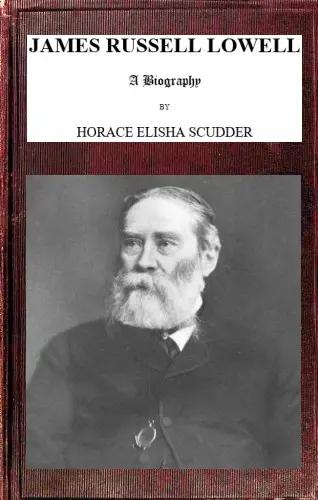
Horace Elisha Scudder
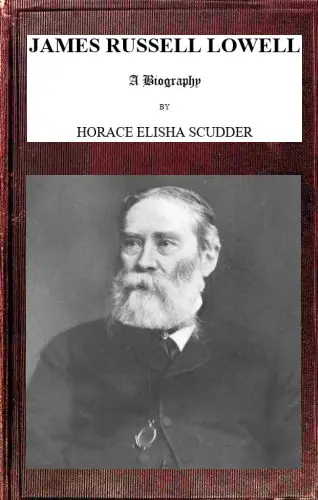
THE CLASSIC COLLECTION · 1901
"James Russell Lowell, A Biography; vol 2/2" by Horace Elisha Scudder is a biographical account written in the early 20th century. This work explores the life and contributions of James Russell Lowell, focusing on various critical periods of his life, including his engagement in political discourse and his literary career. The biography covers Lowell's role during the Civil War, his editorial work for the Atlantic Monthly, and his political opinions, providing insight into his impact on American literature and thought, particularly surrounding issues like democracy and slavery. The opening of the biography sets the stage for a detailed examination of Lowell's engagement with the political landscape of his time, particularly during the Civil War. It discusses the establishment of the Atlantic Monthly, highlighting its intention to be a platform for both art and politics under Lowell's leadership. The author outlines how this magazine became a crucial medium for discussions about pressing national issues, including the moral and political implications of slavery. The text reflects on Lowell's fervent convictions regarding freedom and democracy, emphasizing the ethical considerations that guided his views as the nation faced tumultuous times.
Introduction adapted from the source catalogue; source summaries may be automatically generated.
Free to read · English · 135,986 words · No account needed
MAKE TIME FOR A GOOD BOOK
On by default. Untick to stop anonymous reading totals. Each page counts after 10 seconds in view. How this works.
Anonymous counting is on unless you have switched it off.
Seward, William Henry, preferred by J. R. L. for the presidency, ii. 18.
Seward-Johnson Reaction, The, ii. 107.
Shackford, William Henry, a college friend of J. R. L., i. 33;
goes to teach at Phillips Exeter Academy, 33;
his relation to J. R. L., 34;
letters of J. R. L. to, 34-38.
Shady Hill, home of the Norton family, i. 446.
Shakespeare, an early acquaintance of J. R. L., i. 15; read by him in college, 37; White’s edition of, reviewed by J. R. L., 432, 433; lectured on and written about by J. R. L., ii. 77.
Shakespeare Once More, quoted, i. 388; ii. 87.
Shakespeare’s Richard III., ii. 351.
Shaw, Frank, i. 314.
Shaw, Robert Gould, J. R. L. commemorates in a poem, ii. 42; honors in a letter to his mother, 43.
Shelley, Percy Bysshe, J. R. L. introduced to the writings of, i. 32;
his genius likened to St. Elmo’s fire, 138;
the shell of, 375.
Shepherd of King Admetus, The, i. 147.
Sicily, J. R. L. visits and characterizes, i. 384.
Sidney’s “Defense of Poesie,” i. 67.
“Simple Cobbler of Agawam,” ii. 367.
Sirens, The, i. 85.
“Sir Galahad” suggests Sir Launfal, i. 268.
“Skipper Ireson’s Ride,” by Whittier, J. R. L. on, i. 417, 418.
“Slave Mother, The,” verses by M. W. L., i. 180.
Sleeplessness, J. R. L.’s cure for, ii. 383.
Slick, Sam, i. 261.
Smalley, George W., on J. R. L.’s Americanism, ii. 262.
Smith Professorship, Longfellow resigns, i. 375;
and it is given to J. R. L., 376;
afterwards emeritus, ii. 322.
Smith, Sydney, on Daniel Webster, i. 221;
his scornful question, ii. 363.
Socialism, ii. 315, 349.
“Solitude and Society” by Emerson, J. R. L. on, i. 416.
Song sung at an Anti-Slavery Picnic, J. Owen wishes to suppress, i. 184.
Sonnet, J. R. L. on the, as seen in Longfellow’s writing, ii. 306.
Sophocles, the Philoctetes of, ii. 404.
Southborough, ii. 322.
“Southern History of the War” reviewed by J. R. L., ii. 53.
Southern Literary Messenger, a vehicle for J. R. L.’s work, i. 92.
Sower, The, i. 228.
Spanish, J. R. L. studies, ii. 76;
a familiar tongue to him when he went to Madrid, 221;
how J. R. L. worked at it, 241, 242.
Spectator, London, on J. R. L. and Lord Granville, ii. 291.
Spence, Keith, maternal grandfather of J. R. L., i. 11.
Spence, Mary Traill, J. R. L.’s loyalist grandmother, i. 11, note.
Spens, Sir Patrick, a poetic forbear of J. R. L., i. 11.
Spenser, Edmund, earliest of J. R. L.’s poets, i. 14, and note;
imitated by J. R. L., 351;
essay on, by J. R. L., ii. 188.
Squirrels, J. R. L.’s care for, ii. 407.
Stanley, Henry Morton, ii. 296.
Stedman, Edmund Clarence, J. R. L. to, on modern antiques, ii. 93.
Your reading position is saved on this browser. Take it to another device with a library code. Reading pages adapt to text, rather than matching a printed edition.
Horace Elisha Scudder

Horace Elisha Scudder
Horace Elisha Scudder
Horace Elisha Scudder
BEHIND THE BOOK
This eBook is for the use of anyone anywhere in the United States and most other parts of the world at no cost and with almost no restrictions whatsoever. You may copy it, give it away or re-use it under the terms of the Project Gutenberg License included with this eBook or online at www.gutenberg.org. If you are not located in the United States, you will have to check the laws of the country where you are located before using this eBook. Read the source licence.
The original source file, including credits and licence, is retained by this library. Request an original-format copy at no charge. Please include the book title and Project Gutenberg identifier #57777.
KEEP YOUR CURIOSITY GOING
Cécile Tormay

Moritz Busch
John L. Ransom
Frances Wright
Cécile Tormay

Mabel Potter Daggett