THE CLASSIC COLLECTION✦Noah Webster American Men of LettersCLASSIC FREE BOOKS
Noah Webster American Men of Letters
Horace Elisha Scudder
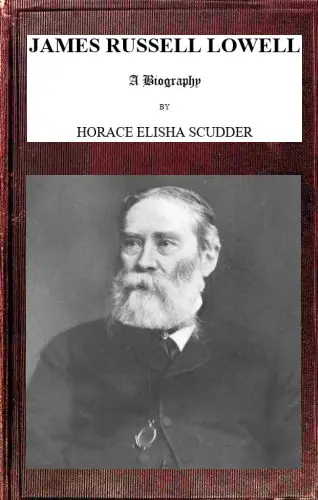
THE CLASSIC COLLECTION · 1901
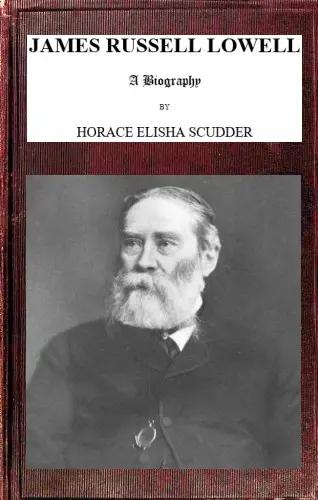
"James Russell Lowell, A Biography; vol 2/2" by Horace Elisha Scudder is a biographical account written in the early 20th century. This work explores the life and contributions of James Russell Lowell, focusing on various critical periods of his life, including his engagement in political discourse and his literary career. The biography covers Lowell's role during the Civil War, his editorial work for the Atlantic Monthly, and his political opinions, providing insight into his impact on American literature and thought, particularly surrounding issues like democracy and slavery. The opening of the biography sets the stage for a detailed examination of Lowell's engagement with the political landscape of his time, particularly during the Civil War. It discusses the establishment of the Atlantic Monthly, highlighting its intention to be a platform for both art and politics under Lowell's leadership. The author outlines how this magazine became a crucial medium for discussions about pressing national issues, including the moral and political implications of slavery. The text reflects on Lowell's fervent convictions regarding freedom and democracy, emphasizing the ethical considerations that guided his views as the nation faced tumultuous times.
Introduction adapted from the source catalogue; source summaries may be automatically generated.
Free to read · English · 135,986 words · No account needed
MAKE TIME FOR A GOOD BOOK
On by default. Untick to stop anonymous reading totals. Each page counts after 10 seconds in view. How this works.
Anonymous counting is on unless you have switched it off.
Holmes, John, friend of J. R. L. and member with him of whist club, i. 271;
his whimsical mode of giving a gift, 311;
letter to, from J. R. L., descriptive of life in Florence, 315;
letter to, from J. R. L., giving impressions of Rome, 342;
a member of the Adirondack Club, 405;
on his brother’s musical gifts, 448;
hears Commemoration Ode, ii. 64;
J. R. L. finds him in London, 154;
and in Paris, 161;
companion to J. R. L. in Paris, 163.
Holmes, Oliver Wendell, in A Fable for Critics, i. 248, 254;
has a copy of the book sent him, 249;
writes of it to J. R. L., 251;
is written to about it by J. R. L., 252, note;
his poem at dinner given to J. R. L., 379;
dines with Mr. Phillips, 411;
J. R. L. makes it a condition precedent to the
editorship of the Atlantic, that he shall be a contributor, 413;
how he was regarded by some of the public, 426;
his poem in “The Round Table,” 431;
on the Saturday Club, 447;
tells stories at dinner, 448;
takes a photograph of J. R. L., ii. 72;
has a colloquy with Anthony Trollope, 83;
J. R. L. takes his place with an ode, 189;
J. R. L. to, on Irish troubles, 292;
his one imperishable poem, 365.
Holmes, Oliver Wendell, Jr., wounded, ii. 31.
Home, The, i. 435.
Home rule, as a cure for Irish ills, ii. 284.
Houghton, Henry Oscar, first printer of the Atlantic, i. 421.
Howe, Estes, marries M. W. L.’s sister, i. 267;
member, with J. R. L., of whist club, 271;
letter to, from J. R. L. of approach to African coast, 313;
writes to J. R. L. of his father’s illness, 317;
letter to, from J. R. L. on travel, 329;
J. R. L. makes his home with, 384;
member of the Adirondack Club, 405.
Howells, William Dean, characterizes Mrs. Frances Dunlap Lowell, i. 403; reviews Longfellow’s Dante, ii. 113; J. R. L. to him on his writing, and on contributions to the Atlantic, 127; and on The Cathedral, 130; his account of the offer of a foreign mission to J. R. L., 217; secures a poem from J. R. L. for Harper’s Monthly, 394.
How I consulted the Oracle of the Goldfishes, ii. 368, 369.
Hubbard, Gardiner Greene, on copyright, ii. 327.
Hughes, Thomas, introduces the Biglow Papers in England, i. 266; J. R. L’s letter to, on the book, 257, 262; his familiarity with the book, 264; J. R. L. writes to, on the demand for more Biglow, ii. 32; J. R. L. makes personal acquaintance of, 146; letters of J. R. L. to, on third journey in Europe, 151, 152, 164, 170, 172, 182, 183; J. R. L. to, on the political situation, 204; J. R. L. advises him of his appointment to Spain, 219.
Hungarian question, the, discussed by Mrs. Putnam and J. R. L., i. 303, 304.
Your reading position is saved on this browser. Take it to another device with a library code. Reading pages adapt to text, rather than matching a printed edition.
Horace Elisha Scudder

Horace Elisha Scudder
Horace Elisha Scudder
Horace Elisha Scudder
BEHIND THE BOOK
This eBook is for the use of anyone anywhere in the United States and most other parts of the world at no cost and with almost no restrictions whatsoever. You may copy it, give it away or re-use it under the terms of the Project Gutenberg License included with this eBook or online at www.gutenberg.org. If you are not located in the United States, you will have to check the laws of the country where you are located before using this eBook. Read the source licence.
The original source file, including credits and licence, is retained by this library. Request an original-format copy at no charge. Please include the book title and Project Gutenberg identifier #57777.
KEEP YOUR CURIOSITY GOING
Cécile Tormay

Moritz Busch
John L. Ransom
Frances Wright
Cécile Tormay

Mabel Potter Daggett