THE CLASSIC COLLECTION✦Noah Webster American Men of LettersCLASSIC FREE BOOKS
Noah Webster American Men of Letters
Horace Elisha Scudder
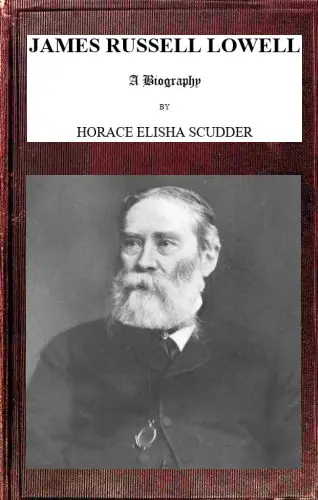
THE CLASSIC COLLECTION · 1901
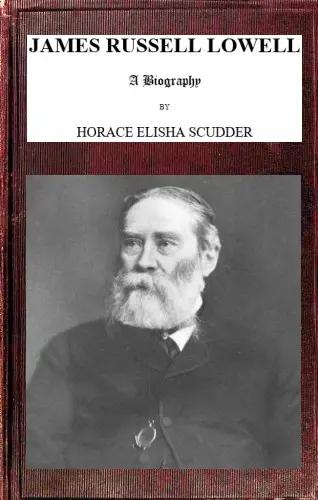
"James Russell Lowell, A Biography; vol 2/2" by Horace Elisha Scudder is a biographical account written in the early 20th century. This work explores the life and contributions of James Russell Lowell, focusing on various critical periods of his life, including his engagement in political discourse and his literary career. The biography covers Lowell's role during the Civil War, his editorial work for the Atlantic Monthly, and his political opinions, providing insight into his impact on American literature and thought, particularly surrounding issues like democracy and slavery. The opening of the biography sets the stage for a detailed examination of Lowell's engagement with the political landscape of his time, particularly during the Civil War. It discusses the establishment of the Atlantic Monthly, highlighting its intention to be a platform for both art and politics under Lowell's leadership. The author outlines how this magazine became a crucial medium for discussions about pressing national issues, including the moral and political implications of slavery. The text reflects on Lowell's fervent convictions regarding freedom and democracy, emphasizing the ethical considerations that guided his views as the nation faced tumultuous times.
Introduction adapted from the source catalogue; source summaries may be automatically generated.
Free to read · English · 135,986 words · No account needed
MAKE TIME FOR A GOOD BOOK
On by default. Untick to stop anonymous reading totals. Each page counts after 10 seconds in view. How this works.
Anonymous counting is on unless you have switched it off.
Fireside Travels, first title given to Cambridge Thirty Years Ago, i. 354.
First Snow-Fall, The, i. 274.
Fischer, Peter, i. 392.
Fish, Hamilton, ii. 203.
Fitz Adam’s Story, i. 302;
read by F. J. Child, ii. 104.
Florence, the Lowells in, i. 314-316.
Follen, Charles, characterized by J. R. L. in the Pioneer, i. 106.
Follen, Eliza Lee, contributor to the Standard, i. 193.
Foote, Henry Stuart, satirized by J. R. L., i. 215.
Forbes, Mrs. Archibald, ii. 335.
“Forerunners,” Emerson’s, i. 378.
Foster, Stephen, portrait of by J. R. L., i. 231.
Fountain of Youth, The, i. 351.
Fountain’s Abbey, ii. 154, 156.
Fragments of an Unfinished Poem, i. 302, 353.
France, the revolution in, characterized by J. R. L., i. 204-206.
“Frederick the Great,” Carlyle’s, ii. 89.
“Free Lance in the Field of Life and Letters, A,” ii. 197, note.
Freiligrath, Ferdinand, wishes to succeed Longfellow, i. 375.
Frelinghuysen, Frederick Theodore, succeeds Mr. Blaine
in State department, ii. 290, note.
Frémont, John Charles, J. R. L. looks wistfully toward, ii. 29.
French, Old, J. R. L.’s studies in, ii. 186. 187.
French Revolution of 1848, The, i. 204.
Freneau, Philip, his one line, ii. 361.
“Friendship,” Thoreau’s essay on, noticed by J. R. L., i. 293.
Frost, Rev. Barzillai, the clergyman with whom J. R. L.
studied at Concord, i. 47, 48, 61.
Fugitive Slave Bill, ii. 6.
Fuller. [Sarah] Margaret, in A Fable for Critics, i. 244-247; criticises J. R. L., 244, note.
Furness, Horace Howard, on praise of J. R. L., ii. 388.
Gallillee, the Misses, ii. 356.
Gardner, Francis, master of Boston Latin School, i. 23.
Garfield, James Abram, his illness and the sympathy of England, ii. 268;
his death, 270.
Garrison, William Lloyd, characterized by J. R. L. in the Pioneer, i. 105;
treatment of, by J. R. L. in London Daily News, 187;
his character sketched, 189;
the verses upon him, 190;
his Liberator, 192;
what he thought of J. R. L., 197;
his views on anonymous articles, 199;
two poems on, by J. R. L., 258-260;
his ineffectiveness compared with the Charleston batteries, ii. 26.
Gay, Sydney Howard, one of the editors of Standard, i. 192;
sole editor, 192;
letter to, by J. R. L. defining relations with, 194-200;
his views on signed articles, 199;
confers with J. R. L., 202;
writes respecting J. R. L.’s terms, 203;
has no time to compliment J. R. L., 212;
his earnestness, 228;
edits a contribution by J. R. L., 229;
values J. R. L.’s work, 229, 230;
not absolute in his control of Standard, 230;
his financial aid of J. R. L., 281;
J. R. L. writes to, of his own delinquency, 295;
loses a child, 305;
is invited to join the Lowells in Europe, 307;
enquires into the landing of the Pilgrims, 307, note;
has a hand in the reissue of Biglow Papers in England, 454.
Geneva, ii. 171.
George, Henry, ii. 315.
Gerry, Elbridge, lives at Elmwood, i. 5.
Gesu, music at the church of, i. 326.
Ghent, ii. 170.
Your reading position is saved on this browser. Take it to another device with a library code. Reading pages adapt to text, rather than matching a printed edition.
Horace Elisha Scudder

Horace Elisha Scudder
Horace Elisha Scudder
Horace Elisha Scudder
BEHIND THE BOOK
This eBook is for the use of anyone anywhere in the United States and most other parts of the world at no cost and with almost no restrictions whatsoever. You may copy it, give it away or re-use it under the terms of the Project Gutenberg License included with this eBook or online at www.gutenberg.org. If you are not located in the United States, you will have to check the laws of the country where you are located before using this eBook. Read the source licence.
The original source file, including credits and licence, is retained by this library. Request an original-format copy at no charge. Please include the book title and Project Gutenberg identifier #57777.
KEEP YOUR CURIOSITY GOING
Cécile Tormay

Moritz Busch
John L. Ransom
Frances Wright
Cécile Tormay

Mabel Potter Daggett