THE CLASSIC COLLECTION✦Noah Webster American Men of LettersCLASSIC FREE BOOKS
Noah Webster American Men of Letters
Horace Elisha Scudder
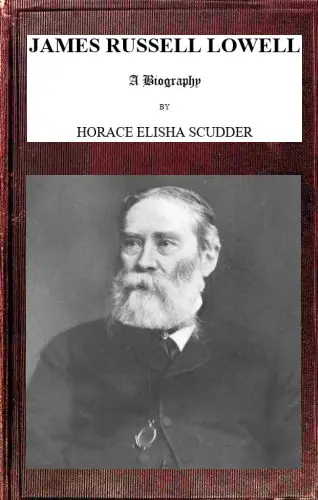
THE CLASSIC COLLECTION · 1901
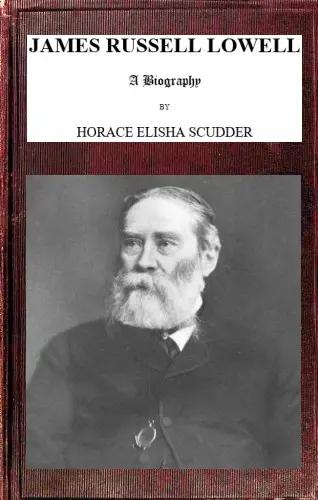
"James Russell Lowell, A Biography; vol 2/2" by Horace Elisha Scudder is a biographical account written in the early 20th century. This work explores the life and contributions of James Russell Lowell, focusing on various critical periods of his life, including his engagement in political discourse and his literary career. The biography covers Lowell's role during the Civil War, his editorial work for the Atlantic Monthly, and his political opinions, providing insight into his impact on American literature and thought, particularly surrounding issues like democracy and slavery. The opening of the biography sets the stage for a detailed examination of Lowell's engagement with the political landscape of his time, particularly during the Civil War. It discusses the establishment of the Atlantic Monthly, highlighting its intention to be a platform for both art and politics under Lowell's leadership. The author outlines how this magazine became a crucial medium for discussions about pressing national issues, including the moral and political implications of slavery. The text reflects on Lowell's fervent convictions regarding freedom and democracy, emphasizing the ethical considerations that guided his views as the nation faced tumultuous times.
Introduction adapted from the source catalogue; source summaries may be automatically generated.
Free to read · English · 135,986 words · No account needed
MAKE TIME FOR A GOOD BOOK
On by default. Untick to stop anonymous reading totals. Each page counts after 10 seconds in view. How this works.
Anonymous counting is on unless you have switched it off.
Church, the, J. R. L.’s comments on, in Conversations, i. 141-145; a bulwark of Paganism, 170.
Church and the Clergy, The, J. R. L.’s articles in
Pennsylvania Freeman, i. 169.
Civil-service reform, importance of, ii. 194, 202;
reference to, at caucus, 210;
address on, by J. R. L., 377.
Clarke, James Freeman, in politics, ii. 201.
Class Poem by J. R. L., i. 48, 50, 51, 53, 54, 56-61.
Clemm, Mrs., Poe’s mother-in-law, J. R. L.’s relations with, i. 282.
Cleveland, Grover, elected president, ii. 316;
J. R. L.’s judgment on, 324.
Clifford, Mrs. W. K., J. R. L. to, on confidants, ii. 323; J. R. L. to, in response to an invitation, 391.
Clough, Arthur Hugh, comes to America on same boat with J. R. L., i. 346; his reception in Boston and Cambridge, 346; describes the Lowell household, 347; J. R. L.’s judgment of his “Bothie,” 347; Cranch reminds J. R. L. of, ii. 96.
Coercion Act, J. R. L. on, ii. 281.
Coleridge, Samuel Taylor, J. R. L. becomes acquainted with the poems of, i. 32; J. R. L. compares his own odes with those of, ii. 44, note; his want of scruple in matters of literary honesty, 134; J. R. L. on unveiling the bust of, 321.
Colosseum at Rome, i. 338.
Commemoration Ode, i. 400;
tried on F. J. Child, ii. 63;
exhausts J. R. L., 64;
to be read aloud, 66;
its composition, 67;
its power to stimulate, 70;
a shrine of Lincoln, 71.
Concord, Massachusetts, J. R. L. sent there in suspension from college, i. 47; his life there, 50-56.
“Conquest of Canaan,” Dwight’s, ii. 361.
Contributors’ Club, article in, by J. R. L., ii. 398.
Conversations on some of the Old Poets, quoted, i. 17;
books published, 132;
its contents analyzed, 134-145;
reviewed by Poe in the Mirror, 163;
compared with later work on same subject, ii. 354.
Cooke, Philip Pendleton, ii. 362.
Cooper, James Fenimore, in A Fable for Critics, i. 254;
has no desire to start a magazine, 419;
characterized, ii. 364.
Copyright, J. R. L. on, ii. 326-332.
“Cornwallis, The,” village drama of, i. 25.
Courtin’, The, i. 300.
Cranch, Christopher Pearse, visits J. R. L., ii. 95;
his ill-success, 96.
Crawford, Thomas, i. 332.
Crayon, The, Stillman’s journal, i. 367, 378.
Credidimus Jovem regnare, ii. 368.
Critic, The, publishes a “Lowell Birthday number,” ii. 387.
Cromwell, treated poetically by J. R. L., i. 124;
wanted by him for America, ii. 28.
Crosby & Nichols, publishers of the North American Review, ii. 47.
Cuba, Spanish relations with, ii. 254;
rumors of American purchase of, 255.
Curtis, George Ticknor, recalls Mr. Wells’s school, i. 23.
Curtis, George William, and Putnam’s Monthly, i. 348;
his “Prue and I,” 350.
Cushing, Caleb, J. R. L.’s article on, ii. 14, 15.
Dall, Mrs. Caroline Healey, quoted on Charles Lowell, i. 10.
Dana, Edmund, brother of R. H. D., Jr., i. 22.
Dana, Richard Henry, ii. 365.
Your reading position is saved on this browser. Take it to another device with a library code. Reading pages adapt to text, rather than matching a printed edition.
Horace Elisha Scudder

Horace Elisha Scudder
Horace Elisha Scudder
Horace Elisha Scudder
BEHIND THE BOOK
This eBook is for the use of anyone anywhere in the United States and most other parts of the world at no cost and with almost no restrictions whatsoever. You may copy it, give it away or re-use it under the terms of the Project Gutenberg License included with this eBook or online at www.gutenberg.org. If you are not located in the United States, you will have to check the laws of the country where you are located before using this eBook. Read the source licence.
The original source file, including credits and licence, is retained by this library. Request an original-format copy at no charge. Please include the book title and Project Gutenberg identifier #57777.
KEEP YOUR CURIOSITY GOING
Cécile Tormay

Moritz Busch
John L. Ransom
Frances Wright
Cécile Tormay

Mabel Potter Daggett