THE CLASSIC COLLECTION✦Noah Webster American Men of LettersCLASSIC FREE BOOKS
Noah Webster American Men of Letters
Horace Elisha Scudder
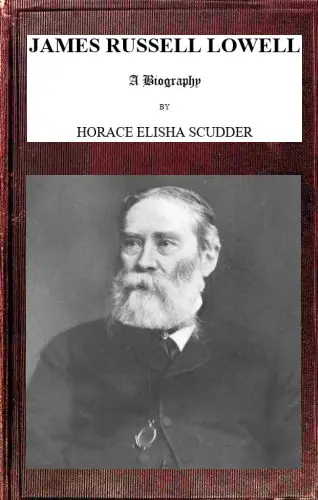
THE CLASSIC COLLECTION · 1901
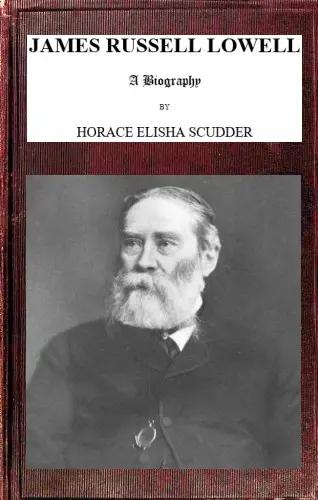
"James Russell Lowell, A Biography; vol 2/2" by Horace Elisha Scudder is a biographical account written in the early 20th century. This work explores the life and contributions of James Russell Lowell, focusing on various critical periods of his life, including his engagement in political discourse and his literary career. The biography covers Lowell's role during the Civil War, his editorial work for the Atlantic Monthly, and his political opinions, providing insight into his impact on American literature and thought, particularly surrounding issues like democracy and slavery. The opening of the biography sets the stage for a detailed examination of Lowell's engagement with the political landscape of his time, particularly during the Civil War. It discusses the establishment of the Atlantic Monthly, highlighting its intention to be a platform for both art and politics under Lowell's leadership. The author outlines how this magazine became a crucial medium for discussions about pressing national issues, including the moral and political implications of slavery. The text reflects on Lowell's fervent convictions regarding freedom and democracy, emphasizing the ethical considerations that guided his views as the nation faced tumultuous times.
Introduction adapted from the source catalogue; source summaries may be automatically generated.
Free to read · English · 135,986 words · No account needed
MAKE TIME FOR A GOOD BOOK
On by default. Untick to stop anonymous reading totals. Each page counts after 10 seconds in view. How this works.
Anonymous counting is on unless you have switched it off.
Atlantic Monthly, origin of, i. 408-413;
its value to Whittier, 417;
its sale, 418;
its timeliness, 419;
its anonymous character, 422;
policy of, as
affirmed by J. R. L., 424;
interest of the public in, 425;
its freedom from competition, 427;
reviewing in, 430;
clubs that sprang from, 446;
designed to be a political magazine, ii. 1;
compared with Standard, 3;
J. R. L.’s political articles in, 17;
the second series of Biglow Papers asked for by editor of, 35;
an anonymous writer in, describes J. R. L.’s comments on the Jews, 301.
Auf Wiederschen, i. 368.
“Auld Lang Syne,” by Max Müller, quoted, ii. 263.
Authors’ readings, ii. 333;
address by J. R. L. before, 361.
“Autobiography of a Journalist” referred to, i. 404.
“Autocrat, The, of the Breakfast Table,” i. 426.
Azeglio, Massimo d’, i. 395.
Bachi, Pietro, instructor in Italian, Spanish, and Portuguese at Harvard in J. R. L.’s youth, i. 27.
Ballads in J. R. L.’s early years, i. 12.
“Band, The,” i. 89.
Banks, Nathaniel Prentiss, J. R. L. comments on, ii. 194.
Barlow, Joel, ii. 361.
Barrett, Elizabeth Barrett, afterward Mrs. Browning,
contributes to the Pioneer, i. 111;
reviewed by Poe, 165.
Bartlett, John, friend of J. R. L., and member with him of whist club, i. 271; verses to, by J. R. L., ii. 96; calls the whist club together for the last time, 407.
Bartol, Rev. Cyrus Augustus, colleague of Charles Lowell, discourages the publication of his sermons, i. 8, note; C. L’s attitude toward, as regards salary, 234, note.
Beaver Brook, J. R. L.’s early rambles to, i. 19.
Beaver Brook, i. 228, 232.
Bell, Mrs. Helen Choate, J. R. L. to, on Feltham, ii. 350.
Bell telephone, ii. 328.
Benton, Joel, defends J. R. L., ii. 192;
and draws out a letter in response, 193.
Béranger, J. R. L. translates Sainte-Beuve’s article on, ii. 77.
Bernini, the angels of, i. 319.
Bethune, Rev. George Washington, i. 155.
Beverly, J. R. L. describes life at, i. 365, 366.
Bibliolatres, i. 228.
Biglow, Hosea, J. R. L. regrets making him a bad speller, i. 261; thinks of educating him, 261.
Biglow Papers, first series, quoted, i. 21;
begun in Boston Courier, 201;
published also the Standard, 256;
origin of, in J. R. L.’s mind, 257;
their success referred to by J. R. L, 260;
progenitors of, 261;
bad spelling in, 261;
revised for publication, 261, 262;
the apparatus of, 263;
success of, 264;
expressive of New England, 265;
and of Lowell, 265;
eclipsing A Fable for Critics, 266;
relation of, to Sir Launfal, 268;
second series, 400;
not liked by Mrs. Lowell, 428;
introduced by Hughes in England, 454;
demand for more, ii. 32;
first of second series written, 34;
second series compared with first, 36;
quoted in newspapers after the Spanish war, 94;
Introduction to second series, 102.
Birmingham and Midland Institute, address before, ii. 313.
Black, Charles C., a friend of J. R. L. in Italy, i. 317;
helps him to London papers, 320;
gets up private theatricals, 331.
Your reading position is saved on this browser. Take it to another device with a library code. Reading pages adapt to text, rather than matching a printed edition.
Horace Elisha Scudder

Horace Elisha Scudder
Horace Elisha Scudder
Horace Elisha Scudder
BEHIND THE BOOK
This eBook is for the use of anyone anywhere in the United States and most other parts of the world at no cost and with almost no restrictions whatsoever. You may copy it, give it away or re-use it under the terms of the Project Gutenberg License included with this eBook or online at www.gutenberg.org. If you are not located in the United States, you will have to check the laws of the country where you are located before using this eBook. Read the source licence.
The original source file, including credits and licence, is retained by this library. Request an original-format copy at no charge. Please include the book title and Project Gutenberg identifier #57777.
KEEP YOUR CURIOSITY GOING
Cécile Tormay

Moritz Busch
John L. Ransom
Frances Wright
Cécile Tormay

Mabel Potter Daggett