THE CLASSIC COLLECTION✦Noah Webster American Men of LettersCLASSIC FREE BOOKS
Noah Webster American Men of Letters
Horace Elisha Scudder
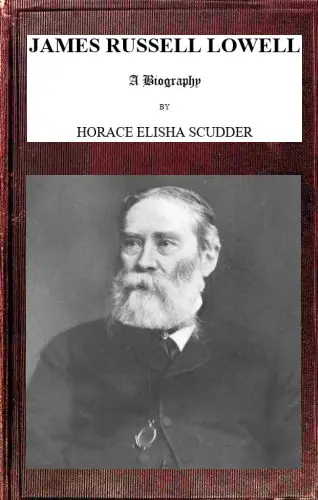
THE CLASSIC COLLECTION · 1901
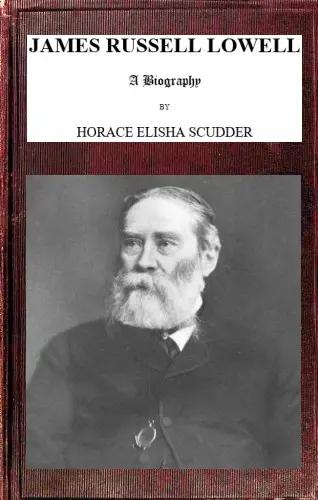
"James Russell Lowell, A Biography; vol 2/2" by Horace Elisha Scudder is a biographical account written in the early 20th century. This work explores the life and contributions of James Russell Lowell, focusing on various critical periods of his life, including his engagement in political discourse and his literary career. The biography covers Lowell's role during the Civil War, his editorial work for the Atlantic Monthly, and his political opinions, providing insight into his impact on American literature and thought, particularly surrounding issues like democracy and slavery. The opening of the biography sets the stage for a detailed examination of Lowell's engagement with the political landscape of his time, particularly during the Civil War. It discusses the establishment of the Atlantic Monthly, highlighting its intention to be a platform for both art and politics under Lowell's leadership. The author outlines how this magazine became a crucial medium for discussions about pressing national issues, including the moral and political implications of slavery. The text reflects on Lowell's fervent convictions regarding freedom and democracy, emphasizing the ethical considerations that guided his views as the nation faced tumultuous times.
Introduction adapted from the source catalogue; source summaries may be automatically generated.
Free to read · English · 135,986 words · No account needed
MAKE TIME FOR A GOOD BOOK
On by default. Untick to stop anonymous reading totals. Each page counts after 10 seconds in view. How this works.
Anonymous counting is on unless you have switched it off.
The Dean of Westminster said that he had been asked to take the chair on this interesting and suggestive occasion. They had met in that venerable and stately building to pay some tribute to the memory of one who, from the first day which he spent in this country up to the date of his death, had endeared himself to an ever-widening circle of friends, and who had for many years been the representative in the Queen’s dominions of that great Republic of the West. He would leave it to others to speak of Mr. Lowell’s great qualities, and of the position which he held as a poet, a humorist, and essayist. Mr. Lowell was worthy to be reckoned among the great writers of our tongue--Chaucer, Shakespeare, Spenser, Milton, Dryden, and those poets whom we had so lately lost. They all deeply regretted the absence of Mr. Balfour and its cause, but they gratefully recognized the service which Mr. Leslie Stephen was rendering them by his presence. There was no one to whom the task of speaking of Mr. Lowell could so wisely be entrusted. In the presence of the American Ambassador he might, perhaps, be allowed to speak of the special fitness of the place in which they were assembled--which was a part of the ancient Abbey, the very heart and centre of that Benedictine monastery, and used solely as the daily meeting-place of the monks. There was no spot in the kingdom or in the world which could compare in historic interest and significance with that in which they were met. That part of the Abbey with which so many associations had gathered, and which was now known by the name of Poets’ Corner, dated from the period of the commencement of the House of Commons, whose members in the earliest days and for three centuries of its existence were summoned within the walls of the Chapter-house. Thus the room where they were sitting was not only the meeting-place of the Benedictine monks of Westminster, but it was also for a long period the ordinary meeting-place of the Commons of England. After the dissolution of the monasteries, the Chapter-house was vested in the Crown, and was still so vested, and it was by the permission of the First Commissioner of Works that the present meeting to do honor to a great American was held. For three more centuries after the Commons had ceased to be summoned to the Chapter-house, the house was used, he would not say as a lumber-room, but as a record-room in which were stored the invaluable documents which belonged to the House of Commons and the various Government offices. One deficiency, however, long remained, which his dear and illustrious predecessor long tried to remove. The late Dean endeavored to induce successive Governments to fill the windows with stained glass, but without success. After his death, however, one of the windows was filled. No meeting could have been more representative of the whole English-speaking race than the one which was held when that window was unveiled. He could imagine that he was still hearing the words which fell from Mr. Lowell on that occasion, Si monumentum quæris, circumspice. No words could have been more eloquent or impressive than those used by the American Minister of that day. That was the first time he himself had the pleasure of hearing Mr. Lowell’s voice. The next historic meeting in that room was one called to unveil a painted window, the gift of the Queen, which was inserted in memory of Lady Augusta Stanley. That meeting, also, Mr. Lowell attended. Two years afterwards he had had the privilege, in his capacity of Dean, of summoning a meeting with a view to honor the American poet Longfellow, to whom a memorial stood in Poets’ Corner. A fourth meeting was held in memory of one to whom as poet and thinker the older generation owed so much. It had been his privilege to place a bust in memory of Samuel Taylor Coleridge. Mr. Lowell on that occasion made one of the most sympathetic and appreciative speeches to which he had ever listened. They would all agree that no more suitable spot could be chosen on which to perpetuate the memory of one who was not only for many years the representative in this country of the great American Republic, but was so great an ornament to that language and literature which were the common heritage of Americans and Englishmen alike.
Your reading position is saved on this browser. Take it to another device with a library code. Reading pages adapt to text, rather than matching a printed edition.
Horace Elisha Scudder

Horace Elisha Scudder
Horace Elisha Scudder
Horace Elisha Scudder
BEHIND THE BOOK
This eBook is for the use of anyone anywhere in the United States and most other parts of the world at no cost and with almost no restrictions whatsoever. You may copy it, give it away or re-use it under the terms of the Project Gutenberg License included with this eBook or online at www.gutenberg.org. If you are not located in the United States, you will have to check the laws of the country where you are located before using this eBook. Read the source licence.
The original source file, including credits and licence, is retained by this library. Request an original-format copy at no charge. Please include the book title and Project Gutenberg identifier #57777.
KEEP YOUR CURIOSITY GOING
Cécile Tormay

Moritz Busch
John L. Ransom
Frances Wright
Cécile Tormay

Mabel Potter Daggett