THE CLASSIC COLLECTION✦Noah Webster American Men of LettersCLASSIC FREE BOOKS
Noah Webster American Men of Letters
Horace Elisha Scudder
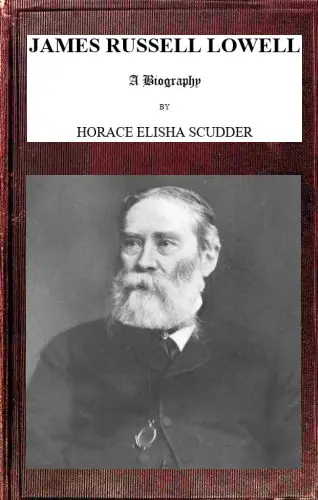
THE CLASSIC COLLECTION · 1901
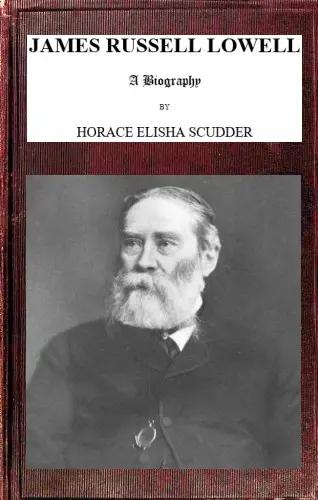
"James Russell Lowell, A Biography; vol 2/2" by Horace Elisha Scudder is a biographical account written in the early 20th century. This work explores the life and contributions of James Russell Lowell, focusing on various critical periods of his life, including his engagement in political discourse and his literary career. The biography covers Lowell's role during the Civil War, his editorial work for the Atlantic Monthly, and his political opinions, providing insight into his impact on American literature and thought, particularly surrounding issues like democracy and slavery. The opening of the biography sets the stage for a detailed examination of Lowell's engagement with the political landscape of his time, particularly during the Civil War. It discusses the establishment of the Atlantic Monthly, highlighting its intention to be a platform for both art and politics under Lowell's leadership. The author outlines how this magazine became a crucial medium for discussions about pressing national issues, including the moral and political implications of slavery. The text reflects on Lowell's fervent convictions regarding freedom and democracy, emphasizing the ethical considerations that guided his views as the nation faced tumultuous times.
Introduction adapted from the source catalogue; source summaries may be automatically generated.
Free to read · English · 135,986 words · No account needed
MAKE TIME FOR A GOOD BOOK
On by default. Untick to stop anonymous reading totals. Each page counts after 10 seconds in view. How this works.
Anonymous counting is on unless you have switched it off.
Mr. Calhoun’s Report. Standard, 15 February.
The Moral Movement against Slavery. Standard, 22 February.
Editorial article, beginning: “Next to the charge of being possessed with only a single idea.” Standard, 1 March.
A Day in June, afterward, enlarged, Al Fresco. Standard, 8
March.
Editorial article, beginning: “The long succession of Democratic rulers has at length been broken.” Standard, 15 March.
Mr. Clay as an Abolitionist.--Second appearance in Fifty Years.
Standard, 22 March.
Lines suggested by the Graves of Two English Soldiers on Concord Battle-Ground. Standard, 29 March.
An Oriental Apologue. Standard, 12 April.
Editorial article, beginning: “The German poet Schiller in a little poem.” Standard, 19 April.
Anti-Slavery Criticism upon Mr. Clay’s Letter. Standard, 26 April.
King Retro. Standard, 10 May.
Editorial article, beginning: “In the Standard of April 19th an article was copied.” Standard, 10 May.
Bibliolatres. Standard, 24 May.
Mobs. Standard, 14 June.
Two Sonnets, afterward named Trial. Standard, 28 June.
Longfellow’s Kavanagh: Nationality in Literature. North American
Review, July.
The Roman Republic. Standard, 12 July.
Fourth of July in Charleston. Standard, 26 July.
Moderation. Standard, 9 August.
Eurydice. Standard, 23 August.
Kossuth. Standard, 6 September.
Editorial article, beginning: “Our readers have had, from time to time, the privilege of seeing extracts from Southern newspapers.” Standard, 20 September.
Editorial article, beginning: “Every now and then we see it asserted.” Standard, 4 October.
To ---- : “We, too, have autumns, when our leaves.” Standard, 18
October.
Canada. Standard, 1 November.
The Lesson of the Pine, afterward enlarged and entitled, A
Mood. Standard, 15 November.
California. Standard, 29 November.
Review of “A Week on the Concord and Merrimack Rivers,” Massachusetts Quarterly Review, December.
General Bem’s Conversion. Standard, 6 December.
Editorial article, beginning: “The last European steamer brings us what is said to be the final determination of the Turkish government in regard to the Hungarian exiles.” Standard, 13 December.
The Burial of Theobald. The Liberty Bell.
The First Snow-Fall. Standard, 27 December.
What shall be done for the Hungarian Exiles? Boston Courier, 3
January.
New Year’s Eve, 1850. Standard, 10 January.
A Review of Judd’s “Philo.” Standard, 24 January.
Editorial article, beginning: “When King Log first made his avatar among the frogs.” Standard, 21 February.
Compromise. Standard, 7 March.
Mr. Webster’s Speech. Standard, 21 March.
Out of Doors. Graham’s Magazine, April.
Editorial article, beginning: “In the comment which we made a fortnight ago on Mr. Webster’s speech.” Standard, 4 April.
Mahmood the Image Breaker. Standard, 18 April.
Dara. Graham’s Magazine, July.
The Northern Sancho Panza and his vicarious Cork tree. Standard,
18 July.
Pseudo Conservatism. Standard, 14 November.
A Dream I had. Standard, 28 November.
To J. F. H., afterward An Invitation to J. F. H. Graham’s
Magazine, December.
Mr. Bowen and the Christian Examiner, I. Boston Daily Advertiser,
28 December.
Mr. Bowen and the Christian Examiner, II. Boston Daily Advertiser,
2 January.
Anti-Apis. Standard, 30 January.
Your reading position is saved on this browser. Take it to another device with a library code. Reading pages adapt to text, rather than matching a printed edition.
Horace Elisha Scudder

Horace Elisha Scudder
Horace Elisha Scudder
Horace Elisha Scudder
BEHIND THE BOOK
This eBook is for the use of anyone anywhere in the United States and most other parts of the world at no cost and with almost no restrictions whatsoever. You may copy it, give it away or re-use it under the terms of the Project Gutenberg License included with this eBook or online at www.gutenberg.org. If you are not located in the United States, you will have to check the laws of the country where you are located before using this eBook. Read the source licence.
The original source file, including credits and licence, is retained by this library. Request an original-format copy at no charge. Please include the book title and Project Gutenberg identifier #57777.
KEEP YOUR CURIOSITY GOING
Cécile Tormay

Moritz Busch
John L. Ransom
Frances Wright
Cécile Tormay

Mabel Potter Daggett