THE CLASSIC COLLECTION✦Noah Webster American Men of LettersCLASSIC FREE BOOKS
Noah Webster American Men of Letters
Horace Elisha Scudder
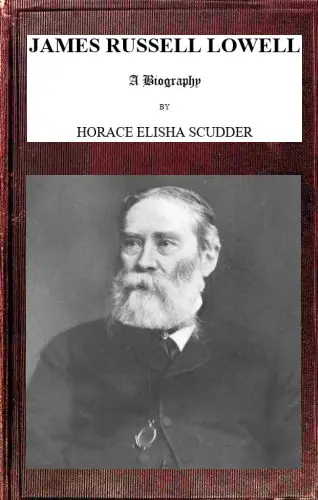
THE CLASSIC COLLECTION · 1901
"James Russell Lowell, A Biography; vol 2/2" by Horace Elisha Scudder is a biographical account written in the early 20th century. This work explores the life and contributions of James Russell Lowell, focusing on various critical periods of his life, including his engagement in political discourse and his literary career. The biography covers Lowell's role during the Civil War, his editorial work for the Atlantic Monthly, and his political opinions, providing insight into his impact on American literature and thought, particularly surrounding issues like democracy and slavery. The opening of the biography sets the stage for a detailed examination of Lowell's engagement with the political landscape of his time, particularly during the Civil War. It discusses the establishment of the Atlantic Monthly, highlighting its intention to be a platform for both art and politics under Lowell's leadership. The author outlines how this magazine became a crucial medium for discussions about pressing national issues, including the moral and political implications of slavery. The text reflects on Lowell's fervent convictions regarding freedom and democracy, emphasizing the ethical considerations that guided his views as the nation faced tumultuous times.
Introduction adapted from the source catalogue; source summaries may be automatically generated.
Free to read · English · 135,986 words · No account needed
MAKE TIME FOR A GOOD BOOK
On by default. Untick to stop anonymous reading totals. Each page counts after 10 seconds in view. How this works.
Anonymous counting is on unless you have switched it off.
Sonnet: “Great truths are portions of the soul of man.” The
Liberty Bell.
Sonnet to Keats, dated March, 1841. Boston Miscellany, January.
[Agatha], dated September, 1840. Boston Miscellany, January.
To Perdita Singing, dated February, 1841. Boston Miscellany,
January.
Song: “Violet! sweet violet!” Graham’s Magazine, January.
Sonnet: To the Spirit of Keats. Arcturus, January.
Sonnet: Sunset and Moonshine. Arcturus, January.
Sonnet: “Poet! thou art most wealthy, being poor,” dated November 25, 1841. Arcturus, February.
An Ode: “In the Old Days of awe and keen-eyed wonder,” dated December, 1841. Boston Miscellany, February.
Sonnet: “Like some black mountain glooming huge aloof,” dated October, 1841. Boston Miscellany, February.
Rosaline. Graham’s Magazine, February.
Sonnet: “If some small savor creep into my rhymes.” Graham’s
Magazine, February.
Fancies about a Rosebud pressed in an old copy of Spenser.
Graham’s Magazine, March.
[Getting up.] Boston Miscellany, March.
[Disquisition on Foreheads. By Job Simifrons.] Boston Miscellany,
March.
The Old English Dramatists. (Unsigned.) Boston Miscellany, April.
Sonnet: “Whene’er I read in mournful history,” dated 25 September, 1841. Boston Miscellany, May.
The Old English Dramatists, No. II. Boston Miscellany, May.
The Two, dated November, 1840. Boston Miscellany, May.
The First Client. (Unsigned.) Boston Miscellany, May.
Sonnet: “My Father, since I love, thy presence cries,” dated November 29, 1841. Arcturus, May.
Sonnet: “The hope of truth grows stronger day by day,” dated December 10, 1841. Arcturus, May.
Sonnet: “I love those poets, of whatever creed,” dated April 20,
1841. Arcturus, May.
Sonnets:
I. “As the broad ocean endlessly upheaveth.” II. “Once hardly in a cycle blossometh.” III. “The love of all things springs from love of one.” IV. “A poet cannot strive for despotism.” V. “Therefore think not the Past is wise alone.” VI. “Far ’yond this narrow parapet of time.”
The United States Magazine and Democratic Review, May.
Reprinted in Poems as “On reading Wordsworth’s Sonnets in Defence of Capital Punishment.”
Farewell. Graham’s Magazine, June.
A Dirge. Graham’s Magazine, July.
A Fantasy, dated 12 January, 1842. Boston Miscellany July.
[The True Radical.] Boston Miscellany, August.
The Old English Dramatists, No. III. Boston Miscellany, August.
Sonnet: “Poet, if men from wisdom turn away.” (Unsigned.) National Anti-Slavery Standard, 1 September.
The Shepherd of King Admetus. Boston Miscellany, September.
An Incident in a Railroad Car, dated Boston, April, 1842. The United States Magazine and Democratic Review, October.
[To an Æolian Harp at Night], dated February, 1842. Boston
Miscellany, December.
Sonnet: “Great Truths are portions of the Soul of man.” The
Liberty Bell.
Sonnet: “If ye have not the one great lesson learned.” The
Liberty Bell.
Pierpont: “The hungry flames did never yet seem hot.” The Liberty
Bell.
Introduction. The Pioneer, January.
[Voltaire.] The Pioneer, January.
[The Follower.] The Pioneer, January.
Sonnet: “Our love is not a fading earthly flower.” The Pioneer,
January.
Your reading position is saved on this browser. Take it to another device with a library code. Reading pages adapt to text, rather than matching a printed edition.
Horace Elisha Scudder

Horace Elisha Scudder
Horace Elisha Scudder
Horace Elisha Scudder
BEHIND THE BOOK
This eBook is for the use of anyone anywhere in the United States and most other parts of the world at no cost and with almost no restrictions whatsoever. You may copy it, give it away or re-use it under the terms of the Project Gutenberg License included with this eBook or online at www.gutenberg.org. If you are not located in the United States, you will have to check the laws of the country where you are located before using this eBook. Read the source licence.
The original source file, including credits and licence, is retained by this library. Request an original-format copy at no charge. Please include the book title and Project Gutenberg identifier #57777.
KEEP YOUR CURIOSITY GOING
Cécile Tormay

Moritz Busch
John L. Ransom
Frances Wright
Cécile Tormay

Mabel Potter Daggett