THE CLASSIC COLLECTION✦Noah Webster American Men of LettersCLASSIC FREE BOOKS
Noah Webster American Men of Letters
Horace Elisha Scudder
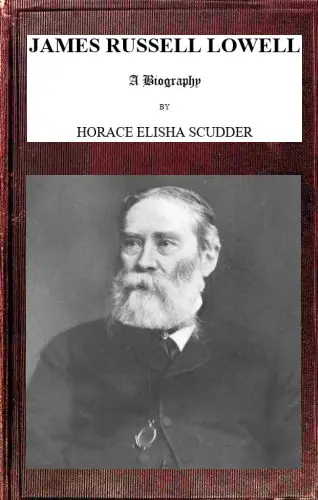
THE CLASSIC COLLECTION · 1901
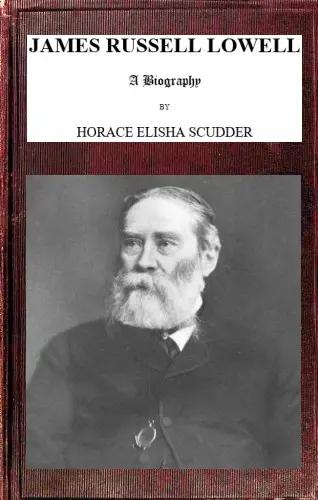
"James Russell Lowell, A Biography; vol 2/2" by Horace Elisha Scudder is a biographical account written in the early 20th century. This work explores the life and contributions of James Russell Lowell, focusing on various critical periods of his life, including his engagement in political discourse and his literary career. The biography covers Lowell's role during the Civil War, his editorial work for the Atlantic Monthly, and his political opinions, providing insight into his impact on American literature and thought, particularly surrounding issues like democracy and slavery. The opening of the biography sets the stage for a detailed examination of Lowell's engagement with the political landscape of his time, particularly during the Civil War. It discusses the establishment of the Atlantic Monthly, highlighting its intention to be a platform for both art and politics under Lowell's leadership. The author outlines how this magazine became a crucial medium for discussions about pressing national issues, including the moral and political implications of slavery. The text reflects on Lowell's fervent convictions regarding freedom and democracy, emphasizing the ethical considerations that guided his views as the nation faced tumultuous times.
Introduction adapted from the source catalogue; source summaries may be automatically generated.
Free to read · English · 135,986 words · No account needed
MAKE TIME FOR A GOOD BOOK
On by default. Untick to stop anonymous reading totals. Each page counts after 10 seconds in view. How this works.
Anonymous counting is on unless you have switched it off.
It was in the double office of American minister and poet that he took part in the ceremonies attending the unveiling of the bust of Longfellow in Westminster Abbey, 2 March, 1884. But the personal relation which he bore the poet was uppermost in his mind, especially as he was renewing his intercourse with the family in the person of two of Longfellow’s daughters who were living in England at this time and were present at the unveiling. The occasion was not one for critical judgment, but in the course of his brief speech he made a felicitous point on sonnet writing. “I have been struck particularly,” he said, “with this quality of style in some of my late friend’s sonnets, which seem to me in unity and evenness of flow among the most beautiful and perfect we have in the language. They remind one of those cabinets in which all the drawers are opened at once by the turn of the key in a single lock, whereas we all have seen sonnets with a lock in every line with a different key to each, and the added conundrums of secret drawers.”
In April came the tercentenary commemoration of the University of Edinburgh, when Lowell was present and received the degree of Doctor of Laws. The same degree was conferred on him at his own University a few weeks later.
In May he was called on for two addresses. On the seventh of the month he attended the annual dinner of the Provincial Newspaper Society at the Inns of Court Hotel, London, and a few words which he then said, because spoken apparently without premeditation, are worth recording as expressing a judgment held by him with great sincerity. “I have my own theory,” he said, “as to what after-dinner speaking should be. I think it should be in the first place short; I think it should be light; and I think it should be both extemporaneous and contemporaneous. I think it should have the meaning of the moment in it, and nothing more. But I confess that when I get up here and face you, representing what you call the Provincial Press--and if you will allow me by way of an interjection, I may state that it has been my fortune to live in a number of countries, where it has sometimes been my duty to study the National Press, and I have always and everywhere found it provincial: I have never yet encountered a truly cosmopolitan newspaper--when I feel myself standing for the first time in the presence of a collection of editors, I experience a very serious emotion. I feel as if I were talking to the ear of Dionysius, at the other end of which the world was listening. I do not see any reporters here--I am glad I do not. I cannot help taking this opportunity, with so many persons who have the formation of public opinion before me, of saying one or two words on the growing change which has taken place in the methods of forming public opinion. I am not sure that you are always aware to how great an extent you have supplanted the pulpit, to how great an extent you have supplanted even the deliberative assembly. You have assumed responsibilities, I should say, heavier than man ever assumed before. You wield an influence entirely without precedent hitherto in human history. I do not wish the dinner to be too solemn, but, as I tell you, I have been solemnized standing in this presence. I came here intending only to say a few words of kindly thanks for the friendliness which you have shown toward the country I have the honor to represent, and to me as representing it. But, I cannot forbear to say that, if I were an editor, I should have written up in the room in which I write, ‘Woe to me if I preach not the gospel:’ I mean so much of the Word of God as is manifest to me, and I should strive to preach that word, and to convey it to my fellow-men. I have always thought the case of clergymen a hard one, because they are expected to be inspired once a week. But what is this to yours who must be inspired every day, and who have undertaken to edit the whole world every morning? There has been nothing, as I was just saying, that has, in the history of man, occupied such a position as the Press. You have the formation of public opinion. There is not a man here who values any more than I do, or ever have done, the opinion of Tom, or the opinion of Dick, or the opinion of Harry. But when Tom, Dick, and Harry agree, then we begin to call it public opinion. I am not sure that it always deserves that name; but I am sure of this, that public opinion is of value in precise proportion to the material it is made of. I am sure of this, that two factors go towards the making of that material. One is the editor, and the other is the reader.”
Your reading position is saved on this browser. Take it to another device with a library code. Reading pages adapt to text, rather than matching a printed edition.
Horace Elisha Scudder

Horace Elisha Scudder
Horace Elisha Scudder
Horace Elisha Scudder
BEHIND THE BOOK
This eBook is for the use of anyone anywhere in the United States and most other parts of the world at no cost and with almost no restrictions whatsoever. You may copy it, give it away or re-use it under the terms of the Project Gutenberg License included with this eBook or online at www.gutenberg.org. If you are not located in the United States, you will have to check the laws of the country where you are located before using this eBook. Read the source licence.
The original source file, including credits and licence, is retained by this library. Request an original-format copy at no charge. Please include the book title and Project Gutenberg identifier #57777.
KEEP YOUR CURIOSITY GOING
Cécile Tormay

Moritz Busch
John L. Ransom
Frances Wright
Cécile Tormay

Mabel Potter Daggett