THE CLASSIC COLLECTION✦Noah Webster American Men of LettersCLASSIC FREE BOOKS
Noah Webster American Men of Letters
Horace Elisha Scudder
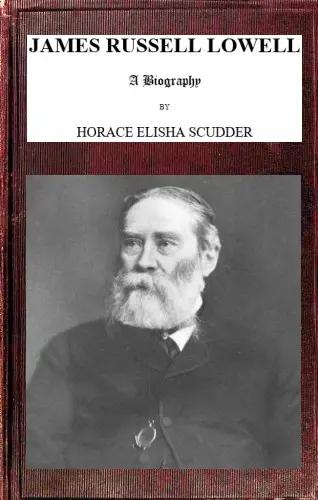
THE CLASSIC COLLECTION · 1901
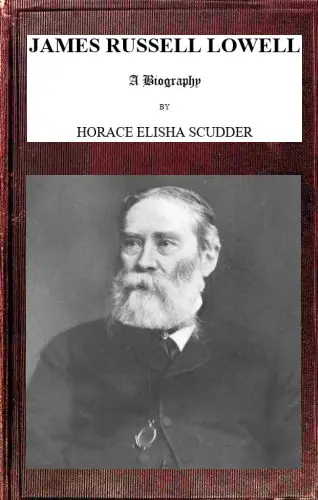
"James Russell Lowell, A Biography; vol. 1/2" by Horace Elisha Scudder is a literary biography written in the early 20th century. The book provides a detailed examination of the life of James Russell Lowell, a prominent figure in American literature and politics during the 19th century, contextualizing his contributions through personal letters and anecdotes to paint a vivid picture of his character and achievements. The opening of the biography introduces Lowell's early life, focusing on his childhood at Elmwood in Cambridge, Massachusetts. Scudder sets the scene by detailing the historical and familial background that shaped Lowell's early years, including descriptions of the picturesque homestead and its significance in his life. The narrative explores the influences of his parents, particularly his father, Rev. Charles Lowell, and reflects on the young Lowell's sensory experiences in nature, foreshadowing his future as a poet. The biography promises a deeper exploration of Lowell's literary pursuits and social engagements, offering insights into the formative moments that defined his character.
Introduction adapted from the source catalogue; source summaries may be automatically generated.
Free to read · English · 124,532 words · No account needed
MAKE TIME FOR A GOOD BOOK
On by default. Untick to stop anonymous reading totals. Each page counts after 10 seconds in view. How this works.
Anonymous counting is on unless you have switched it off.
[94] See “Walter Savage Landor,” in Latest Literary Essays and
Addresses, p. 51.
[95] The Poems and Prose Remains of Arthur Hugh Clough, i. 188.
[96] Perhaps his partial friend Briggs was referring to this when he wrote, 18 March, 1860: “If you bring out that long promised volume of fireside travels, I hope you will not omit that racy chapter of the novel you read to me, but which you will never write. I think it was much better than anything of the Autocrat’s that I have read.”
[97] The lines on pp. 80, 81, of “Cambridge Thirty Years Ago” are also saved from the same poem, but from the unprinted portion.
[98] See his two letters to T. W. Higginson, outlining his plan, and published by the latter in his Old Cambridge.
[99] See letter to Mr. Norton, 13 April, 1884, Letters, ii. 279.
[100] “A Few of Lowell’s Letters” in The Old Rome and the New and
other Studies, p. 134.
[101] The poem was not printed till April, 1858, when it appeared in
The Atlantic Monthly.
[102] It was the custom when there was an unusual demand for tickets, for the lecturer, besides his Tuesday and Friday evening discourses, to repeat them on Wednesday and Saturday afternoons. In those days also, applicants for tickets registered their names during a certain number of days in advance, and at the close of the registry notification was made that persons holding numbers divisible by two, three, four, or five, as the case might be (in the ratio of applicants to the number of seats in the hall), might call and receive tickets.
[103] Probably the verses beginning,--
“Farewell, for the bark has her breast to the tide.”
[104] “A Good Word for Winter,” in Literary Essays, iii. 267.
[105] “Mr. Lowell as a Teacher:” Scribner’s Magazine, November, 1891. Included in his volume Stelligeri: Charles Scribner’s Sons.
[106] “Address before the Modern Language Association of America.”
[107] 21 August, 1857.
[108] 31 August, 1857.
[109] 31 December, 1857.
[110] “A Few of Lowell’s Letters,” in The Old Rome and the New, and Other Studies, by W. J. Stillman.
[111] Literary Friends and Acquaintance, p. 242.
[112] See especially “The Subjective of It,” first printed in the Atlantic Monthly, and “The Philosophers’ Camp,” printed in The Century, and both included in The Old Rome and the New, and Other Studies. And more particularly see the first volume of The Autobiography of a Journalist.
[113] It is worth noting that the year in which this sentence was written, the Atlantic Monthly was, in a special contingency, edited by the Professor of English Literature at Princeton.
[114] Mr. Phillips was by marriage connected with Mr. Emerson’s family.
[115] Mr. J. Elliot Cabot.
[116] E. E. Hale’s James Russell Lowell and his Friends.
[117] “The New Portfolio,” January, 1885.
Your reading position is saved on this browser. Take it to another device with a library code. Reading pages adapt to text, rather than matching a printed edition.
Horace Elisha Scudder

Horace Elisha Scudder
Horace Elisha Scudder
Horace Elisha Scudder
BEHIND THE BOOK
This eBook is for the use of anyone anywhere in the United States and most other parts of the world at no cost and with almost no restrictions whatsoever. You may copy it, give it away or re-use it under the terms of the Project Gutenberg License included with this eBook or online at www.gutenberg.org. If you are not located in the United States, you will have to check the laws of the country where you are located before using this eBook. Read the source licence.
The original source file, including credits and licence, is retained by this library. Request an original-format copy at no charge. Please include the book title and Project Gutenberg identifier #57776.
KEEP YOUR CURIOSITY GOING
John L. Ransom

Herman W. Mudgett

Harriet Monroe
Daniel Dulany Addison
Charles Lanman

Harold Rosher