THE CLASSIC COLLECTION✦Noah Webster American Men of LettersCLASSIC FREE BOOKS
Noah Webster American Men of Letters
Horace Elisha Scudder
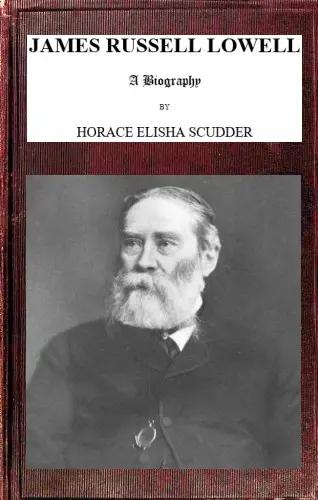
THE CLASSIC COLLECTION · 1901
"James Russell Lowell, A Biography; vol. 1/2" by Horace Elisha Scudder is a literary biography written in the early 20th century. The book provides a detailed examination of the life of James Russell Lowell, a prominent figure in American literature and politics during the 19th century, contextualizing his contributions through personal letters and anecdotes to paint a vivid picture of his character and achievements. The opening of the biography introduces Lowell's early life, focusing on his childhood at Elmwood in Cambridge, Massachusetts. Scudder sets the scene by detailing the historical and familial background that shaped Lowell's early years, including descriptions of the picturesque homestead and its significance in his life. The narrative explores the influences of his parents, particularly his father, Rev. Charles Lowell, and reflects on the young Lowell's sensory experiences in nature, foreshadowing his future as a poet. The biography promises a deeper exploration of Lowell's literary pursuits and social engagements, offering insights into the formative moments that defined his character.
Introduction adapted from the source catalogue; source summaries may be automatically generated.
Free to read · English · 124,532 words · No account needed
MAKE TIME FOR A GOOD BOOK
On by default. Untick to stop anonymous reading totals. Each page counts after 10 seconds in view. How this works.
Anonymous counting is on unless you have switched it off.
[8] Mary Traill Spence Lowell was born 3 December, 1810, was married to Samuel Raymond Putnam, 25 April, 1832, and died in Boston, 1 June, 1898. She was a woman of intellectual power and literary accomplishment. She chose to write anonymously, but the books she wrote, Records of an Obscure Man, The Tragedy of Errors, Fifteen Days, and The Tragedy of Success, though remote from the current of popular taste in her day, not only disclose a most thoughtful nature, and one profoundly interested in great subjects of racial and philosophical moment, but not infrequently are exceedingly felicitous in expression.
[9] In a lecture on Spenser, given in 1856, Lowell said, “The Faery Queene was the first poem I ever read, and I had no suspicion of any double meaning in it.”
[10] “An Epistle to George William Curtis,” 1874.
[11] Conversations on Some of the Old Poets, pp. 170, 171.
[12] Said at the commemoration of the one hundred and fiftieth anniversary of the foundation of the West Church, Boston, 1887.
[13] The Power of Sound: a rhymed lecture, pp. 22, 23.
[14] “‘Tis near midnight, and I hear a bass-drum, kettle-drum and fife in the distance, playing the dear old boongalang tune of my earliest days, the very one to which General Gage marched out of Boston. It is delightful. I think it is the noise Wagner is always trying to make and failing.”--J. R. L. to C. E. Norton, 16 April, 1889.
[15] “Books and Libraries” in Literary and Political Addresses,
Works, vi. 83.
[16] Latest Literary Essays and Addresses, p. 43.
[17] Literary and Political Addresses, pp. 69, 70.
[18] Mr. Shackford did not live to continue his friendship with Lowell.
He died in 1842.
[19] The Hasty Pudding Club, a Harvard students’ club, which has always made much of literature of the lighter sort, its specialty now being amateur theatricals.
[20] “Thoreau,” in Literary Essays, i. 366.
[21] There is a letter from Mrs. Anna Cabot Lowell, 3 July, 1838, to her brother-in-law, which throws a little light on the way in which his friends regarded Lowell at this time: “Aunt S. was here last evening and depicted in a lively manner the grief of Scates for your idle courses. She says he went to you with tears in his eyes to implore you to persevere, and that he told his friends in faltering accents that you had but this one fault in the world. Being desirous to know the exact nature of that fault, that you might apply the specific remedy, I asked her what the fault was. She said ‘indolence to be sure: indolence and the Spence negligence.’ I quote her very words. My opinion of the case is that it proceeds more from negligence than indolence, and more from a blind confidence in your powers and your destiny than either.”
[22] Letters, ii. 302.
Your reading position is saved on this browser. Take it to another device with a library code. Reading pages adapt to text, rather than matching a printed edition.
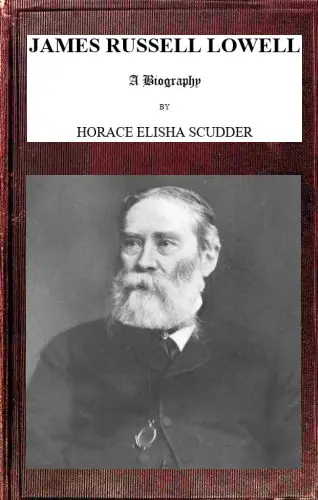
Horace Elisha Scudder

Horace Elisha Scudder
Horace Elisha Scudder
Horace Elisha Scudder
BEHIND THE BOOK
This eBook is for the use of anyone anywhere in the United States and most other parts of the world at no cost and with almost no restrictions whatsoever. You may copy it, give it away or re-use it under the terms of the Project Gutenberg License included with this eBook or online at www.gutenberg.org. If you are not located in the United States, you will have to check the laws of the country where you are located before using this eBook. Read the source licence.
The original source file, including credits and licence, is retained by this library. Request an original-format copy at no charge. Please include the book title and Project Gutenberg identifier #57776.
KEEP YOUR CURIOSITY GOING
John L. Ransom

Herman W. Mudgett

Harriet Monroe
Daniel Dulany Addison
Charles Lanman

Harold Rosher