THE CLASSIC COLLECTION✦Noah Webster American Men of LettersCLASSIC FREE BOOKS
Noah Webster American Men of Letters
Horace Elisha Scudder
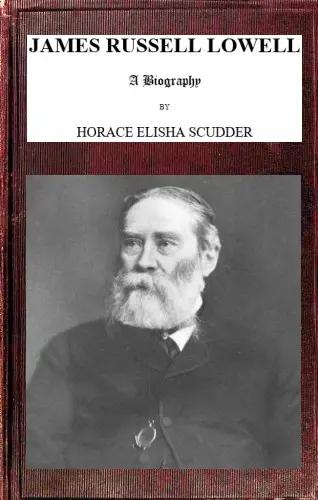
THE CLASSIC COLLECTION · 1901
"James Russell Lowell, A Biography; vol. 1/2" by Horace Elisha Scudder is a literary biography written in the early 20th century. The book provides a detailed examination of the life of James Russell Lowell, a prominent figure in American literature and politics during the 19th century, contextualizing his contributions through personal letters and anecdotes to paint a vivid picture of his character and achievements. The opening of the biography introduces Lowell's early life, focusing on his childhood at Elmwood in Cambridge, Massachusetts. Scudder sets the scene by detailing the historical and familial background that shaped Lowell's early years, including descriptions of the picturesque homestead and its significance in his life. The narrative explores the influences of his parents, particularly his father, Rev. Charles Lowell, and reflects on the young Lowell's sensory experiences in nature, foreshadowing his future as a poet. The biography promises a deeper exploration of Lowell's literary pursuits and social engagements, offering insights into the formative moments that defined his character.
Introduction adapted from the source catalogue; source summaries may be automatically generated.
Free to read · English · 124,532 words · No account needed
MAKE TIME FOR A GOOD BOOK
On by default. Untick to stop anonymous reading totals. Each page counts after 10 seconds in view. How this works.
Anonymous counting is on unless you have switched it off.
The Lowells had their quarters at Capo le Case, No. 68, on the third piano, and were surrounded by a few English and American friends. Mr. and Mrs. Story were not in Rome when they first arrived, but joined them in about a fortnight, when the rains had ceased at last and so permitted walks in the Campagna. The first part of their stay had been dreary enough, and drew from Lowell the whimsical remark: “Sometimes as I look from the Pincian, I think that the best thing about [modern Rome] is that the hills look like Brighton.” And Mrs. Lowell draws a humorous picture of her husband, and their half homesick feelings, when she writes: “Through Mr. Black we have the English journals and papers, and it really gives me a little home feeling when I see a bundle of Examiners and Athenæums brought in just as they used to be from Mr. Wells’s, and see James selecting his cigar with particular satisfaction and giving the fire an express arrangement, and then drawing up his chair to it and putting his feet on the fender, beginning to read.”
The anxiety, also, which Lowell felt over his father’s illness benumbed his faculties and made him restless; but with fair weather, better news came, and the travellers gave themselves up more unreservedly to the pleasures which the great city afforded them. But Rome does not thrill one from the start. It takes time for its ancient hands to get that clutch which at last never loosens, and Lowell at first seemed somewhat unaffected. “I like,” he wrote to his father, just before Christmas, “to walk about in the fine sunshine and get unexpected and unguide-booked glimpses of fine scenery, but systematic sight-seeing is very irksome to me. Though we have been in Rome now nearly as long as we were in Florence, I have not learned to like it as well. We were able to enjoy Florence sincerely and without any reproaches, because we had not heard of your illness. Then, too, the churches here are nearly all alike. Going to see them is like standing to watch a procession of monks,--the same thing over and over again, and when you have seen one you have seen all. There is a kind of clumsy magnificence about them, like that of an elephant with his castle on his back and his gilded trappings, and the heaviness somehow weighs on one. There is no spring and soar in their architecture as in that of the Lombard churches I have seen. The Roman columns standing here and there look gentleman-like beside them, and reproach them with their tawdry parvenuism. The finest interior in Rome is that of the Sta. Maria degli Angeli, which Michelangelo made out of a single room in the baths of Diocletian. Even the size of St. Peter’s seems inconsiderable in a city where the Coliseum still stands in crater-like ruin, and where one may trace the foundations of a palace large enough almost for a city.... Yesterday I walked out upon the Campagna, but by a different gate from my favorite San Sebastiano. Leaving the Porta del Popolo, we followed the road as far as the Ponte Molle, then turned to the right on the hither bank of the Tiber, which we followed as far as the confluence of the Tiber and Anio, where was once the city of Antemnæ. As it had been destroyed by Romulus, however, there was nothing to be seen of the old Sabine stronghold except the flatiron-shaped bluff on which it stood, the natural height and steepness of which, aided no doubt by art, must have made the storming of it no very agreeable diversion. The view from the top is very beautiful, and it is a good place to study the Campagna scenery from,--I mean the Campagna in a state of nature. Below us flowed the swift and dirty Tiber, and the yet swifter and dirtier Anio. In front the Campagna wallowed away as far as the line of snow-streaked mountains which wall it in. Herds of cattle and of horses dotted it here and there, the gray cows looking like sheep in the distance to an eye used always to expect red in kine. Sometimes a sort of square tower rose, lonely and with no sign of life about it. Looking more carefully, however, it would turn out to be no tower at all, but only the cottage of a shepherd perched high above the inundation of malaria on the top of some ruinous tomb. Add malaria and the idea of desolation to an Illinois prairie, and you have the Campagna. Where Antemnæ had stood there now rose a conical wigwam built wholly of thatch, surmounted by a cross, at the door of which stood a woman in scarlet bodice and multitudinous petticoat, with a little girl ditto, ditto, but smaller. Seeing us get out a pocket spyglass, a boy of about eighteen years contrived to muster energy enough to come out and stare at us. He was dressed in sheepskin breeches with the wool on, short wide jacket, red waistcoat, and hat turned up at the side, and would have looked extremely well in a landscape--but nowhere else. A smaller boy came up with more impetuosity--fat, rosy-cheeked, Puck-like, and with eyes that looked as if their normal condition was that of being close-shut, but which once opened to the width necessary to take in the extraordinary apparition of three forestieri at once, would require some maternal aid to get back again. Large hawks were sliding over the, air above us, and there was no sound except the sharp whistle of a peasant attending a drove of horses in the pasture below. Jemmy will like to know that the horses are belled here (I mean in the fields) as cows are with us, only that the bells are large enough for a town school. To-night I am going to make the giro of the churches to see the ceremonies with which Christmas is ushered in. First an illumination at Santa Maria Maggiore and the cradle of the Saviour carried in procession at ten o’clock, then mass at midnight in the San Luigi dei Francesi, then mass at St. Peter’s at three o’clock A.M. I have not seen a ceremony of the church yet that was impressive, and hope to be better pleased to-night.”
Your reading position is saved on this browser. Take it to another device with a library code. Reading pages adapt to text, rather than matching a printed edition.
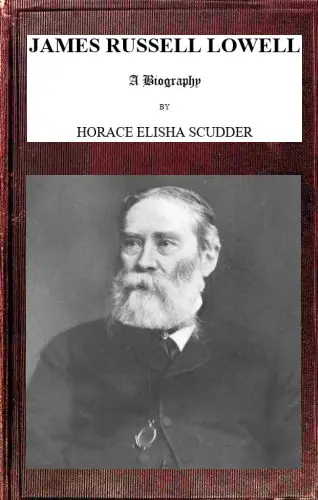
Horace Elisha Scudder

Horace Elisha Scudder
Horace Elisha Scudder
Horace Elisha Scudder
BEHIND THE BOOK
This eBook is for the use of anyone anywhere in the United States and most other parts of the world at no cost and with almost no restrictions whatsoever. You may copy it, give it away or re-use it under the terms of the Project Gutenberg License included with this eBook or online at www.gutenberg.org. If you are not located in the United States, you will have to check the laws of the country where you are located before using this eBook. Read the source licence.
The original source file, including credits and licence, is retained by this library. Request an original-format copy at no charge. Please include the book title and Project Gutenberg identifier #57776.
KEEP YOUR CURIOSITY GOING
John L. Ransom

Herman W. Mudgett

Harriet Monroe
Daniel Dulany Addison
Charles Lanman

Harold Rosher