THE CLASSIC COLLECTION✦Noah Webster American Men of LettersCLASSIC FREE BOOKS
Noah Webster American Men of Letters
Horace Elisha Scudder
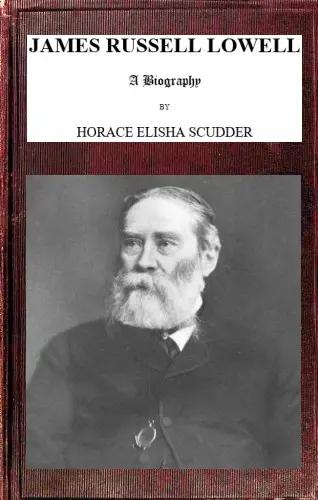
THE CLASSIC COLLECTION · 1901
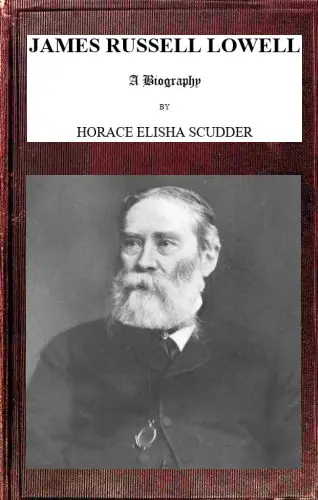
"James Russell Lowell, A Biography; vol. 1/2" by Horace Elisha Scudder is a literary biography written in the early 20th century. The book provides a detailed examination of the life of James Russell Lowell, a prominent figure in American literature and politics during the 19th century, contextualizing his contributions through personal letters and anecdotes to paint a vivid picture of his character and achievements. The opening of the biography introduces Lowell's early life, focusing on his childhood at Elmwood in Cambridge, Massachusetts. Scudder sets the scene by detailing the historical and familial background that shaped Lowell's early years, including descriptions of the picturesque homestead and its significance in his life. The narrative explores the influences of his parents, particularly his father, Rev. Charles Lowell, and reflects on the young Lowell's sensory experiences in nature, foreshadowing his future as a poet. The biography promises a deeper exploration of Lowell's literary pursuits and social engagements, offering insights into the formative moments that defined his character.
Introduction adapted from the source catalogue; source summaries may be automatically generated.
Free to read · English · 124,532 words · No account needed
MAKE TIME FOR A GOOD BOOK
On by default. Untick to stop anonymous reading totals. Each page counts after 10 seconds in view. How this works.
Anonymous counting is on unless you have switched it off.
The volume of poems to which Lowell refers in this letter came out just before Christmas, 1847. It bore the words “Second Series” on the title-page, being coupled in the author’s mind with the Poems issued four years previous. It is in the main a collection of the poems which Lowell in the past four years had scattered through papers and magazines, though he omitted several which had appeared in print, one or two of which indeed he went back and picked up on issuing his next collection a score of years later. He did not draw on his Biglow poems, reserving them for a volume by themselves, and he omitted several that were in a similar vein. There was perhaps no single poem in the new series which struck a deeper note than is to be found in one or two of the poems in the earlier collection, yet the art of the second series is firmer than that of the first, and the book as a whole is distinctly more even and more free from the mere sentimentalism which marks the previous volume. Scattered through it are a few of the more serious of his anti-slavery poems, as if for a testimony; but he does not retain the violent, not to say turgid, songs which he had thrown out upon occasions of public excitement.
There is one poem among the few contributed directly to the volume, which is familiar to lovers of Lowell himself rather than of Lowell the poet, if we may take his own discrimination, and it is most likely that it was written under conditions referred to in the letter just quoted. “An Indian-Summer Reverie,” which fills sixteen pages of the little volume, near its close, bears the marks of rapid writing. It is easy to believe that Lowell, coming away from the printing-office, where he had learned that the printers needed at once more copy, paused near the willows, and in the warm, hazy November afternoon let his mind drift idly over the scene and blend with it reflections on his own life. The poet, by virtue of his gift, is always young, and yet when young is the most retrospective of men. Not yet thirty, Lowell could remember his youth, and helped by the autumn that was in the air, could see nature and man and his own full life through a medium which has the mistiness and the color of the Indian Summer. There are poetic lines and phrases in the poem, and more than all the veil of the season hangs tremulously over the whole, so that one is gently stirred by the poetic feeling of the rambling verses; yet, after all, the most enduring impression is of the young man himself in that still hour of his life, when he was conscious, not so much of a reform to which he must put his hand, as of the love of beauty, and of the vague melancholy which mingles with beauty in the soul of a susceptible poet. The river winding through the marshes, the distant sound of the ploughman, the near chatter of the chipmunk, the individual trees, each living its own life, the march of the seasons flinging lights and shadows over the broad scene, the pictures of human life associated with his own experience, the hurried survey of his village years--all these pictures float before his vision; and then, with an abruptness which is like the choking of the singer’s voice with tears, there wells up the thought of the little life which held as in one precious drop the love and faith of his heart. Mr. Briggs, in a letter written upon receiving the volume, says: “I have just laid it aside with my eyes full of tears after reading ‘The Changeling,’ which appears to me the greatest poem in the collection, and I think that it will be so regarded by and by, a good many years hence, when I shall be wholly forgotten and you will only be known by the free thoughts you will leave behind you.” Mr. Briggs had himself lost a child, and his grief had been commemorated by Lowell; this same letter announces the birth of a daughter. One’s personal experience often colors if it does not obscure one’s critical judgment; but in taking account of Lowell’s life and its expression, we may not overlook the fact that up to this time certainly he was singularly ingenuous in making poetry, not simply a vehicle for the conveyance of large emotions generalized from personal experience, but a precipitation of his most intimate emotions. His love, his tender feelings for his friends, his generous and ardent hopes for humanity, his passion for freedom and truth, all lay at the depths of his being; but they rose to the surface perpetually in his poems and his letters, and he had scarcely learned to hold them in check by that hard mundane wisdom which comes to most through the attrition of daily living.
Your reading position is saved on this browser. Take it to another device with a library code. Reading pages adapt to text, rather than matching a printed edition.
Horace Elisha Scudder

Horace Elisha Scudder
Horace Elisha Scudder
Horace Elisha Scudder
BEHIND THE BOOK
This eBook is for the use of anyone anywhere in the United States and most other parts of the world at no cost and with almost no restrictions whatsoever. You may copy it, give it away or re-use it under the terms of the Project Gutenberg License included with this eBook or online at www.gutenberg.org. If you are not located in the United States, you will have to check the laws of the country where you are located before using this eBook. Read the source licence.
The original source file, including credits and licence, is retained by this library. Request an original-format copy at no charge. Please include the book title and Project Gutenberg identifier #57776.
KEEP YOUR CURIOSITY GOING
John L. Ransom

Herman W. Mudgett

Harriet Monroe
Daniel Dulany Addison
Charles Lanman

Harold Rosher