THE CLASSIC COLLECTION✦Noah Webster American Men of LettersCLASSIC FREE BOOKS
Noah Webster American Men of Letters
Horace Elisha Scudder
THE CLASSIC COLLECTION · 1901
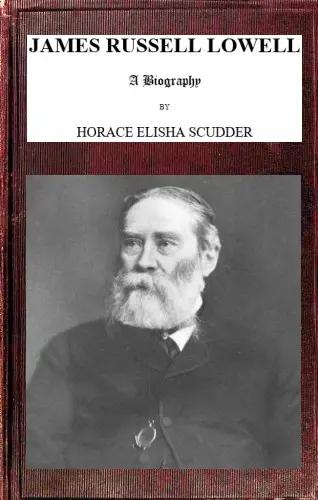
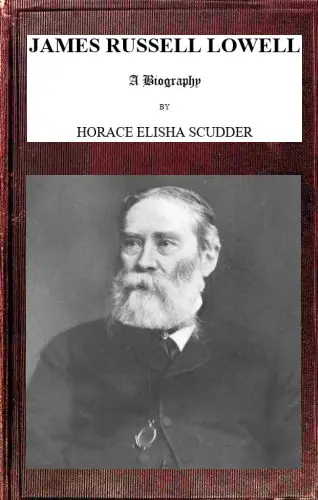
"James Russell Lowell, A Biography; vol. 1/2" by Horace Elisha Scudder is a literary biography written in the early 20th century. The book provides a detailed examination of the life of James Russell Lowell, a prominent figure in American literature and politics during the 19th century, contextualizing his contributions through personal letters and anecdotes to paint a vivid picture of his character and achievements. The opening of the biography introduces Lowell's early life, focusing on his childhood at Elmwood in Cambridge, Massachusetts. Scudder sets the scene by detailing the historical and familial background that shaped Lowell's early years, including descriptions of the picturesque homestead and its significance in his life. The narrative explores the influences of his parents, particularly his father, Rev. Charles Lowell, and reflects on the young Lowell's sensory experiences in nature, foreshadowing his future as a poet. The biography promises a deeper exploration of Lowell's literary pursuits and social engagements, offering insights into the formative moments that defined his character.
Introduction adapted from the source catalogue; source summaries may be automatically generated.
Free to read · English · 124,532 words · No account needed
MAKE TIME FOR A GOOD BOOK
On by default. Untick to stop anonymous reading totals. Each page counts after 10 seconds in view. How this works.
Anonymous counting is on unless you have switched it off.
The other vehicle for Lowell’s more exclusively literary work during the winter of 1845 was Graham’s Magazine, published in Philadelphia. He had been a contributor since the spring of 1841, when he used the signature “H. Perceval,” which he had been employing in initial form in the Southern Literary Messenger. His contributions were all poems, some of which he had preserved in the two volumes already published, but in the number for February, 1845, there appeared his biographical and critical sketch of Poe in the series “Our Contributors,” which ran for a score of numbers and was accompanied by steel portraits. Graham was desirous of including Lowell in the series with a portrait by Page, but for some reason the plan fell through. In this sketch of Poe, Lowell used a discursive manner, giving expression in a lively fashion to his judgments of other poets in the past, but not hesitating to speak emphatically of the genius of Poe, whom he did not know personally.
“Mr. Poe,” he wrote, “is at once the most discriminating, philosophical, and fearless critic upon imaginative works who has written in America. It may be that we should qualify our remarks a little, and say that he might be, rather than that he always is, for he seems sometimes to mistake his phial of prussic acid for his inkstand.... Mr. Poe has that indescribable something which men have agreed to call genius.”
Lowell had offered to write this sketch in May, 1844, and had been supplied with biographical material by Poe himself, who moreover read the article in manuscript which Lowell sent at the end of September through their common friend, Mr. Briggs. During this winter of 1845 Poe was a lively subject of discussion by Lowell and his friends, for he was the most conspicuous figure in American literature at that time. His “Raven” appeared in The American Review for February, and his series of papers on plagiarism, with their acuteness, their ostentation of learning, and their malice, was trailing through the Mirror and The Broadway Journal. His name was linked with that of Briggs in the editorship of the Journal, and Briggs sometimes found it difficult to make clear to his friends just how responsibility was apportioned between them. It was impossible to regard this very insistent figure as an intellectual or æsthetic abstraction, and his personality was always getting in the way of a fair judgment. In a letter to Briggs, 16 January, 1845, Lowell remarks: “From a paragraph I saw yesterday in the Tribune I find that Poe has been at me in the Mirror. He has at least that chief element of a critic--a disregard of persons. He will be a very valuable coadjutor to you.” Briggs, who was at this time a warm defender of Poe, had read the article in the Mirror, which was a review of the “Conversations,” and assured Lowell that it was extremely laudatory and discriminating, and a few days later, after strongly praising “The Gold Bug” which he had just read, he says: “Do not trouble yourself about anybody’s gloriometer.... I have always misunderstood Poe from thinking him one of the Graham and Godey species, but I find him as different as possible. I think that you will like him well when you come to know him personally.” Briggs copied “The Raven” into his magazine and wrote enthusiastically to Lowell about it. But Lowell was deeply offended by what he termed “the grossness and vulgarity” of Poe’s treatment of Longfellow, especially in his offhand allusion to Mrs. Longfellow and her children. Briggs again came to Poe’s defence. “The allusion to Mrs. Longfellow,” he wrote, “was only a playful allusion to an abstract Mrs. Longfellow, for Poe did not know even that Longfellow was married; look at the thing again and you will see that it contains nothing offensive. Poe has, indeed, a very high admiration for Longfellow, and so he will say before he is done. For my own part I did not use to think well of Poe, but my love for you and implicit confidence in your judgment led me to abandon all my prejudices against him, when I read your account of him. The Rev. Mr. Griswold, of Philadelphia, told me some abominable lies about him, but a personal acquaintance with him has induced me to think highly of him. Perhaps some Philadelphian has been whispering foul things in your ear about him. Doubtless his sharp manner has made him many enemies. But you will think better of him when you meet him.”
Your reading position is saved on this browser. Take it to another device with a library code. Reading pages adapt to text, rather than matching a printed edition.
Horace Elisha Scudder

Horace Elisha Scudder
Horace Elisha Scudder
Horace Elisha Scudder
BEHIND THE BOOK
This eBook is for the use of anyone anywhere in the United States and most other parts of the world at no cost and with almost no restrictions whatsoever. You may copy it, give it away or re-use it under the terms of the Project Gutenberg License included with this eBook or online at www.gutenberg.org. If you are not located in the United States, you will have to check the laws of the country where you are located before using this eBook. Read the source licence.
The original source file, including credits and licence, is retained by this library. Request an original-format copy at no charge. Please include the book title and Project Gutenberg identifier #57776.
KEEP YOUR CURIOSITY GOING
John L. Ransom

Herman W. Mudgett

Harriet Monroe
Daniel Dulany Addison
Charles Lanman

Harold Rosher