Beyond the Old Frontier: Adventures of Indian-Fighters, Hunters, and Fur-Traders
George Bird Grinnell
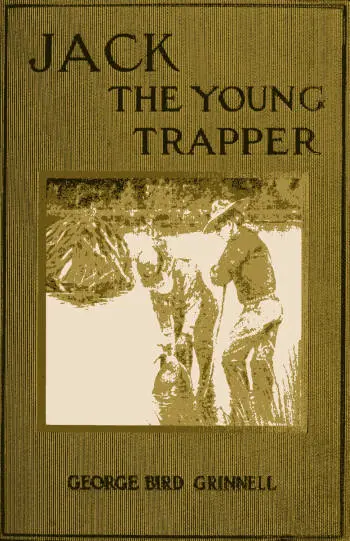
THE CLASSIC COLLECTION · 1907
"Jack the Young Trapper: An Eastern Boy's Fur Hunting in the Rocky Mountains" by George Bird Grinnell is a novel likely written in the early 20th century. The story follows the adventures of Jack Danvers, a young boy from the East who travels to the Rocky Mountains to learn about trapping and fur hunting during the transformative years of America’s westward expansion. With a mix of excitement and learning, Jack’s journey unfolds in a wilderness rich with wildlife, including antelope and beaver, aiming to capture the spirit of the old trappers and the rugged beauty of the western landscape. The opening of the novel introduces Jack Danvers as he returns to his uncle's ranch after a long winter away at school. Full of enthusiasm, he is eager to reconnect with old friends and the natural beauty of the prairie. As he settles in, a conversation between Jack, his uncle Mr. Sturgis, and his friend Hugh Johnson hints at plans for a summer expedition—potentially trapping beaver in North Park. This setting lays the groundwork for Jack's upcoming adventures, showcasing themes of friendship, the challenges of wilderness survival, and the excitement of discovery as they prepare to embark on their trapping journey into the Rocky Mountains.
Introduction adapted from the source catalogue; source summaries may be automatically generated.
Free to read · English · 95,652 words · No account needed
MAKE TIME FOR A GOOD BOOK
On by default. Untick to stop anonymous reading totals. Each page counts after 10 seconds in view. How this works.
Anonymous counting is on unless you have switched it off.
"Oh," said Henry, as they pantingly staggered up the slope, "I'm afraid I didn't hit him. My gun kept moving around so; but when I pulled the trigger, I thought it was moving toward the right spot, and I knew I never could hold it still."
As they topped the ridge, Jack saw lying among the rocks below them
something brown and curved, which he was sure was one of the ram's
horns.
"Hurrah!" he yelled, and they plunged down among the broken stones, leaping from one to another like a pair of young goats. Jack was much more active among the rocks than Henry, and reached the ram first. It was quite dead, for the bullet had gone just to the right spot, and through the great beast's heart.
When Henry came up, Jack shook his hands in cordial congratulation, and then, drawing his butcher knife, prepared to bleed the ram.
"My," he said, "but we've got a job now. You and I can never carry this animal into camp. We'll have to take what we can, and come up here to-morrow with help. Possibly we can get a pack horse up here, though I doubt it. I know we can't get one up the way we came, but there may be some other road. Well, come on," he continued, "we've got no time to fool; it will be dark in a couple of hours, and we must hurry." As they were at work removing the animal's entrails, Jack said, "Now, what shall we try to carry back?"
"Oh, Jack," said Henry, "whatever we leave here, let us take the head with us. I would not lose that for anything. Just think, it's the first sheep I ever saw, the first I ever shot at, and the first I ever killed. I do want to take that in and show it to my governor. My, won't he be delighted!"
"Well," said Jack, "if we carry the head we can't carry anything else. That head as it is, without any of the neck, will weigh not less than forty or fifty pounds, and we've got quite a way to go. Moreover, it's such an unhandy thing that we can't both of us carry it. We've got to spell each other."
"Let's try to take it, anyhow, Jack," said Henry.
"All right," said Jack, "we'll try," and cutting the skin of the neck low down to breast and shoulders, the boys quickly skinned away the hide from the flesh, cutting the head off at the first joint.
"Now," said Jack, "we must start back."
Your reading position is saved on this browser. Take it to another device with a library code. Reading pages adapt to text, rather than matching a printed edition.
George Bird Grinnell
George Bird Grinnell

Caspar Whitney & George Bird Grinnell & Owen Wister
George Bird Grinnell
BEHIND THE BOOK
This eBook is for the use of anyone anywhere in the United States and most other parts of the world at no cost and with almost no restrictions whatsoever. You may copy it, give it away or re-use it under the terms of the Project Gutenberg License included with this eBook or online at www.gutenberg.org. If you are not located in the United States, you will have to check the laws of the country where you are located before using this eBook. Read the source licence.
The original source file, including credits and licence, is retained by this library. Request an original-format copy at no charge. Please include the book title and Project Gutenberg identifier #45690.
KEEP YOUR CURIOSITY GOING
Coulson Kernahan

Maurice Baring
Frances Wright
Cécile Tormay

Frederic Jesup Stimson

W. H. P. (William Henry Pope) Jarvis